
Blog
Droëwors vs Boerewors: Understanding Distinct South African Meat Snacks

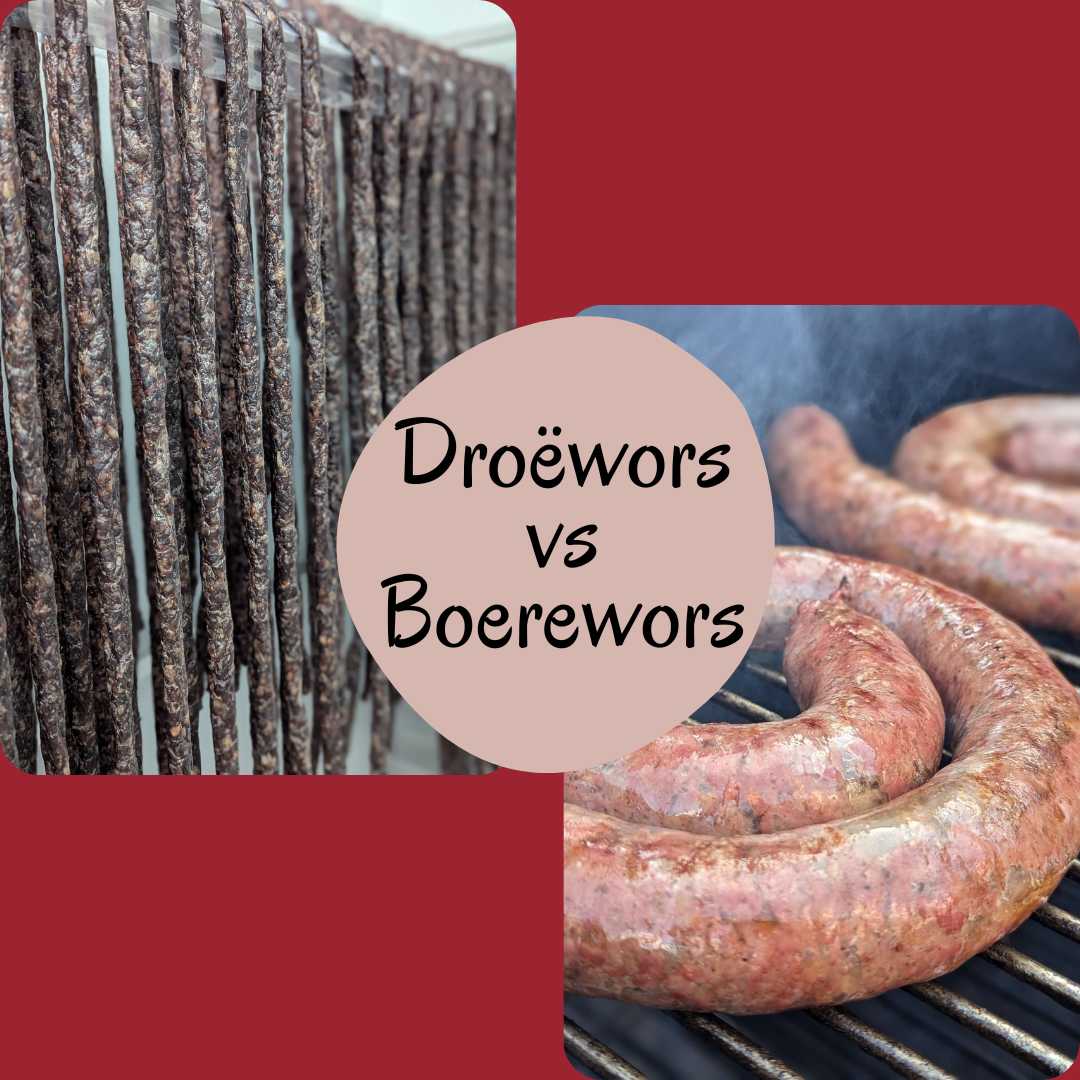
For many South Africans living abroad, few things taste more like home than a good piece of droëwors or a sizzling coil of boerewors on the braai. Both are unmistakably South African, both made from beef and spices, and both have been part of our culinary culture for generations. This guide explores the differences in taste and preparation in the context of Droëwors vs Boerewors.
When it comes to flavor, the debate of Droëwors vs Boerewors often heats up among enthusiasts.
But while they share a common heritage, droëwors and boerewors are completely different in texture, preparation, and how they’re enjoyed.
The differences in preparation techniques help shape the unique identities of Droëwors vs Boerewors.
At Yebo Biltong, we craft droëwors with the same care and authenticity as our biltong, using air-drying, traditional spices, and premium cuts of beef. But we also know that to appreciate this beloved snack truly, it helps to understand its origins and how it differs from its juicy cousin, boerewors.
Let’s dig into the delicious details.
Understanding the nuances between Droëwors vs Boerewors can elevate your culinary experience.
A Tale of Two “Wors”. Understanding the Differences between Droëwors vs Boerewors
The ongoing debate surrounding Droëwors vs Boerewors showcases the passion of South African food lovers.
Both droëwors and boerewors trace their roots back to early South African settlers, who needed reliable ways to preserve meat in a challenging climate.
The Dutch word “wors” means sausage. From that simple idea came two very different expressions of South African ingenuity:
- Boerewors — literally “farmer’s sausage”, a fresh, coiled sausage meant for grilling.
- Droëwors — meaning “dried sausage”, a preserved, air-dried version meant to last without refrigeration.
The two share similar spice profiles, but what sets them apart is their preparation, texture, and purpose.
Understanding the distinctions between Droëwors vs Boerewors can enhance your next culinary adventure.
What Is Boerewors?

Coiled boerewors on a grill
Boerewors is the heart of the South African braai.
Made from coarsely ground beef (often with a touch of pork or lamb for richness), boerewors is seasoned with a fragrant blend of spices that typically includes coriander, black pepper, nutmeg, and cloves. At Yebo, we make our Boerewors from high quality beef that includes juicy whole brisket!
It’s then packed into natural casings, coiled into its iconic spiral shape, and slowly grilled over an open flame or charcoal. The result? Juicy, smoky, and incredibly flavorful sausage that’s as much about tradition as it is about taste.
Every South African family has its own version, passed down through generations, tweaked for personal preference, and fiercely debated over at braais.
What Is Droëwors?

A pile of dried beef sticks or droëwors
The craft of making droëwors is often compared to that of making boerewors, leading to endless discussions about Droëwors vs Boerewors.
Now take that same spice tradition, and apply the art of air-drying. That’s how you get droëwors.
Droëwors uses similar ingredients to boerewors but undergoes an entirely different process. Instead of being grilled, it’s air-dried naturally, much like biltong.
The mixture is made entirely from lean beef, seasoned with coriander, pepper, salt, and sometimes a touch of Worcestershire sauce or vinegar, and then stuffed into thin casings (usually sheep casing). These thinner sausages are ideal for drying evenly and safely.
After curing, the droëwors hang for several days in a controlled environment where air, temperature, and humidity are carefully balanced.
The result is a dry, savory, chewy sausage that is packed with concentrated flavor, long-lasting, and perfect as an on-the-go snack.
The Science Behind the Difference
This leads us to explore the intricate nuances in the debate of Droëwors vs Boerewors.
Though both are “wors,” the difference between droëwors and boerewors comes down to moisture, fat, and time.
| Factor | Boerewors | Droëwors |
|---|---|---|
| Preparation | Grilled fresh | Air-dried slowly |
| Texture | Juicy and soft | Firm and dry |
| Fat Content | Higher, for moisture and richness | Lower, to prevent spoilage |
| Shelf Life | Short — must be refrigerated | Long — naturally preserved |
| Flavor | Mildly smoky, fresh beef flavor | Intense, concentrated spice profile |
| Usage | Served hot as a meal | Eaten cold as a snack |
Why Fat Matters
Both droëwors and boerewors have their own unique flavor profiles, which fuels the conversation about Droëwors vs Boerewors.
Boerewors relies on fat for juiciness, typically between 20-30%. But in droëwors, fat is the enemy. During air-drying, fat can oxidize and spoil, leading to rancidity. Droëwors’ fat content is anywhere between 8% and 20%.
That’s why true droëwors is made from lean beef, with the right balance of meat, fat, and seasoning to dry evenly without losing tenderness.
This attention to fat content is part of what makes Yebo Droëwors so clean and flavorful; it’s crafted for texture, safety, and taste, not shortcuts.
The Flavor Connection
This flavor connection is crucial when discussing Droëwors vs Boerewors.
Both droëwors and boerewors draw their flavor identity from the same iconic South African spices, especially coriander.
- Coriander adds a bright, citrusy warmth that defines both snacks.
- Black pepper brings sharpness and balance.
- Cloves and nutmeg (used more commonly in boerewors) add a subtle depth and warmth when cooked.
- Vinegar and Worcestershire sauce (used in droëwors) add tang and umami while helping preserve the product.
In short, the flavor DNA is the same, but how those flavors express themselves changes dramatically depending on whether they’re grilled or air-dried.
Boerewors delivers its flavor through sizzle and smoke; droëwors, through time and transformation.
From Braai to Backpack: Different Roles, Same Heritage
Boerewors: The Braai Essential
Boerewors isn’t just food, it’s a cultural ritual. It’s what brings people together around a fire on weekends, public holidays, or after a rugby match. You’ll find it on rolls, on pap (maize meal), or eaten straight off the grill with your fingers.
Its juiciness, aroma, and smoky spice make it the centerpiece of any South African gathering.
Droëwors: The Everyday Snack
Droëwors, on the other hand, is the portable cousin, ideal for hiking, road trips, sporting events, or afternoon cravings.
It doesn’t need refrigeration, doesn’t spoil easily, and delivers a powerful punch of protein and flavor in every bite.
At Yebo Biltong, our droëwors are air-dried naturally, sugar-free, and seasoned with the same authentic South African spices that define our biltong. It’s made for those who love tradition but live modern, active lives.
Whether at home or on the go, the choice between Droëwors vs Boerewors is ever-present.
Texture: The Ultimate Difference
The biggest contrast between droëwors and boerewors comes down to texture, and it’s what defines how each should be enjoyed.
- Boerewors is juicy, crumbly, and rich. You can slice it with a fork and taste the fat and smoke in every mouthful.
- Droëwors is firm, chewy, and deeply satisfying. It snaps when you bite it, then softens as you chew, releasing waves of meaty, spiced flavor.
That texture comes from the science of air-drying, where moisture is slowly removed to create balance rather than toughness. It’s why authentic droëwors, like Yebo’s, never feel rubbery or brittle. It’s perfectly cured for that iconic “bite and chew” that makes it irresistible.
Health and Nutrition: Naturally Simple
Both boerewors and droëwors at Yebo are made from real high-quality meat, but droëwors offers a few extra benefits for health-conscious eaters.
Because it’s air-dried and sugar-free, droëwors is:
-
- High in protein
- Low in carbohydrates
- Naturally preserved without additives
- Keto and paleo-friendly
Ultimately, the world of South African snacks brings us back to the Droëwors vs Boerewors conversation.
It’s a snack that satisfies both hunger and nostalgia, a modern, clean way to enjoy South African flavor anywhere in the world.
Craftsmanship Matters
At Yebo Biltong, we make droëwors the same way South Africans have done for generations, with real spices and no artificial preservatives.
Each batch begins with premium lean beef, seasoned with fresh coriander, cracked pepper, salt, vinegar, and Worcestershire sauce, then air-dried to perfection. The result is a snack that’s rich in heritage, high in quality, and unmistakably South African.
We believe droëwors deserves the same level of care and respect as fine charcuterie, because, at its core, it’s one of the most naturally crafted meat snacks in the world.
The Final Word: Two Icons, One Heritage
Boerewors and droëwors are two sides of the same South African story. One sizzles on the fire and brings people together; the other carries that same flavor and pride wherever you go.
The tale of Droëwors vs Boerewors is one of tradition and enjoyment.
Both are built on the same foundation: quality beef, traditional spices, and South African soul, but their paths diverge in form and purpose.
At Yebo Biltong, we honor that heritage every day. Our droëwors pays tribute to the same spice traditions that make boerewors beloved, but through the art of air-drying, captures South Africa’s flavor in its purest, most portable form.
So whether you’re at a braai or on the move, there’s a wors for you.
And when it comes to authentic South African taste, Yebo means yes; yes to flavor, yes to tradition, yes to the real thing.
In conclusion, the choice of Droëwors vs Boerewors reflects your personal taste and experience.