
Blog
Storage Container Selection for Maximum Biltong Freshness During Spring Weather

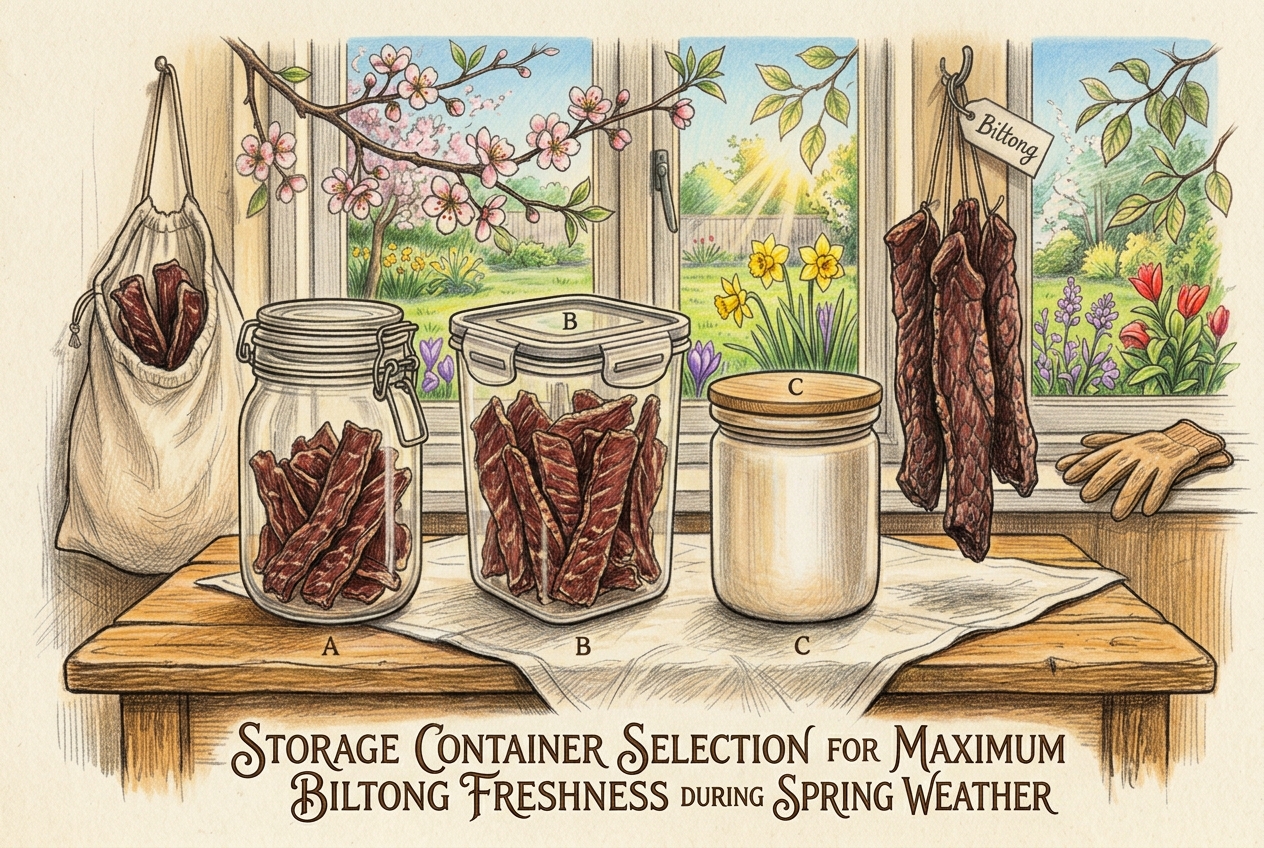
Spring weather presents unpredictable challenges that can transform your carefully made South African beef biltong from a premium snack into an expensive error. One day, the weather is dry and crisp; the next, it becomes humid and muggy. During these fluctuations, your biltong can absorb moisture like a sponge.
Many biltong lovers discover this lesson through experience. They open their storage container only to find that their favorite strips have developed a telling white fuzz or, worse, a slimy texture, signaling that their investment is headed straight for the trash.
The traditional air-curing methods that create authentic biltong rely on controlled moisture levels. But spring weather doesn’t care about your storage preferences, and standard containers simply can’t handle the rapid environmental changes that come with seasonal transitions.
How Humidity Fluctuations Affect Traditional Air-Cured Biltong Quality
Spring humidity can swing from 30% to 80% within hours, creating a nightmare scenario for biltong preservation. Your carefully air-cured strips contain just enough residual moisture to maintain their signature texture, typically around 35-40% moisture content for properly made biltong.
When external humidity rises, your biltong acts like a moisture magnet. The salt content that helps preserve it also makes it hygroscopic, meaning it naturally draws water from the surrounding air. This is where most storage solutions fail.
Traditional plastic bags trap moisture with no escape route. Glass jars can create condensation when temperatures fluctuate. Even paper bags become useless when humidity spikes above 60%.
The result? Your biltong’s texture shifts from that perfect chewiness to either overly moist (which can lead to spoilage) or rock-hard (when it over-dries, trying to compensate). Neither option gives you the authentic South African experience you’re paying for.
Temperature Variations and Their Impact on Fresh Biltong Preservation
Temperature swings during spring create their own set of problems. Morning temperatures might hit 12°C (54°F), while afternoons soar to 25°C (77°F) or higher. Your biltong storage needs to handle these fluctuations without creating an environment where bacteria thrive.
Here’s what happens inside most storage containers: warm air holds more moisture than cool air. When temperatures drop overnight, that excess moisture condenses directly onto your biltong. You wake up to wet strips that were perfectly dry the evening before.
Commercial biltong producers understand this challenge. They use climate-controlled environments throughout the entire process. But once that biltong leaves their facility, it’s up to you to maintain optimal conditions.
Temperature consistency matters more than the actual temperature (within reason). Biltong stored at a steady 18°C will outlast biltong experiencing daily swings between 10°C and 28°C, even if the average temperature is the same.
Identifying Moisture-Related Spoilage Signs in Premium Beef Biltong
Knowing when your biltong has absorbed too much moisture can save you from unpleasant surprises. The early warning signs appear before visible mold, giving you a chance to salvage your investment.
First sign: texture changes. Fresh biltong should have some flexibility without being spongy. If your strips feel noticeably softer than when you first stored them, they’re absorbing moisture. Thick-cut varieties show this change more obviously than thin-cut strips.
Second warning: surface appearance. Proper biltong has a slightly matte finish with visible spice coating. When it starts absorbing moisture, the surface becomes shinier or develops a slightly tacky feel.
Color changes follow moisture absorption. Dark spots or patches indicate moisture has penetrated the meat’s structure. White spots might be salt crystallization (harmless) or the beginning of mold growth (definitely not harmless).
The smell test never lies. Fresh biltong has a distinctive, pleasant aroma combining the meat’s natural scent with spices and curing salt. Any sour, musty, or “off” odors mean immediate disposal time.
Why Standard Storage Methods Fail During Seasonal Transitions
Most people store their biltong the same way year-round, but spring weather demands adaptive strategies. Standard storage containers weren’t designed with South African air-cured snacks in mind.
Plastic containers create sealed environments that trap whatever moisture is present when you close the lid. During spring’s temperature swings, that moisture condenses and redistributes constantly. You’re essentially creating a miniature greenhouse effect.
Paper bags work well in consistently dry conditions but become liabilities when humidity rises. They absorb moisture from the air and transfer it directly to your biltong, the opposite of what you want.
Sealed packages remove air but can’t adapt to changing conditions once opened. Many people reseal their biltong in the original packaging, but standard home sealers don’t create the controlled atmosphere that commercial packaging provides.
The fundamental problem with standard storage methods is their passive nature. They can’t respond to environmental changes, leaving your biltong vulnerable to whatever conditions spring weather throws at them. Effective biltong storage during seasonal transitions requires containers that actively manage internal conditions, not just contain your snacks.
Essential Features of Professional Biltong Storage Containers
Airtight Seal Technology for Optimal Freshness Retention
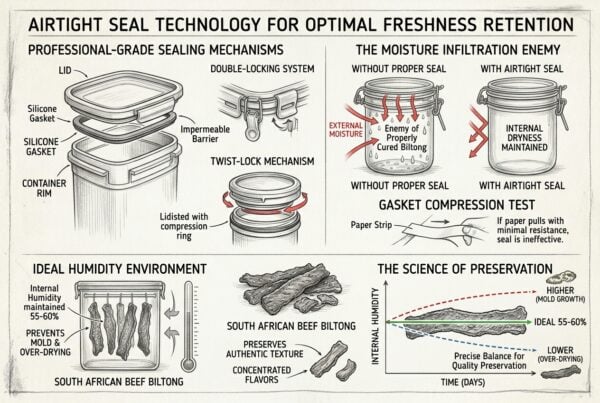
Illustrated guide showing airtight-seal technology and humidity control for preserving the freshness of south african beef biltong.
The foundation of effective biltong storage containers lies in their sealing mechanism. Professional-grade containers feature silicone gaskets that create an impermeable barrier against moisture infiltration (the enemy of properly cured biltong).
Look for containers with double-locking systems or twist-lock mechanisms that compress the gasket evenly around the entire perimeter. You can test the seal’s effectiveness by placing a piece of paper between the lid and the container. If you can pull it out without resistance, the seal isn’t tight enough.
Quality containers maintain internal humidity levels between 55% and 60%, preventing both mold growth and over-drying. South African Beef Biltong requires this precise balance to preserve its authentic texture and concentrated flavors.
Material Selection: Glass vs. Plastic vs. Metal Containers
Glass containers offer superior freshness retention because they’re non-porous and won’t absorb odors or flavors over time. They also allow visual inspection without opening the container, which helps maintain optimal storage conditions.
Food-grade plastic containers work well for short-term storage (up to two weeks) but can develop microscopic scratches that harbor bacteria. BPA-free polypropylene containers resist cracking in temperature fluctuations and cost significantly less than glass alternatives.
Stainless steel containers excel in temperature stability but prevent visual monitoring. They’re particularly valuable for commercial operations where durability matters more than convenience.
Glass wins for serious biltong enthusiasts because it preserves the complex flavor profile developed through traditional air-curing methods. Metal and plastic can subtly alter taste during extended storage.
Proper Ventilation Balance in South African Biltong Storage Systems
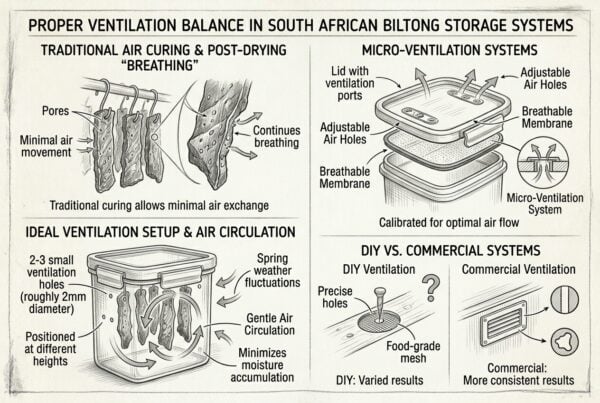
Infographic showing proper airflow and ventilation balance for traditional and modern south african biltong curing and storage systems.
Biltong storage containers need controlled ventilation, not complete air exclusion. Traditional air curing creates a product that continues breathing after the drying process ends.
Professional containers incorporate micro-ventilation systems with adjustable air holes or breathable membranes. These allow minimal air exchange while preventing moisture accumulation that leads to white mold formation.
The ideal setup includes 2-3 small ventilation holes (roughly 2mm in diameter) positioned at different heights within the container. This creates gentle air circulation without exposing the biltong to excessive humidity during spring weather fluctuations.
You can create DIY ventilation by drilling precise holes and covering them with food-grade mesh. However, commercial ventilation systems offer more consistent results because they’re calibrated for optimal air flow rates.
Size Considerations for Different Biltong Cuts and Quantities
Container sizing directly impacts storage effectiveness. Overcrowded containers trap moisture between pieces, while oversized containers allow excessive air circulation that can dry out your biltong.
For traditional thick-cut biltong strips (10-15mm), allow 25% extra space above the product level. This prevents pieces from touching the lid where condensation might form during temperature changes.
Thin-sliced biltong (under 5mm) requires different storage ratios. Use wider, shallower containers rather than tall, narrow ones. The increased surface area helps maintain even humidity distribution across all pieces.
Multiple smaller containers often work better than a single large one. You can open just what you need without exposing your entire stash to air and potential contamination. A good rule: size containers to hold 3-4 days’ worth of consumption.
UV Protection Requirements for Maintaining Authentic Flavors
Light exposure breaks down the proteins and fats that give biltong its distinctive taste profile. UV rays are particularly damaging because they accelerate rancidity in the meat’s natural oils.
Amber or dark-tinted glass containers filter harmful wavelengths while allowing visual inspection. Clear containers work well when stored in dark pantries or cabinets, but tinted options offer flexibility for countertop storage.
Opaque containers offer maximum UV protection but prevent you from monitoring your biltong without opening the seal. This trade-off works well for bulk storage situations where you’re not accessing the product daily.
Even indirect sunlight through kitchen windows can degrade the quality over time. The complex flavor development that occurs during proper air-curing deserves protection from environmental factors that could compromise the final product.
Professional storage combines UV protection with temperature stability. Store containers in areas that maintain 65-70°F with minimal daily temperature swings for optimal freshness retention.
Container Selection Guide by Biltong Type and Cut
Storage Solutions for Traditional Thick-Cut Beef Biltong Slices
Traditional thick-cut slices need containers that balance airflow with moisture protection. Glass jars with tight-fitting lids work exceptionally well for these substantial pieces because they prevent moisture absorption while maintaining the meat’s firm texture.
Food-grade plastic containers with secure seals offer another reliable option. Look for containers with at least 500ml capacity to accommodate thick slices without crushing them. The key is choosing containers that don’t compress the meat (which can damage the texture you’ve worked so hard to develop through traditional air curing).
Vacuum-sealed bags excel for long-term storage. But here’s what most people don’t realize: you should partially vacuum-seal thick cuts, not completely remove all air. Complete vacuum sealing can compress the fibers too aggressively, affecting that perfect chew texture.
Paper bags lined with parchment work for short-term storage (2-3 days). This method allows continued moisture evaporation while protecting against external humidity. It’s particularly effective during spring’s unpredictable weather patterns.
Specialized Containers for Biltong Bites and Chili Bites Varieties
Smaller biltong pieces require different storage approaches because of their increased surface area-to-volume ratio. These bite-sized pieces lose moisture faster than thick cuts, making container selection critical for maintaining optimal texture.
Airtight glass containers with rubber gasket seals work best for biltong bites. The smaller pieces benefit from complete moisture protection since they’re already at their target moisture level. Mason jars provide excellent visibility and seal integrity.
For chili bites specifically, avoid metal containers. The spice oils can react with certain metals over time, potentially affecting flavor. Stick with glass or high-quality BPA-free plastic containers with secure locking mechanisms.
Portion-control containers (150-200ml capacity) work perfectly for daily servings. This sizing prevents repeated exposure to air when accessing your stash throughout the week. You’ll maintain consistent quality without constantly opening and closing larger containers.
Silica gel packets can be beneficial for bite-sized pieces during humid spring weather. Place one small packet in containers holding more than 200g of bites. Just ensure the packet doesn’t come into direct contact with the meat.
Droëwors and Beef Droëwors Specific Storage Requirements
Droëwors presents unique storage challenges due to its cylindrical shape and natural casing. Standard containers often don’t accommodate the length efficiently, leading to broken pieces or awkward storage solutions.
Long, shallow containers work best for whole droëwors sticks. Tupperware’s rectangular containers (approximately 25cm length) accommodate most standard droëwors without breaking. This prevents the frustrating experience of opening your container to find crumbled pieces instead of intact sausages.
For cut droëwors pieces, treat them similarly to thick-cut biltong. The key difference is ensuring pieces don’t stick together during storage. Separate layers with parchment paper if you’re storing significant quantities.
Beef droëwors benefits from slightly more airflow than traditional biltong because of its casing. Consider containers with small ventilation holes covered by fine mesh. This maintains air circulation while preventing contamination.
Hanging storage works exceptionally well for whole droëwors sticks. Use food-grade hooks in a cool, dry area. This method continues the traditional air-curing process while maintaining the meat’s structural integrity.
Multi-Compartment Systems for Mixed Healthy Meat Snacks
When storing multiple biltong varieties together, compartmentalization prevents flavor transfer and maintains each product’s distinct characteristics. Cross-contamination between spiced and plain varieties can significantly muddy flavors.
Bento-style containers with secure dividers work perfectly for mixed storage. Look for systems with at least four compartments to separate thick cuts, bites, droëwors, and any specialty flavors. Each compartment should seal independently to prevent moisture migration.
Stackable glass containers offer another solution. You can dedicate specific containers to each variety while maintaining space efficiency. This approach works particularly well if you’re making homemade biltong in multiple batches.
Clear labeling becomes crucial with multi-compartment systems. Include the storage date and variety in each section. Spring’s varying humidity can affect different cuts at different rates, so tracking becomes essential for optimal timing of consumption.
Consider modular systems that expand as your collection grows. Start with basic compartments and add sections as needed. This flexibility accommodates seasonal variations in your biltong consumption and storage needs.
Temperature consistency matters more with mixed storage systems. Different cuts and spice levels can have optimal storage temperatures that vary. Aim for the most restrictive requirements across all varieties you’re storing together.
Spring-Specific Storage Strategies and Best Practices
Optimal Placement Locations Within Your Home Environment
Finding the perfect spot for your biltong storage containers becomes crucial during spring’s unpredictable weather patterns. You’ll want to avoid areas near windows where temperature swings can reach 15-20 degrees throughout the day.
Your pantry’s interior shelves work exceptionally well, particularly the middle zones where temperatures remain most stable. Kitchen cabinets away from heat sources such as ovens or dishwashers are another excellent option. But here’s what many people overlook: basement storage areas maintain incredibly consistent conditions year-round.
Spare bedroom closets offer surprising advantages for biltong storage containers. These spaces typically avoid the temperature fluctuations common in main living areas. Just ensure adequate air circulation around your containers to prevent any moisture buildup.
Avoid storing containers near heating vents, air conditioning units, or exterior walls. These locations experience the most dramatic temperature changes during spring weather transitions. Your South African Beef Biltong deserves better than these roller-coaster conditions.
Monitoring and Controlling Internal Container Humidity Levels
Spring humidity control requires active monitoring rather than hoping for the best. Small digital hygrometers (costing under $10) provide accurate readings of your container’s internal moisture levels. You’re aiming for a humidity level between 55% and 65% for optimal fresh biltong preservation.
Silica gel packets become your best friend during humid spring days. Place 2-3 packets in larger containers, replacing them every 2-3 weeks depending on local humidity. Food-grade desiccant packets work even better and can be reactivated in a low oven.
Container ventilation matters more than you might think. Airtight doesn’t mean suffocating your biltong. Quality containers include controlled ventilation systems that allow moisture escape without exposing your snacks to external humidity.
Watch for condensation forming on container walls or lids. This warning sign indicates excessive internal humidity that could compromise your biltong’s texture and flavor. Immediate action prevents weeks of careful storage from going to waste.
Consider using moisture-absorbing materials, such as rice or activated charcoal, in small cloth bags. These natural options help maintain optimal humidity without introducing chemicals near your south african biltong storage system.
Rotation Schedules for Maintaining Peak Biltong Freshness
First-in, first-out rotation prevents older pieces from losing their premium texture and flavor. Label your containers with storage dates using removable stickers or dry-erase markers. This simple step eliminates guesswork about which batch needs attention first.
Weekly rotation checks work well for most households. Examine each container’s contents, moving older pieces to more accessible positions. Your sliced biltong typically maintains peak quality for 1-2 weeks when stored properly.
Spring’s changing conditions mean you need to adjust your rotation frequency. During particularly humid weeks, check containers every 2-3 days instead of weekly. This increased vigilance catches potential issues before they affect your entire supply.
Create a simple rotation chart listing container locations and last-check dates. This visual reminder helps maintain consistency even when life gets busy. Quality fresh biltong preservation relies on these systematic approaches rather than occasional attention.
Different biltong cuts require different rotation priorities. Thicker pieces generally last longer than thin slices, so plan your consumption accordingly. Understanding these variations helps optimize your overall storage strategy.
Integration with Existing Adventure Snacks Storage Systems
Many outdoor enthusiasts already have established storage systems for trail mix, energy bars, and dried fruits. Your biltong storage containers can integrate seamlessly into these existing setups with minimal modifications.
Dedicated adventure snack cabinets work perfectly for biltong storage. The consistent access patterns and controlled environment already established for other dried foods translate directly to the preservation needs of biltong.
Consider grouping containers by intended use rather than food type. Keep grab-and-go portions separate from bulk storage containers. This organization prevents the unnecessary opening of your main storage containers during busy mornings.
Camping gear storage areas often provide ideal conditions for storing South African biltong. These spaces typically remain cool, dry, and organized. Plus, your biltong stays conveniently located near other outdoor adventure supplies.
Light or partially vacuum-sealed portions can complement your main container system. Store individual serving sizes alongside your regular containers for maximum flexibility. This dual approach accommodates both daily snacking and adventure-trip preparation without compromising the effectiveness of either storage method.
Advanced Preservation Techniques for Extended Freshness
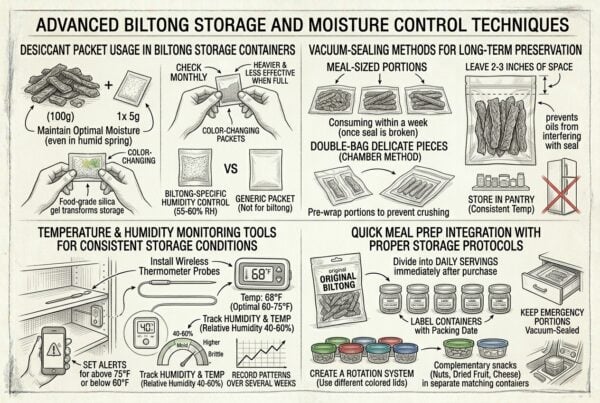
Infographic showing advanced biltong storage, moisture control, and vacuum sealing tips for maintaining ideal freshness and texture.
Desiccant Packet Usage in Biltong Storage Containers
Smart biltong storage goes beyond just picking the right container. Adding food-grade silica gel packets transforms your storage system into a moisture-management powerhouse.
Place one 5-gram packet per 100 grams of biltong in your container. The silica gel absorbs excess humidity that could otherwise create soft spots or encourage unwanted bacterial growth. You’ll find these packets maintain optimal moisture levels even during humid spring weather fluctuations.
Check your packets monthly and replace them when they feel saturated (you’ll notice they become heavier and less effective). Some packets change color when full, making replacement timing obvious.
Avoid using packets from other food products. Different materials work for different moisture ranges, and biltong requires specific humidity control that generic packets can’t provide.
Vacuum-Sealing Methods for Long-Term Preservation
Vacuum sealing extends South African Beef Biltong freshness from weeks to months, but technique matters more than equipment quality.
Portion your biltong into meal-sized quantities before sealing. Once you break a vacuum seal, that portion needs to be consumed within a week. Smaller portions mean less waste and better freshness control.
Leave 2-3 inches of space between the biltong and seal line. This prevents oils from interfering with the seal and gives you room for resealing if needed.
Double-bag delicate pieces using the chamber method. Place individually wrapped portions inside a larger vacuum bag, then seal the outer bag. This prevents crushing while maintaining the moisture barrier you need.
Store vacuum-sealed biltong in your pantry rather than the refrigerator. The consistent temperature prevents condensation that could compromise your seal and affect texture.
Temperature Monitoring Tools for Consistent Storage Conditions
Spring weather creates temperature swings that can destroy even perfectly air-cured biltong. Digital monitoring tools help you stay ahead of these changes.
Install wireless thermometer probes in your main storage areas. Set alerts for temperatures above 75°F or below 60°F. These boundaries keep your South African Beef in the optimal preservation zone.
Track humidity alongside temperature using combo sensors. Relative humidity should stay between 40% and 60% for maximum freshness. Higher levels encourage mold growth, while lower levels make biltong overly brittle.
Check your phone alerts regularly during weather transitions. Spring storms and temperature shifts occur quickly, and early intervention can save entire batches from spoilage.
Record patterns over several weeks to identify problem areas in your storage setup. You might discover that your pantry runs warmer than expected or that certain containers perform better in specific locations.
Quick Meal Prep Integration with Proper Storage Protocols
Efficient meal prep starts with storage containers that work with your weekly routine. Pre-portioned biltong saves time while maintaining freshness standards.
Divide fresh biltong into daily servings immediately after purchase. Use small glass containers with tight seals for grab-and-go convenience. This approach prevents repeated exposure of your entire stash to air and handling.
Label containers with packing dates and consume within optimal timeframes. Traditional air-cured biltong maintains peak quality for 2-3 weeks when stored properly, but you’ll taste the difference in freshness after the first week.
Create a rotation system using different colored lids or labels. Always consume older portions first to prevent waste and ensure you’re experiencing biltong at its best.
Prep complementary snacks using the same container system. Nuts, dried fruits, or cheese portions stored alongside your biltong create complete protein-rich meals without compromising storage protocols.
Keep emergency portions vacuum-sealed in your desk or car. These longer-term storage options provide backup nutrition without requiring daily attention to freshness indicators.
Troubleshooting Common Spring Storage Issues
Addressing Condensation Problems in Sealed Containers
Condensation inside sealed containers is your biltong’s worst enemy during spring weather changes. You’ll notice water droplets forming on container walls when warm air meets cooler surfaces, creating the perfect environment for spoilage.
The solution isn’t more sealing (that makes things worse). Instead, you need controlled air exchange. Remove your biltong from completely sealed containers and transfer it to containers with small ventilation holes or slightly loosened lids.
Check your containers twice daily during the first week of spring. If you spot any moisture buildup, immediately remove the biltong and let it air-dry for 30 minutes before returning it to a different container. Place paper towels at the bottom of containers to absorb excess moisture, but replace them every 2-3 days to prevent bacterial growth.
Temperature fluctuations cause the most condensation issues. Keep your storage area at a consistent temperature between 15-20°C, and avoid placing containers near windows or heating vents where temperatures vary throughout the day.
Preventing Mold Growth During High-Humidity Periods
Spring humidity spikes can trigger mold growth within 24-48 hours if you’re not prepared. Prevention starts with monitoring the relative humidity in your storage environment, which should never exceed 65% for South African Beef Biltong.
White mold appears first, usually as fuzzy spots on the surface. Don’t panic if you catch it early. Remove affected pieces immediately and increase airflow around remaining pieces. Good mold (the white, chalky surface bloom on properly aged biltong) differs from bad mold by its dry, powdery texture rather than fuzzy appearance.
Create a mold-prevention routine during humid periods:
- Inspect all pieces every morning
- Rotate biltong positions weekly to ensure even air exposure
- Use silica gel packets (food-grade only) in corners of storage containers
- Maintain air circulation with small fans if necessary
Natural anti-mold measures work better than chemical solutions. Placing a piece of bread in your storage area may sound counterintuitive, but it absorbs excess moisture and shows signs of mold before your biltong does, serving as an early warning system.
Restoring Texture to Improperly Stored Traditional Flavor Biltong
Over-dried biltong feels like leather and requires careful rehydration. The traditional air curing process can be partially reversed, but patience is crucial. You can’t rush texture restoration without compromising flavor.
Start by assessing the damage. Properly stored biltong should bend without breaking and feel slightly pliable. If your pieces snap like twigs, they need moisture restoration. If they feel soggy or sticky, they need to be dried.
For over-dried biltong, the paper towel method works best. Lightly dampen (not soak) paper towels and place them in a container with your biltong for 2-4 hours. Check every hour and remove towels once the biltong reaches the desired texture. Never leave damp towels with biltong overnight.
Under-dried or soggy biltong requires the opposite approach. Spread pieces on clean kitchen towels and place them in a well-ventilated area for 6-12 hours. A fan on low speed accelerates the process, but avoid direct heat sources that cook rather than dry.
Some texture damage can’t be reversed completely. Pieces that have been frozen and thawed, or stored in completely airtight conditions for weeks, may never return to optimal texture. These pieces work well chopped into smaller portions for cooking or mixed into a trail mix.
When to Transfer Between Different Container Types for Optimal Results
Container switching isn’t admitting defeat (it’s advanced biltong management). Different storage phases require different container types, and knowing when to switch separates casual snackers from serious enthusiasts.
Start fresh biltong in breathable containers, such as paper bags or perforated plastic containers, for the first 3-5 days. This allows final moisture to escape while protecting from contamination. After this initial period, you can move to more protective storage.
Switch to airtight containers when:
- Humidity levels drop below 45% consistently
- Your biltong reaches the perfect texture, and you want to maintain it
- You’re storing for more than two weeks
Return to breathable storage if you notice any softening or moisture buildup. This back-and-forth approach might seem excessive, but it’s how commercial producers maintain consistent quality across varying conditions.
Emergency transfers become necessary when the weather changes rapidly. Keep backup containers ready during spring’s unpredictable weather patterns. A sudden spike in humidity or a temperature drop might require immediate container changes to prevent spoilage.
Monitor your biltong’s condition daily during the first month of spring storage. Environmental changes happen faster than spoilage signs appear, so proactive container management prevents problems rather than fixing them.
Your investment in quality storage containers and proper technique pays dividends in preserved flavor and texture. Spring weather challenges your biltong storage system, but with the right approach, you’ll maintain that perfect traditional flavor and texture regardless of what Mother Nature throws your way.
Related Posts
- The Art of Thin-Cut vs Thick-Cut Biltong: Choosing Your Texture Preference
- The Science of Air-Drying Beef: Why Biltong’s Texture Is Unmatched
- Shelf Life Extension Through Natural Air-Curing Preservation Techniques
- Quality Indicators: Visual Assessment Methods for Perfectly Air-Cured Biltong
- Temperature Control Techniques That Create Perfect Biltong Texture
- Moisture Content Analysis: Optimal Humidity Levels for Premium Biltong Quality