Blog
Vacuum Sealing Versus Traditional Cloth Wrapping for Biltong Storage

Understanding Traditional Biltong Storage Methods
The aroma of properly cured beef fills the kitchen as you unwrap that familiar brown paper package; a ritual South African families have practiced for generations. Long before vacuum sealers became household staples, biltong makers perfected storage methods that honored the natural air-curing process while maintaining optimal flavor and texture.
Traditional storage approaches work in harmony with biltong’s unique characteristics, allowing the meat to continue its gentle moisture regulation even after the initial curing period. These time-tested methods recognize that South African beef biltong isn’t just dried meat, it’s a living product that benefits from controlled air exposure.
The Heritage of Cloth and Paper Wrapping
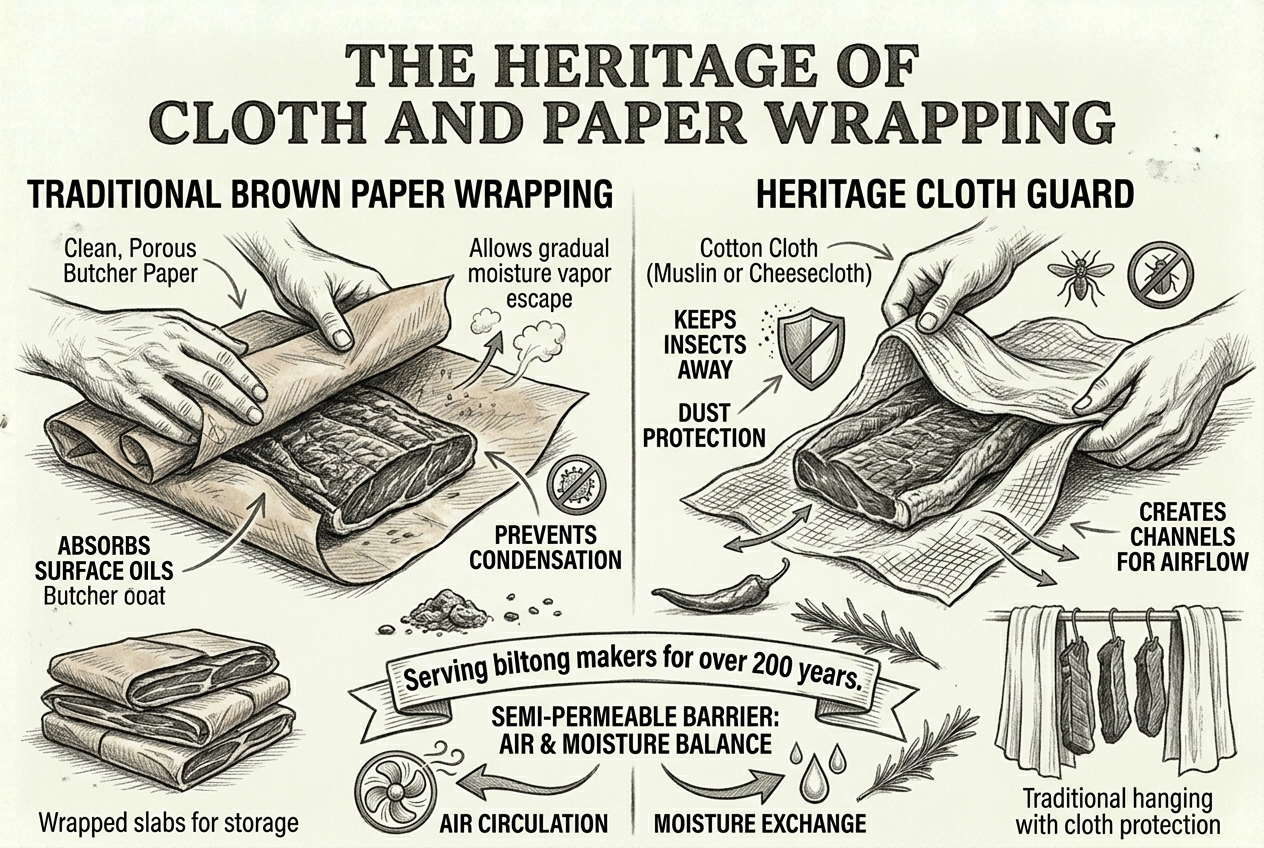
Cotton cloth and brown paper have served as biltong’s guardians for over 200 years, protecting the meat while allowing essential air circulation. These materials create a semi-permeable barrier that prevents contamination without completely sealing off moisture exchange.
Brown paper, particularly butcher paper, offers excellent breathability while absorbing excess surface oils. The paper’s porous structure allows moisture vapor to escape gradually, preventing the condensation buildup that can lead to spoilage. Many families who make their own biltong still swear by this method, wrapping individual slabs in clean butcher paper before storing them.
Cotton cloth provides similar benefits with added durability. Traditional biltong makers often use cheesecloth or muslin, materials that allow air movement while keeping dust and insects at bay. The fabric’s weave creates tiny channels for airflow, maintaining the delicate balance between protection and ventilation that proper biltong storage requires.
How Air Circulation Affects Moisture Control
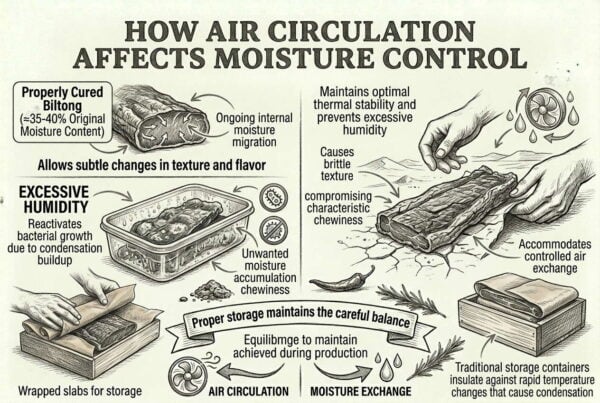
Infographic explaining how proper air circulation and humidity control improve biltong storage methods and preserve quality.
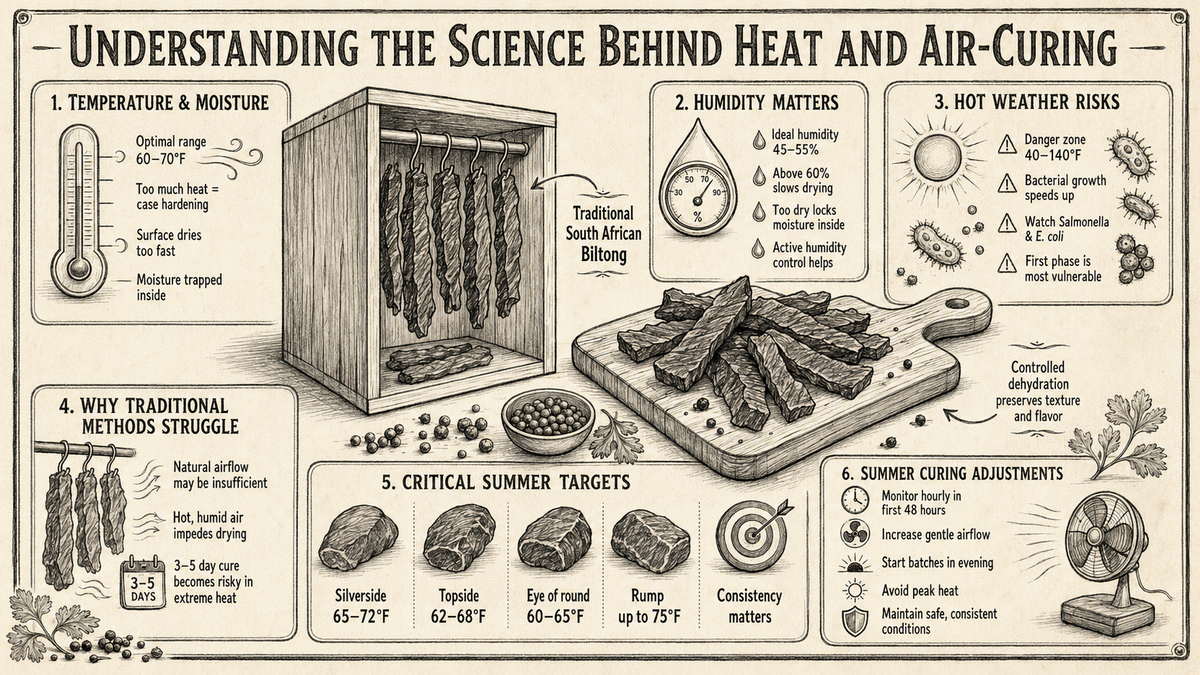
Understanding moisture dynamics is crucial for successful biltong storage. Traditional methods recognize that completely stopping air circulation can disrupt the meat’s natural equilibrium, potentially causing texture changes or unwanted moisture accumulation.
Properly cured biltong contains approximately 35-40% of its original moisture content. This remaining moisture continues to migrate through the meat fibers, creating subtle changes in texture and flavor over time. Traditional storage methods accommodate this ongoing process by allowing controlled air exchange.
The science of air-drying extends beyond the initial curing phase; proper storage maintains the careful balance achieved during production. Excessive humidity can reactivate bacterial growth, while overly dry conditions can make the meat brittle and compromise its characteristic chewiness.
Temperature fluctuations also play a role. Traditional storage containers, often made from wood or cardboard, provide insulation against rapid temperature changes that could cause moisture condensation. This thermal stability helps maintain a consistent texture across different storage environments.
Traditional Storage Containers and Materials
Wooden boxes remain the gold standard for traditional biltong storage, offering natural moisture regulation through their porous structure. Cedar and pine varieties are particularly prized for their antimicrobial properties and pleasant aroma that complements rather than masks the meat’s flavor.
Cardboard containers, while less romantic than wooden boxes, provide similar benefits at a fraction of the cost. The corrugated structure creates air pockets that help regulate temperature, while the cardboard itself absorbs excess moisture. Many commercial producers still use cardboard packaging for this reason.
Clay pots and ceramic containers offer another traditional option, particularly popular in rural areas. These materials naturally regulate humidity while providing excellent protection from temperature extremes. The thick walls create a stable microenvironment that many consider ideal for long-term storage.
When Conventional Methods Work Best
Traditional storage methods excel in specific situations where their unique characteristics provide clear advantages. Short-term storage (under two weeks) often benefits from conventional approaches, especially when the biltong will be consumed relatively quickly.
Climate plays a significant role in method selection. Areas with stable, moderate humidity, such as many parts of Escondido, often favor traditional storage, as the environment naturally supports proper moisture balance. The gentle air circulation provided by cloth or paper wrapping works particularly well in these conditions.
Artisanal producers frequently prefer traditional methods to maintain authenticity and showcase their commitment to heritage techniques. The visual appeal of brown paper packages or cloth-wrapped biltong reinforces the product’s traditional roots and values of craftsmanship.
Understanding different texture preferences also influences storage choice. Traditional methods allow for gradual texture evolution, which some consumers prefer over the static preservation offered by more modern techniques.
The Science Behind Vacuum Sealing for Biltong
How Vacuum Sealing Removes Oxygen Exposure

Infographic comparing air-curing and vacuum sealing biltong storage methods to show how oxygen removal affects freshness, flavor, and texture.
Vacuum sealing creates an anaerobic environment by removing virtually all oxygen from the packaging, typically reducing oxygen levels to below 1%. This process fundamentally changes how South African beef biltong interacts with its storage environment compared to traditional air-curing methods.
The removal of oxygen prevents oxidative reactions that would otherwise degrade the meat’s surface proteins and fats. Without oxygen, the Maillard reactions that continue post-production are significantly slowed, preserving the biltong’s characteristic texture and preventing the development of off-flavors that arise when amino acids react with oxygen over extended periods.
Commercial vacuum sealers achieve this by drawing air out through specialized pumps, creating negative pressure within the packaging. The process typically removes 99.9% of the available oxygen, creating an environment in which aerobic bacteria cannot survive. This controlled atmosphere essentially pauses the natural aging process that occurs in traditional cloth wrapping, where constant air exchange continues to slowly modify the meat’s composition.
Modern vacuum sealing equipment uses graduated pressure cycles to avoid crushing delicate biltong pieces while still achieving maximum oxygen removal. The technology specifically addresses the challenge of preserving air-cured meats without compromising their structural integrity during sealing.
Traditional biltong is best enjoyed with its natural texture intact. While vacuum sealing works well for whole slabs for long-term storage, we do not recommend it for sliced biltong. The pressure from vacuum sealing can compress the delicate meat fibers and alter the authentic eating experience that makes biltong unique.
Why avoid vacuum sealing sliced biltong?
- Compresses the natural texture of the meat
- Causes slices to stick together
- May affect the natural flavor and aroma of the beef
- Can create a denser, slightly wetter mouthfeel
- Reduces the traditional artisanal character of biltong
For the best experience, store sliced biltong in a cool, dry place in a breathable or lightly sealed pouch and enjoy it fresh.
Impact on Flavor and Texture Preservation
Vacuum sealing locks in the complex flavor compounds developed during the traditional air-curing process. The absence of oxygen prevents volatile compounds from escaping, maintaining the distinctive taste profile that makes properly prepared biltong so appealing to consumers.
The controlled environment preserves moisture content at optimal levels, typically maintaining biltong at 35-40% moisture without further dehydration. Traditional cloth wrapping allows continued moisture loss, which can lead to over-drying and texture changes that make the meat tough or brittle over time.
Texture preservation occurs because vacuum sealing prevents the surface hardening that occurs as biltong continues to lose moisture during open-air storage. The consistent environment maintains the characteristic chewiness and prevents an overly dry exterior while keeping the interior properly cured.
However, vacuum sealing does create different textural conditions than traditional methods. The compressed environment can slightly alter the meat’s natural structure, sometimes creating a denser mouthfeel than cloth-wrapped biltong, which maintains its original air-dried texture through continued exposure to atmospheric conditions.
Extending Shelf Life Through Controlled Environment
Vacuum-sealed biltong typically maintains quality for 6-12 months when stored properly, compared to 2-4 weeks for traditionally cloth-wrapped varieties. This extended shelf life results from eliminating aerobic bacterial growth and preventing mold development that can occur in humid conditions.
The controlled environment prevents contamination from environmental factors like dust, insects, and airborne bacteria that can affect traditionally stored biltong. This makes vacuum sealing particularly valuable for commercial operations serving the growing health-conscious market in Southern California, where consumers expect consistent quality and extended storage capabilities.
Temperature stability becomes less critical with vacuum sealing, as the absence of oxygen reduces the rate of chemical reactions that cause spoilage. While refrigeration still extends shelf life, vacuum-sealed biltong can safely be stored at room temperature for extended periods, unlike cloth-wrapped varieties that require careful climate control.
The sealed environment also prevents cross-contamination from other foods and eliminates the need for the constant air circulation required by traditional storage methods. This makes vacuum sealing ideal for consumers who want to understand the craftsmanship while enjoying convenient, long-term storage options.
Equipment Requirements and Setup
Professional vacuum sealing requires specialized equipment ranging from home-use chamber sealers ($200-500) to commercial-grade units ($1,000-5,000) used by artisan producers. The choice depends on volume requirements and desired vacuum levels, with chamber sealers providing superior results for biltong preservation.
Proper setup involves selecting appropriate barrier films that prevent oxygen transmission while maintaining seal integrity. Multi-layer films with oxygen-barrier properties work best, typically featuring nylon or polyethylene layers that resist punctures from biltong’s textured surfaces.
Temperature control during sealing prevents heat damage to the meat’s surface proteins. Quality vacuum sealers offer adjustable sealing temperatures and times to accommodate the specific requirements of air-cured meats without compromising their carefully developed characteristics.
Maintenance requirements include regular calibration of vacuum levels and replacement of sealing elements. Commercial operations need consistent monitoring to ensure each package achieves the oxygen levels necessary for optimal preservation, maintaining the quality standards that distinguish authentic traditional biltong from mass-produced alternatives.
Comparative Analysis: Preservation Performance
Moisture Retention and Texture Changes
The moisture content of properly air-cured biltong sits between 35-40%, creating that distinctive chewy texture. Vacuum sealing fundamentally alters this equilibrium by preventing natural moisture exchange with the environment. Within the sealed package, moisture redistributes unevenly, causing some pieces to become softer while others may develop harder spots.
Traditional cloth wrapping allows the biltong to continue its gentle drying process. The fabric acts like skin, permitting controlled moisture release while protecting from external humidity. This maintains the authentic texture that South African beef biltong enthusiasts expect – firm yet yielding, never soggy or overly tough.
Temperature fluctuations compound vacuum sealing challenges. When sealed biltong moves from refrigeration to room temperature, condensation forms inside the package. This trapped moisture creates localized soft spots that completely compromise the traditional texture profile.
Flavor Profile Maintenance Over Time
Flavor development in traditional air-curing relies on ongoing enzymatic processes that continue during storage. Cloth wrapping preserves these complex biochemical reactions, allowing the coriander, salt, and vinegar notes to mature and deepen over time. The natural breathability prevents flavor stagnation.
Vacuum sealing halts these processes abruptly. The absence of oxygen stops enzymatic activity, essentially freezing the flavor profile at the moment of sealing. While this prevents deterioration, it also eliminates the subtle flavor evolution that makes aged biltong superior to freshly dried product.
Commercial producers often package immediately after processing, which explains why store-bought versions taste flat compared to traditionally stored artisan biltong. The anaerobic environment also promotes different bacterial activity, potentially creating off-flavors that wouldn’t develop under normal air-curing conditions.
Salt migration patterns differ significantly between methods. In cloth-wrapped biltong, salt continues to distribute evenly throughout the meat. Vacuum-sealed products can develop salt concentration gradients, creating inconsistent seasoning from piece to piece.
Shelf Life Expectations for Each Method
Vacuum sealing extends theoretical shelf life to 6-12 months under refrigeration, making it attractive for commercial distribution. However, this extended timeframe often comes at the cost of quality degradation that isn’t immediately apparent.
Properly cloth-wrapped biltong maintains peak quality for 2-4 weeks at room temperature, or up to 8 weeks refrigerated. While shorter than vacuum-sealed alternatives, this timeframe aligns with natural consumption patterns and ensures an optimal eating experience throughout the storage period.
The key difference lies in the decline curves of quality. Vacuum-sealed biltong experiences gradual deterioration that may go unnoticed until significant flavor loss occurs. Traditional storage shows more obvious signs of quality decline, allowing consumers to identify optimal consumption windows.
Humidity control becomes critical for the success of cloth wrapping. San Diego County’s coastal climate, particularly in areas like Carlsbad and Escondido, provides naturally favorable conditions for traditional storage methods without additional environmental controls.
Storage Temperature Considerations
Traditional cloth wrapping performs optimally at a consistent room temperature between 65 and 75°F. Temperature stability matters more than absolute temperature; sudden changes cause expansion and contraction that can crack the meat’s surface and accelerate spoilage.
Vacuum-sealed biltong requires consistent refrigeration to maintain package integrity. Temperature cycling creates internal pressure changes that can compromise the seal or cause package ballooning. This dependence on refrigeration limits portability and increases storage complexity.
Thermal mass differences affect temperature stability. Cloth-wrapped biltong has natural thermal inertia that buffers against short-term temperature fluctuations. Vacuum packages, especially smaller portions, respond rapidly to ambient temperature changes.
Mold Prevention and Safety Factors
Surface mold prevention relies on different mechanisms for each method. Traditional wrapping allows beneficial surface bacteria to establish protective biofilms that compete with harmful organisms. This natural defense system has protected air-cured meats for centuries.
Vacuum sealing eliminates the risk of surface mold by removing oxygen, but creates conditions favorable for the growth of anaerobic bacteria. While less visible, these organisms can produce toxins without obvious spoilage indicators, potentially creating safety risks that aren’t immediately apparent.
Proper cloth selection and preparation significantly impact safety outcomes. Food-grade cotton or linen, properly cleaned and dried, provides the ideal balance of protection and breathability. Synthetic materials or improperly prepared cloths can trap moisture and promote harmful bacterial growth.
Quality indicators differ between methods. Traditional storage shows obvious signs of problems, visible mold, foul odors, or texture changes. Vacuum-sealed products may harbor issues without clear external indicators, requiring more sophisticated detection methods. Understanding these differences helps consumers make informed choices about their preferred storage approach based on their specific needs and consumption patterns.
Practical Implementation for Home and Commercial Use
Cost Analysis of Each Storage Method
The upfront investment for vacuum sealing equipment ranges from $30 for basic home models to $200 for commercial-grade units. Professional vacuum chamber systems used by larger operations can cost $500-$2,000, but these handle significant volume efficiently. Vacuum bags add ongoing costs of approximately $0.10-$0.25 per package, depending on size and quality.
Traditional cloth wrapping requires minimal initial investment. Quality cotton or muslin fabric costs $15-$25 per yard, with each yard producing 20-30 individual wraps. The fabric becomes reusable after proper washing, making the per-use cost negligible over time. However, cloth wrapping requires more labor time, particularly for commercial operations that process multiple batches daily.
For home users producing 2-5 pounds monthly, cloth wrapping offers the most economical approach. Commercial operations processing 50+ pounds weekly typically find vacuum sealing more cost-effective despite higher equipment costs, as labor savings offset material expenses. The break-even point usually occurs around 20-25 pounds of monthly production.
Equipment Investment and Maintenance
Vacuum sealers require regular maintenance to maintain proper sealing temperatures and suction power. Heating elements need replacement every 12-18 months with heavy use, costing $20-$40. Vacuum pumps require oil changes every 6 months for optimal performance, adding $15-$25 to operating costs.
Storage space considerations differ significantly between methods. Vacuum sealers need dedicated counter space and electrical access, while cloth wrapping requires only storage for fabric supplies. Chamber vacuum units demand substantial workspace but offer superior sealing consistency for commercial applications.
Cloth wrapping maintenance involves washing fabric every 3-4 uses to prevent flavor contamination and bacterial buildup. Quality cotton withstands 50+ washing cycles before replacement becomes necessary. The washing process requires careful attention to temperature control (cold water prevents shrinkage) and thorough drying to eliminate moisture retention.
Temperature control environments complement both methods differently. Vacuum-sealed South African beef biltong tolerates temperature fluctuations better, while cloth-wrapped products require consistent cool, dry conditions to prevent condensation buildup within the fabric layers.
Batch Size Considerations for Different Methods
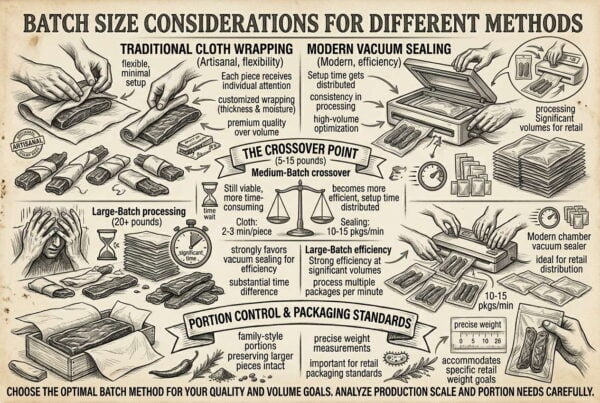
Comparison of biltong storage methods showing traditional cloth wrapping versus modern vacuum sealing for different batch sizes and efficiency levels.
Small-batch production (1-3 pounds) favors cloth wrapping due to its flexibility and minimal setup requirements. Each piece receives individual attention, allowing for customized wrapping based on thickness and moisture content. This method works particularly well for artisanal producers focusing on premium quality over volume.
Medium batches (5-15 pounds) represent the crossover point at which both methods remain viable. Vacuum sealing becomes more efficient as setup time gets distributed across multiple packages. Commercial operations often transition to vacuum sealing at this production level to maintain consistent processing times.
Large-batch processing (20+ pounds) strongly favors vacuum sealing for efficiency. Modern chamber vacuum units process 10-15 packages per minute, while cloth wrapping requires 2-3 minutes per piece for proper technique. The time difference becomes substantial when processing significant volumes for retail distribution.
Portion control varies between methods. Vacuum sealing easily accommodates precise weight measurements, which is important for retail packaging standards. Cloth wrapping works better for family-style portions where exact weights matter less than preserving larger pieces intact.
Portability and Travel Storage Solutions
Vacuum-sealed packages excel in travel situations due to their compact, sealed nature. The airtight barrier prevents odor transfer, which is crucial when packing biltong alongside other items. These packages withstand compression in luggage without compromising product integrity or creating a mess.
Cloth-wrapped biltong requires additional protective containers for travel, as the breathable fabric offers no barrier against external moisture or contamination. However, cloth wrapping allows easier access to portions during extended trips without compromising the package seal.
Temperature stability during transport differs significantly. Vacuum-sealed products maintain quality longer in warm vehicles or luggage, while cloth-wrapped items need consistent cool conditions to prevent accelerated moisture loss. This consideration is critical for Carlsbad residents traveling to warmer inland areas, where temperature control is challenging.
International travel regulations often favor vacuum-sealed products due to their commercial appearance and sealed packaging. Customs officials more readily accept professionally packaged items compared to cloth-wrapped products that may appear homemade or unregulated. Understanding proper processing techniques helps ensure travel compliance regardless of chosen storage method.
Best Practices for Different Biltong Types
Storage Guidelines for Wet vs Dry Biltong
The moisture content of your biltong determines everything about how you should store it. Wet biltong, with its higher moisture levels and softer texture, requires more aggressive protection against air exposure and bacterial growth. This type benefits significantly from vacuum sealing, which removes oxygen and creates an anaerobic environment that prevents spoilage.
Dry biltong presents different challenges. While it’s naturally more shelf-stable due to lower moisture content, it can quickly become too dry if stored improperly. Traditional cloth wrapping works exceptionally well here because it allows the biltong to maintain its ideal texture without becoming overly dehydrated. The breathable nature of cloth prevents condensation buildup while protecting against dust and contaminants.
For wet biltong stored in vacuum bags, consume within 5-7 days for optimal quality. The sealed environment preserves moisture and flavor but doesn’t stop all degradation processes. Dry biltong wrapped in cloth can maintain quality for 2-3 weeks when stored in cool, dry conditions typical of Carlsbad’s climate.
Temperature control becomes critical with wet varieties. Store vacuum-sealed wet biltong in refrigerated conditions between 35-40°F to slow bacterial growth. Dry biltong wrapped in cloth performs well at room temperature but should be kept away from heat sources and direct sunlight common in Southern California homes.
Handling Different Cut Thicknesses
Thick-cut biltong requires different storage considerations than thin strips. Thicker pieces retain more internal moisture even when the exterior appears properly dried. This internal moisture can create problems if stored incorrectly, leading to spoilage from the inside out.
Vacuum sealing works particularly well for thick-cut pieces because it prevents air pockets from forming around irregular surfaces. The tight seal ensures even protection across the entire surface area. However, avoid over-compressing thick cuts during vacuum sealing, as this can damage the meat’s structure and create uneven textures.
Thin-cut biltong strips present opposite challenges. These pieces dry more completely during production but can become brittle quickly if exposed to low humidity. Traditional cloth wrapping provides gentle protection while allowing these delicate pieces to maintain their characteristic snap without becoming too hard.
When storing mixed thicknesses together, separate them by cut style rather than mixing different types in the same container. Thick pieces may release moisture that affects thin strips, creating uneven storage conditions. Consider using traditional preparation methods that account for variations in cut thickness from the outset.
Spiced and Flavored Varieties Storage Needs
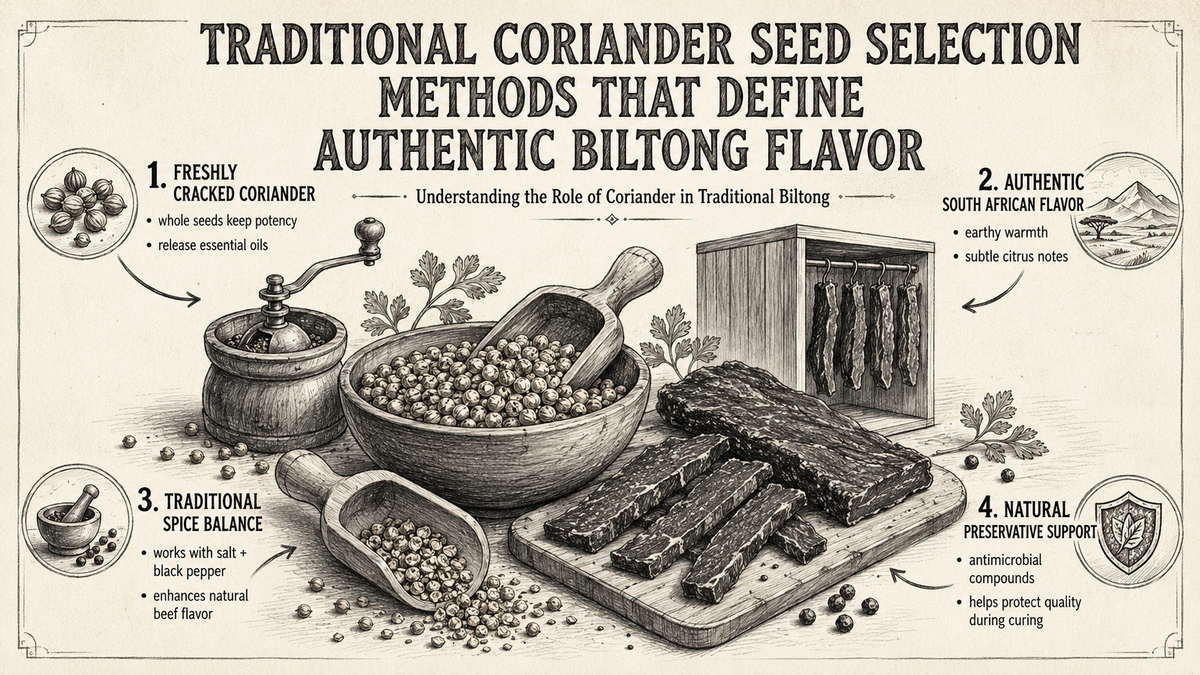
Heavily spiced biltong varieties require special attention because certain spices can affect storage longevity. Coriander-heavy varieties tend to maintain their flavor profile better in cloth wrapping, which allows the spices to continue developing subtle flavor changes over time. This natural aging process enhances the complexity that makes spiced biltong distinctive.
Vacuum sealing spiced varieties can sometimes intensify flavors to undesirable levels. The sealed environment concentrates volatile compounds from spices, potentially creating overpowering taste profiles. If you choose vacuum sealing for spiced varieties, consume them more quickly to prevent flavor concentration from becoming overwhelming.
Chili-based varieties present unique considerations. The capsaicin in chili can continue affecting the meat even during storage, potentially increasing heat levels over time. Cloth wrapping allows some of these volatile compounds to dissipate naturally, maintaining a more balanced heat profile.
Sweet or herb-infused varieties often benefit from vacuum sealing because it preserves delicate flavor compounds that might otherwise fade. The sealed environment prevents oxidation of herbs and maintains the integrity of subtle sweet notes that could be lost through air exposure.
Droëwors and Specialty Products Considerations
Droëwors requires completely different storage approaches due to its unique shape and texture. The long, thin format creates multiple surface areas where moisture can escape or enter, making consistent storage conditions critical. Traditional hanging methods work well for short-term storage, but longer preservation requires more controlled environments.
Vacuum sealing droëwors presents technical challenges because the cylindrical shape doesn’t pack efficiently. Consider cutting into smaller segments before vacuum sealing, though this affects presentation. Alternatively, use cloth wrapping, paying careful attention to maintaining the coiled shape and ensuring even coverage.
Specialty products like biltong powder or shredded varieties need moisture protection above all else. These processed forms have increased surface area, making them more susceptible to changes in humidity. Vacuum sealing works exceptionally well here, creating airtight conditions that preserve texture and prevent clumping.
Game meat biltongs often have different fat content than traditional South African beef biltong, affecting storage requirements. Higher-fat-content varieties benefit from refrigerated storage regardless of the wrapping method, while leaner game meats can handle room-temperature storage similar to traditional beef varieties.
Making the Right Choice for Your Needs
Matching Storage Method to Consumption Timeline
Your consumption timeline determines which storage method delivers optimal results for your South African beef biltong. For quick consumption within two weeks, traditional cloth wrapping maintains the perfect balance of texture while allowing continued air circulation. The natural breathing process keeps biltong at its peak eating condition.
Vacuum sealing is the superior choice for longer storage periods beyond a month. The complete removal of oxygen halts oxidation processes that would otherwise compromise flavor development. Commercial producers typically recommend vacuum sealing for any biltong intended for storage beyond the initial aging period.
Intermediate timelines (two to four weeks) benefit from a nuanced approach. Start with cloth wrapping for the first week to complete the natural drying process, then transition to vacuum sealing for extended preservation. This hybrid timing captures the advantages of both methods in their respective phases.
Seasonal and Climate Considerations
California’s diverse climate patterns significantly impact biltong storage decisions throughout the year. During humid summer months in coastal areas like Carlsbad, vacuum sealing provides crucial protection against moisture reabsorption that could compromise texture and safety. The sealed environment prevents humidity from undoing the careful air-curing process.
Winter months with lower humidity levels favor traditional cloth wrapping methods. The drier air naturally supports continued preservation while maintaining optimal texture development. Inland areas like Escondido experience more pronounced seasonal variations, requiring adjustments to storage methods based on current humidity levels.
Temperature fluctuations also influence storage choices. Consistent cool temperatures support the effectiveness of cloth wrapping, while areas experiencing temperature swings benefit from the protective barrier of vacuum sealing. Monitor local conditions and adjust your storage approach accordingly for optimal results.
Commercial vs Home Production Requirements
Commercial biltong production requires packaging for distribution and retail. The extended shelf life enables a broader market reach while maintaining consistent quality standards. Professional producers use specialized vacuum equipment that removes more oxygen than home units, resulting in superior preservation.
Home production offers flexibility in choosing methods that align with personal preferences and consumption patterns. Small batches consumed quickly benefit from cloth wrapping’s texture advantages. The traditional approach connects home producers with authentic South African methods while delivering exceptional eating experiences.
Regulatory considerations often dictate commercial storage approaches. Food safety requirements and insurance standards typically mandate vacuum sealing for products entering retail channels. Home producers operate under different guidelines, allowing them to experiment with traditional methods that commercial operations cannot practically implement.
Hybrid Approaches and When to Switch Methods
Combining storage methods maximizes biltong quality throughout different phases. Begin with cloth wrapping during the initial settling period (first 3-7 days) to complete moisture equilibration. This allows natural enzymes to finish their flavor development work while maintaining proper texture.
Switch to vacuum sealing once biltong reaches optimal dryness and flavor development. Signs indicating readiness for vacuum sealing include consistent texture throughout the piece, no surface moisture, and fully developed color. This transition point typically occurs within the first week of storage.
Portion-based approaches work well for larger batches. Vacuum seal portions intended for future consumption while keeping immediate-use quantities in cloth wrapping. This strategy ensures fresh-eating quality for current needs while protecting long-term storage portions.
Emergency switches become necessary when storage conditions change unexpectedly. Rising humidity or temperature fluctuations may require immediate transition to vacuum sealing to protect biltong quality. Keep vacuum sealing equipment readily available for these situations.
The choice between vacuum sealing and traditional cloth wrapping ultimately depends on your specific circumstances, consumption patterns, and quality priorities. Understanding the strengths of both methods allows you to make informed decisions that maximize your biltong enjoyment. Whether you prefer the authentic texture of cloth-wrapped biltong or the extended preservation of vacuum sealing, proper storage ensures every piece delivers the exceptional flavor that makes this traditional South African delicacy so remarkable.