Blog
Earth Day 2026 and the Environmental Benefits of Traditional Air-Curing Methods


Why Earth Day 2026 Matters for Traditional Food Preservation
The growing movement toward sustainable food practices
Earth Day 2026 arrives at a pivotal moment, as consumers scrutinize every aspect of their food choices. From carbon footprints to packaging waste, people want transparency about how their snacks impact the planet. This shift goes beyond trendy marketing; it’s driving real changes in how food producers approach everything from sourcing to processing.
The statistics tell a compelling story. Food production accounts for roughly 30% of global greenhouse gas emissions, with industrial processing contributing significantly to this footprint. But here’s what’s interesting: traditional preservation methods like air-curing require zero fossil fuels for processing. When artisanal producers create South African beef biltong using centuries-old techniques, they’re essentially eliminating the energy-intensive heating, smoking, or chemical treatments that define modern meat processing.
In Carlsbad and throughout Southern California, conscious consumers are discovering that sustainable snacking doesn’t mean compromising on taste or nutrition. They’re seeking products that align with their environmental values while delivering the protein and satisfaction they need.
How ancient preservation methods align with modern environmental goals
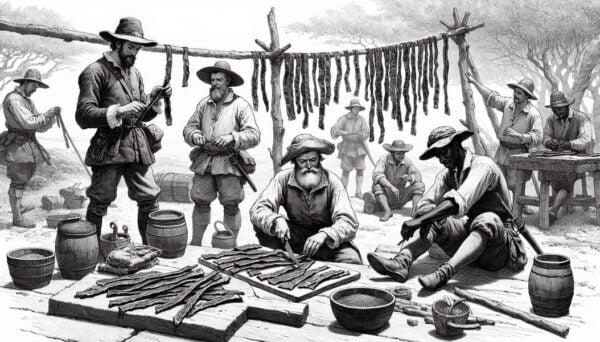 Traditional air-curing is one of humanity’s most elegant solutions for food preservation, and it’s incredibly eco-friendly. The process relies entirely on natural airflow, controlled humidity, and time to transform fresh meat into shelf-stable protein. No refrigerated trucks carrying products across continents. No industrial ovens consuming massive amounts of energy.
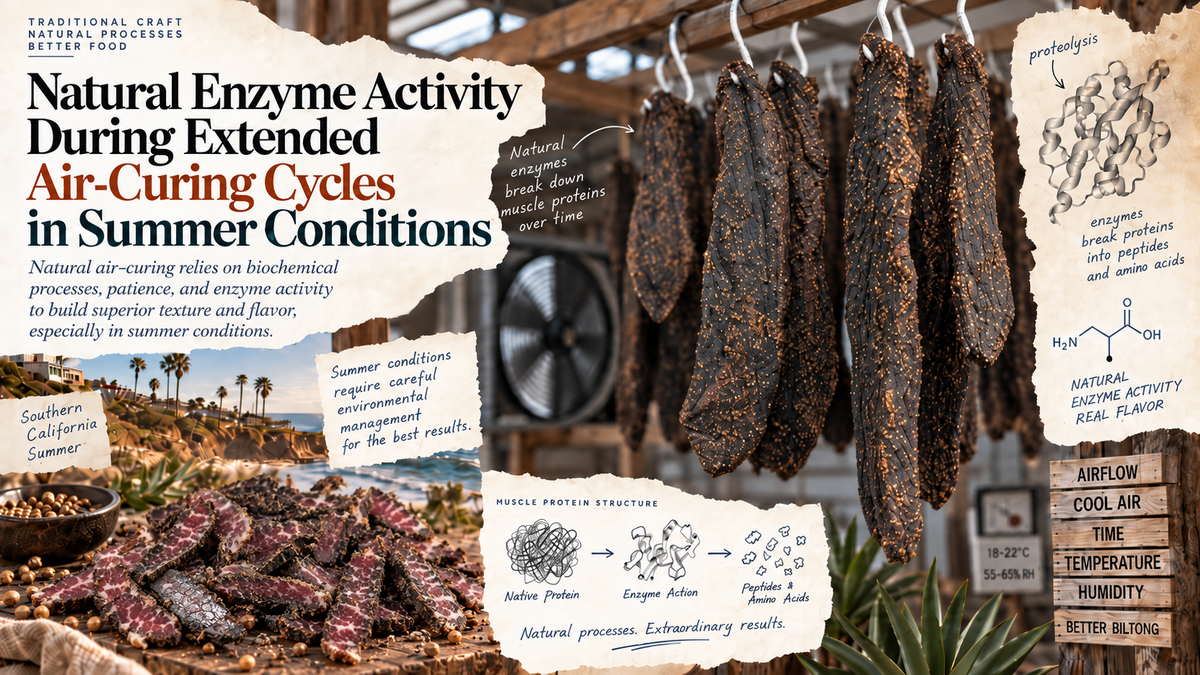
Consider the simplicity: quality cuts of beef, traditional spices like coriander and salt, and carefully controlled drying conditions. That’s it. The natural enzymes in the meat do the heavy lifting, breaking down proteins and developing complex flavors without any artificial intervention. This gentle process preserves nutritional value while creating a product that can last months without refrigeration.
What’s remarkable is how this ancient wisdom perfectly addresses today’s sustainability concerns. Air-curing requires minimal resources, produces virtually no waste, and creates products with incredibly long shelf lives. When you compare this to jerky production, which typically involves industrial dehydrators running for hours, the environmental advantages become crystal clear.
Traditional air-curing vs. industrial processing energy consumption
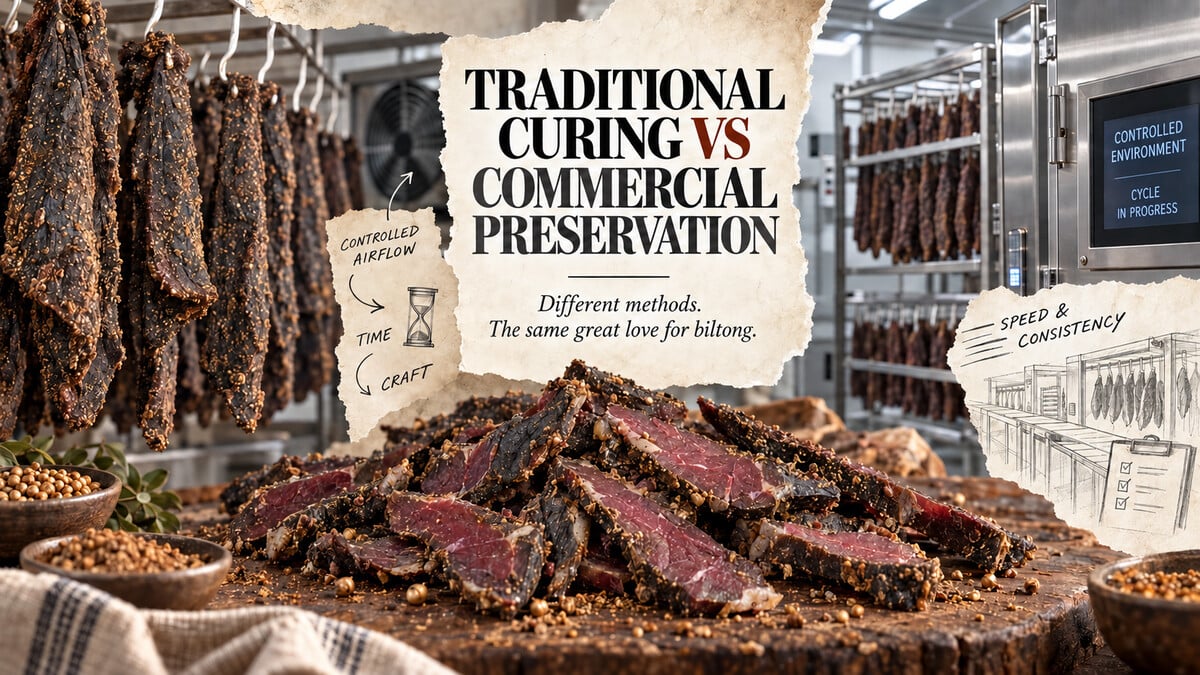
The energy comparison between traditional air-curing and industrial meat processing reveals dramatic differences. Commercial jerky production typically involves large-scale dehydrators operating at temperatures between 140 and 160°F for 6-12 hours. Factor in the energy needed for commercial refrigeration, packaging machinery, and climate-controlled storage, and the carbon footprint adds up quickly.
Air-curing takes a fundamentally different approach. The process relies on natural temperature control and airflow patterns, using ambient conditions to slowly remove moisture from properly seasoned meat. Quality traditional biltong develops its characteristic texture and flavor through weeks of careful monitoring rather than hours of intensive energy consumption.
Numbers matter to environmentally conscious consumers. While industrial facilities might process thousands of pounds per day, consuming significant amounts of electricity and gas, artisanal air-curing operations achieve similar preservation results with essentially zero direct energy input. This efficiency becomes even more impressive when you consider that air-cured products often have superior nutritional profiles and longer natural shelf lives.
The role of artisanal food makers in environmental stewardship
Small-batch producers practicing traditional air-curing methods are quietly leading a revolution in sustainable protein production. These artisanal makers aren’t just preserving culinary traditions; they’re demonstrating how time-tested techniques can address modern environmental challenges.
The stewardship extends beyond energy savings. Many traditional producers source locally when possible, reducing transportation emissions. They typically use minimal packaging and avoid the complex supply chains that characterize industrial food production. The commitment to quality naturally aligns with sustainable practices.
What’s particularly meaningful is how these producers connect consumers with the true environmental cost of their food choices. When you understand that your biltong was air-cured using methods that haven’t changed significantly in centuries, you’re experiencing food production at its most sustainable. No fossil fuels for heating.
No chemical preservatives requiring industrial synthesis. Just skillful application of natural processes that have sustained communities for generations.
This approach resonates strongly in environmentally conscious communities like Carlsbad and Escondido, where consumers increasingly value transparency and sustainability in their food choices. As Earth Day 2026 approaches, these artisanal producers represent a practical path toward more sustainable protein consumption.
The Environmental Impact of Traditional Air-Curing Methods
Zero electricity requirements for natural drying processes
Traditional air-curing requires no electrical power, making it one of the most environmentally sustainable preservation methods available. While commercial meat processing facilities consume massive amounts of energy through refrigeration units, dehydrators, and climate control systems, air-drying beef relies purely on natural airflow and ambient conditions.
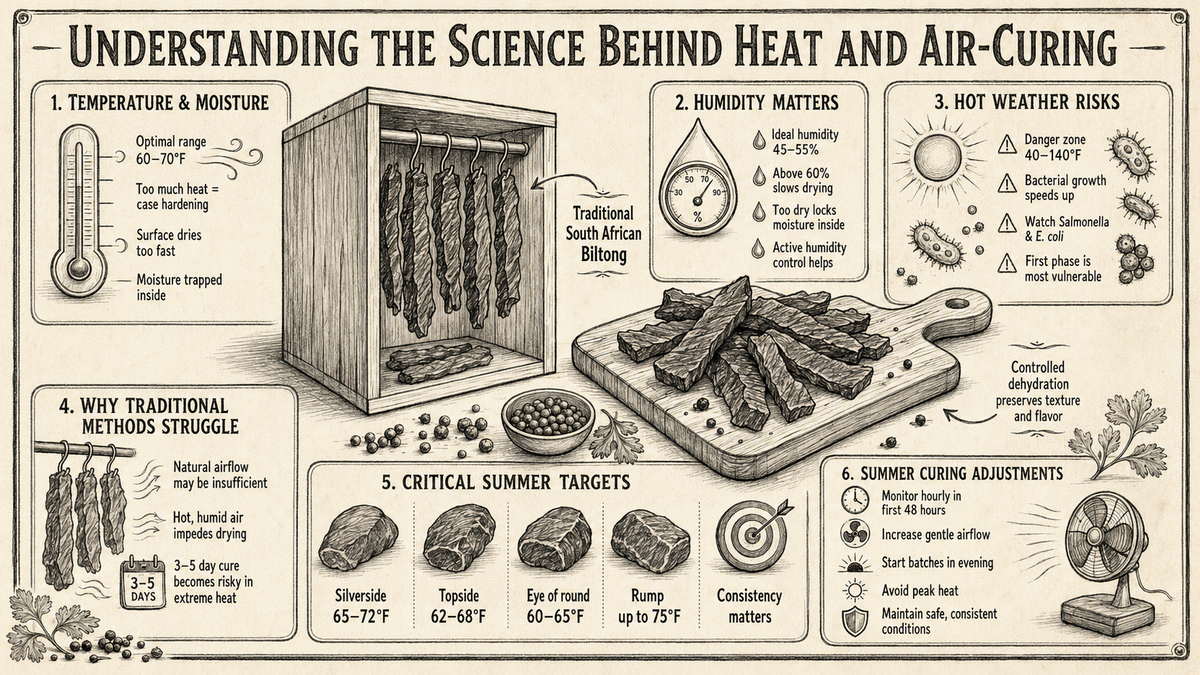
The process harnesses environmental factors that have preserved food for centuries. Controlled-temperature environments between 60 and 70°F, combined with proper air circulation, create optimal drying conditions without mechanical intervention. This natural approach eliminates the carbon emissions associated with continuous electrical consumption that characterizes modern meat processing facilities.
In regions like Carlsbad and Escondido, where mild coastal climates provide ideal conditions year-round, traditional air-curing becomes even more energy-efficient. The consistent temperatures and natural airflow patterns reduce reliance on artificial climate control, creating a preservation method that works in harmony with local environmental conditions rather than fighting against them.
Reduced carbon footprint compared to refrigerated preservation
The difference in carbon footprints between traditional air-curing and refrigerated preservation methods is dramatic. Commercial refrigeration systems require constant energy to maintain temperatures between 32-40°F, consuming approximately 4-6 kWh per day for standard processing facilities. When scaled across industrial meat-processing operations, this amounts to thousands of tons of CO2 emissions annually.
Traditional air-curing eliminates this entire energy requirement. The process creates shelf-stable products through natural moisture removal rather than temperature suppression. South African Beef Biltong is preserved through controlled dehydration, reducing water activity to levels where harmful bacteria cannot survive, without contributing to greenhouse gas emissions from energy consumption.
The transportation benefits compound these savings. Air-cured products maintain quality at room temperature, eliminating the need for refrigerated transport trucks that consume additional fuel, and maintaining cold chains. This creates cascading environmental benefits throughout the entire supply chain, from production facility to consumer.
Minimal packaging needs for naturally preserved meats
Air-cured meats require significantly less packaging material than their refrigerated counterparts. The natural preservation process creates products stable at ambient temperatures, eliminating the need for vacuum-sealed plastic containers, insulated packaging, and ice packs that characterize fresh meat distribution.
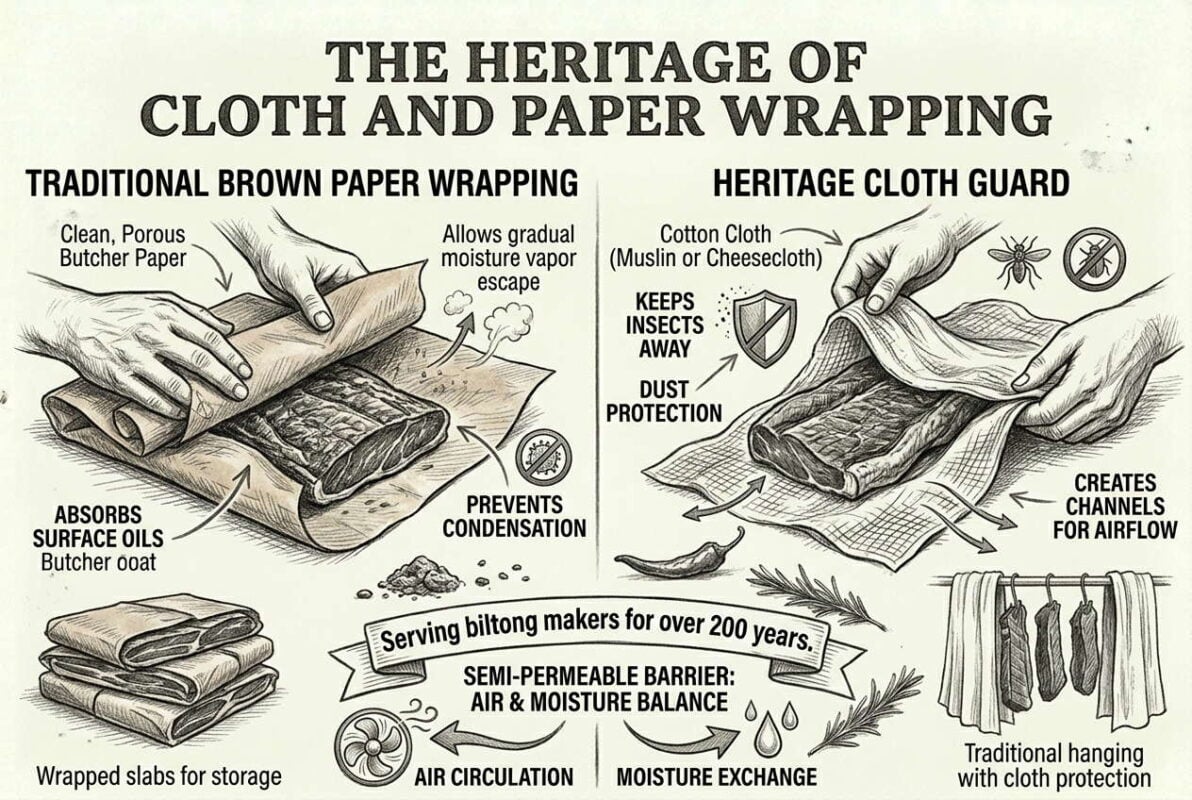
Traditional biltong packaging often consists of simple paper or minimal plastic wrapping, prioritizing breathability over airtight sealing. This approach reduces plastic waste while maintaining product integrity. The natural preservation properties mean products don’t require the multiple layers of protective packaging that are used to extend shelf life for less stable alternatives.
The packaging reduction extends beyond primary wrapping. Air-cured products don’t need styrofoam containers, absorbent pads, or the extensive secondary packaging required for temperature-sensitive items. This streamlined approach significantly reduces the environmental impact associated with packaging production, transportation, and disposal.
Water conservation benefits of dry-curing techniques
Traditional air-curing demonstrates remarkable water efficiency compared to industrial meat processing methods. While commercial facilities consume thousands of gallons of water daily for cleaning equipment, maintaining sanitation standards, and processing operations, traditional biltong craftsmanship requires minimal water use throughout the process.
The curing process itself removes moisture rather than adding it, creating products with extended shelf life through dehydration rather than chemical preservation, and thereby avoiding water-intensive mixing and application processes. This fundamental difference means traditional methods work with natural moisture content rather than fighting against it.
Water conservation becomes particularly significant in drought-prone regions of California, where every gallon counts. Traditional air-curing methods align with local water conservation efforts while producing superior protein products. The process transforms raw materials into shelf-stable nutrition without contributing to the water stress that affects many agricultural and food-processing operations.
The environmental benefits extend beyond direct water usage. Reduced wastewater production means less strain on treatment facilities and a lower risk of contaminated runoff affecting local ecosystems. This creates a more sustainable production model that respects both water resources and environmental protection goals.
How South African Biltong Traditions Support Sustainability
Heritage recipes that work with nature’s rhythms
Traditional South African beef biltong preparation follows seasonal patterns that have been refined over centuries. These heritage recipes align with natural weather cycles, using winter’s dry conditions and summer’s controlled humidity to create optimal curing environments. Rather than fighting against climate patterns, traditional methods work within them.
The timing of traditional biltong preparation reflects a deep understanding of environmental cycles. Early settlers learned to cure meat during specific weather windows when temperature and humidity created ideal conditions. This seasonal approach eliminates the need for energy-intensive climate control systems that modern commercial operations rely on.
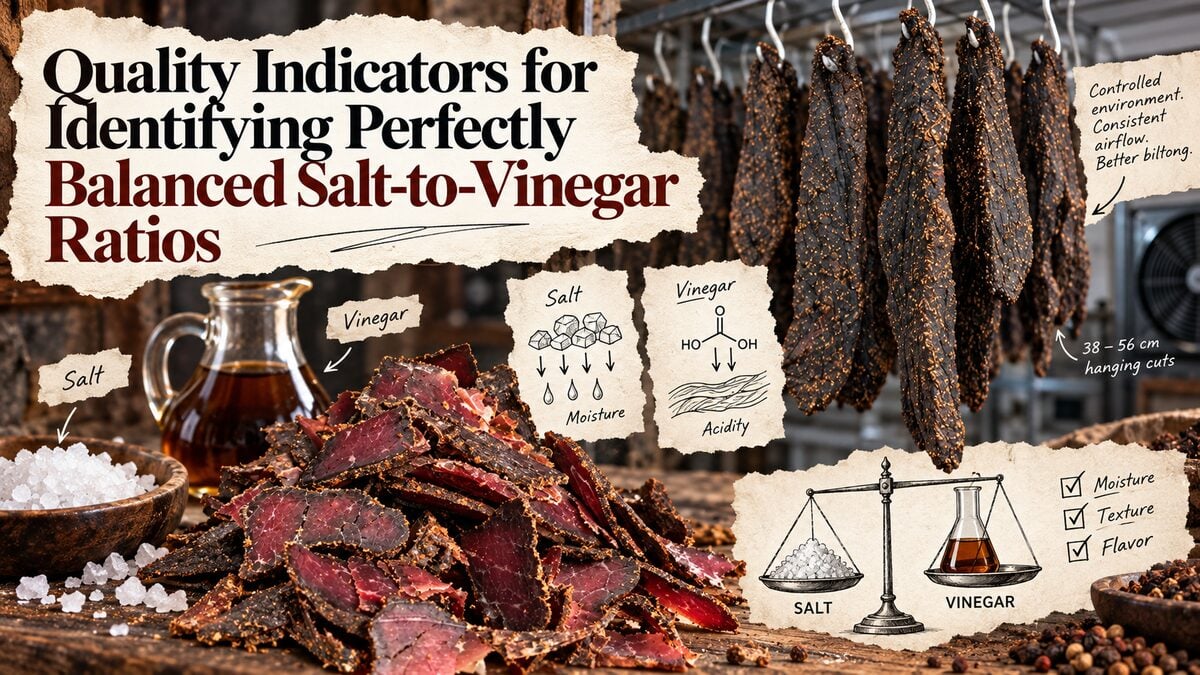
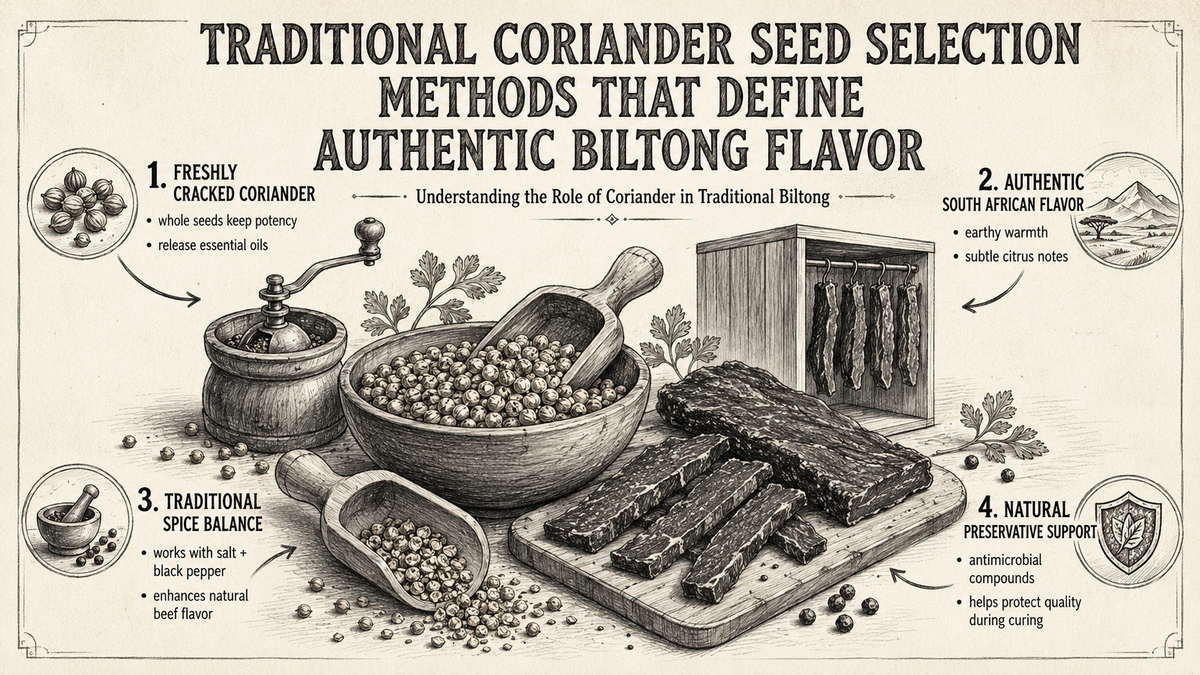
Heritage spice blends using coriander, salt, and vinegar create natural preservation without synthetic additives. These traditional combinations don’t just enhance flavor (they also support the natural curing process by creating antimicrobial environments). The simplicity of these recipes means fewer processed ingredients and reduced environmental impact from chemical production.
Using local climate conditions for optimal curing
Southern California’s Mediterranean climate offers unique advantages for traditional air-curing methods. The consistent temperatures and low humidity levels in areas like Carlsbad and Escondido create natural conditions similar to South Africa’s highveld regions, where biltong originated. This climate compatibility reduces the need for artificial environmental controls.
Traditional air-curing harnesses natural air circulation patterns rather than mechanical ventilation systems. The process relies on gentle airflow that naturally occurs in properly ventilated spaces, eliminating the energy consumption associated with electric fans and dehumidifiers. This approach creates superior texture while maintaining minimal environmental impact.
Temperature control in traditional methods relies on careful placement and timing rather than on heating or cooling systems. Curing rooms utilize thermal mass and natural insulation to maintain stable conditions. This passive approach to temperature management significantly reduces energy consumption compared to modern commercial drying facilities.
Humidity management in traditional air-curing occurs through natural moisture exchange with the environment. The meat releases moisture gradually while the surrounding air absorbs it naturally. This balance eliminates the need for powered dehumidification systems that consume substantial electricity.
Supporting local farmers and reducing food transportation
Traditional biltong production naturally supports local agricultural systems by sourcing animals from nearby farms. This localized approach reduces transportation distances and associated carbon emissions while supporting regional food security. Local sourcing also enables direct relationships between producers and suppliers.
Small-scale traditional operations require less infrastructure than industrial facilities, making them viable in more locations. This distributed production model reduces the need for long-distance shipping of finished products. Local production means fresher ingredients and shorter supply chains throughout the process.
The traditional emphasis on quality over quantity naturally supports sustainable farming practices. Producers focused on traditional methods often seek out grass-fed, pasture-raised animals that align with environmental stewardship values. This creates market demand for more sustainable agricultural practices.
Regional biltong traditions create economic opportunities for local farmers and small producers. Rather than competing with industrial agriculture, traditional methods offer alternative markets that value quality and sustainability over pure volume. This economic diversity strengthens local food systems and agricultural resilience.
Modern Applications of Time-Tested Preservation Techniques
Adapting traditional methods for contemporary kitchens
Converting centuries-old air-curing techniques for today’s home kitchens doesn’t require massive equipment or specialized rooms. Modern enthusiasts are discovering that traditional preservation methods work beautifully in standard residential spaces with simple modifications.
The key lies in creating controlled airflow using common household items. A spare bedroom or garage can become an effective curing environment by installing basic ventilation fans and maintaining steady temperatures between 60-70°F. Many Carlsbad residents are taking advantage of the region’s naturally low humidity, which creates ideal conditions for South African beef biltong production without additional dehumidification equipment.
Temperature regulation becomes manageable with digital thermostats and small space heaters or fans. The traditional approach emphasizes gentle, consistent conditions rather than rapid processing, making it perfectly suited for patient home crafters who want to create quality air-cured products without industrial infrastructure.
Smart monitoring systems now allow enthusiasts to track humidity and temperature remotely, ensuring optimal curing conditions even when away from home. This technology bridges traditional methods with contemporary convenience, maintaining the integrity of natural processes while adding modern precision.
Creating sustainable snack options for outdoor adventures

Hiker enjoying YEBO Peri-Peri Chili Bites with a rugged mountain landscape in the background.
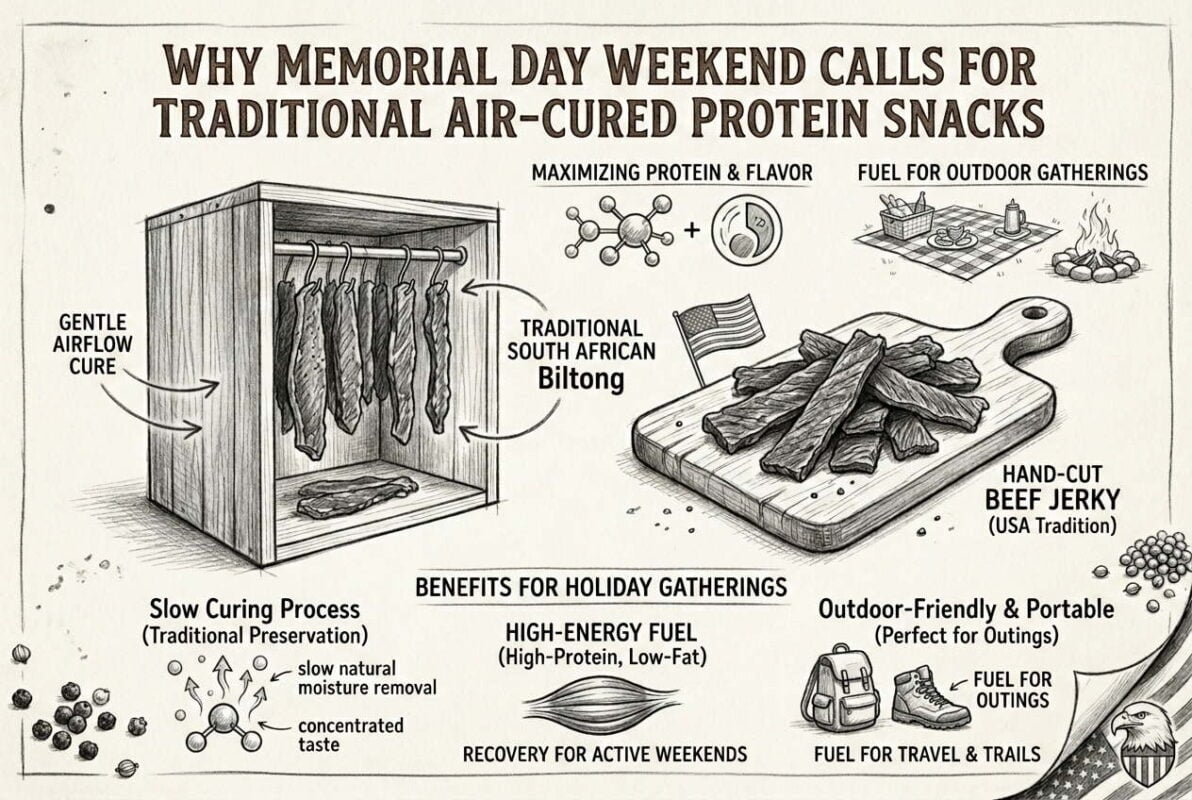
Air-cured meat represents the ultimate sustainable protein for outdoor enthusiasts, requiring no refrigeration and generating minimal packaging waste compared to commercial alternatives. Traditional preservation methods create lightweight, nutrient-dense foods perfect for hiking, camping, and extended outdoor activities throughout San Diego County’s diverse landscapes.
The natural curing process eliminates the need for chemical preservatives and excessive packaging materials common in mass-produced jerky products. A single batch of properly air-cured meat can provide weeks of protein-rich snacking without plastic wrappers, aluminum pouches, or synthetic additives that burden outdoor environments.
Environmental benefits extend beyond packaging reduction. Traditional air-curing methods consume significantly less energy than commercial dehydration processes, relying on natural airflow and ambient temperatures rather than electric heating elements running continuously for hours.
For Escondido outdoor groups planning multi-day adventures, air-cured proteins offer superior shelf stability and flavor complexity that commercial alternatives struggle to match. The traditional spice blends used in authentic recipes provide a sustained release of energy, making them ideal for extended physical activity in natural settings.
Building your own eco-friendly curing setup at home
Creating a sustainable home-curing environment requires minimal investment while delivering maximum environmental benefits. Start with repurposed materials like wooden dowels from old furniture projects or metal racks from unused appliances to create hanging systems for air-drying meat.
Ventilation systems can utilize solar-powered fans or strategically placed passive vents that harness natural air circulation patterns. This approach eliminates ongoing electrical consumption while maintaining the consistent airflow essential for proper curing. Many practitioners find that positioning their setup near windows with prevailing breezes creates adequate air movement without mechanical assistance.
Water conservation is automatic with traditional air-curing methods, as the natural dehydration process requires no washing, rinsing, or steam cleaning, which are associated with other preservation techniques. The minimal cleanup involves simple wiping of surfaces with natural vinegar solutions, avoiding harsh chemical cleaners.
Building materials should emphasize sustainability and food safety. Untreated hardwoods, stainless steel components, and natural fiber screening materials create durable systems that improve with age. These setups often become family heirlooms, passed down through generations of home preservation enthusiasts who value traditional craftsmanship and environmental responsibility.
Seasonal considerations for natural air-drying success
Understanding seasonal variations enables home practitioners to optimize their curing schedules while working in harmony with natural climate patterns. Southern California’s distinct dry and wet seasons create unique opportunities for air-curing success when properly timed.
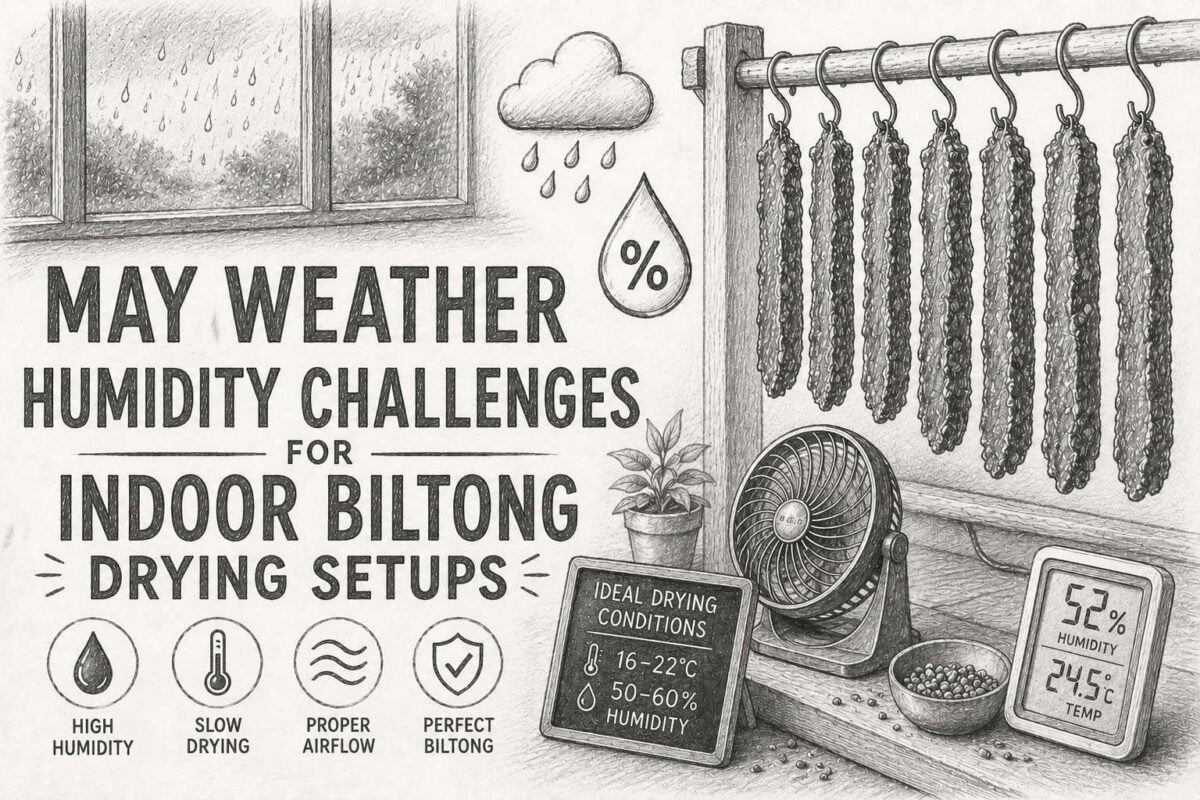
The fall and winter months provide ideal conditions with lower humidity and consistent temperatures. The natural cooling trends eliminate the need for energy-intensive climate control, allowing traditional methods to proceed with minimal environmental impact. Spring curing requires more attention to humidity fluctuations but rewards careful practitioners with exceptional flavor development.
Summer presents challenges but also opportunities for experienced curers who understand how to leverage natural air circulation patterns. Early-morning and late-evening processing takes advantage of cooler temperatures while avoiding midday heat that could compromise the gentle curing process.
Seasonal ingredient availability also influences traditional recipes. Local spice harvests, salt sourcing, and meat selection align with natural production cycles, creating truly sustainable food systems that minimize transportation impacts while maximizing freshness and quality.
Making Earth-Conscious Choices in Your Snacking Habits
Comparing the environmental cost of different protein snacks
When you’re standing in the snack aisle in Carlsbad, the environmental impact probably isn’t the first thing on your mind. But the difference between protein snacks is actually pretty dramatic when you look at the full picture.
Traditional South African beef biltong uses remarkably little energy compared to most commercial jerky. While industrial jerky operations rely on massive dehydrators running at high temperatures for extended periods, air-cured biltong essentially uses what nature provides. The energy footprint is minimal because the process operates under ambient conditions rather than against them.
Compare that to heavily processed protein bars, which often require multiple heating and cooling cycles, extensive packaging machinery, and the production of synthetic ingredients. The manufacturing chain for a typical protein bar involves more industrial steps than most people realize. Each ingredient might come from a different facility, each requiring its own energy-intensive processing.
Nuts and seeds represent a middle ground. While they’re often minimally processed, the water requirements for crops like almonds can be substantial. Traditional meat preservation, on the other hand, takes cuts that might otherwise be wasted and transforms them into shelf-stable protein without additional water inputs during processing.
Supporting businesses that prioritize traditional methods
Your purchasing decisions matter more than you might think. When you choose products made with traditional methods, you’re supporting a completely different approach to food production.
Small-scale operations using traditional air-curing processes typically have much smaller carbon footprints than industrial facilities. They’re not running massive conveyor systems, industrial-scale heating equipment, or complex packaging lines. The simplicity of the process translates directly into environmental benefits.
These businesses also tend to source more responsibly. Because traditional methods require higher-quality starting materials, producers often develop relationships with local suppliers who share similar values. You’re not just buying a snack; you’re supporting a supply chain that prioritizes quality over volume.
Look for companies that are transparent about their processes. The ones doing things the right way are usually proud to share exactly how their products are made. They’ll talk about air circulation, natural enzymes, and traditional spicing rather than hiding behind vague terms like “natural flavoring.”
Reading labels to identify truly sustainable products
Marketing teams have gotten pretty clever about making products sound eco-friendly when they’re not. Learning to read between the lines is crucial for making genuinely sustainable choices.
Start with the ingredient list. Truly traditional products have remarkably short ingredient lists. If you see a bunch of preservatives, artificial flavors, or chemical-sounding names, that’s a red flag. Authentic biltong typically contains meat, salt, vinegar, coriander, and maybe a few other traditional spices. That’s it.
Pay attention to processing claims, too. Terms like “slow-dried” or “naturally cured” are good signs, while phrases like “quick-processed” or “flash-dried” suggest energy-intensive methods. Traditional air-curing takes time precisely because it works with natural processes rather than forcing them.
Packaging matters as well. Excessive packaging, multiple wrapped layers, or non-recyclable materials suggest a company that prioritizes shelf appeal over environmental impact. Simple, functional packaging often indicates a focus on the product itself rather than marketing gimmicks.
Building a more environmentally conscious pantry
Creating a sustainable snack collection doesn’t mean sacrificing taste or convenience. It’s about making informed choices that align with your environmental values.
Start by evaluating your current snack habits. Which products do you reach for most often? Research the companies behind those products. Many people are surprised to discover how energy-intensive their favorite snacks actually are to produce.
Build around minimally processed options. Traditional air-cured meats, naturally dried fruits, raw nuts, and simple whole foods require far less industrial processing than their commercial counterparts. These foods also tend to be more satisfying, which means you’ll likely eat less overall.
Consider storage too. Products with longer shelf lives reduce food waste, which is a huge environmental win. Traditional preservation methods like air-curing create naturally shelf-stable foods without the need for artificial preservatives or energy-intensive storage requirements.
Don’t feel like you need to overhaul everything at once. Start by replacing one or two frequently consumed items with more sustainable alternatives. As you discover what works for your taste preferences and lifestyle, you can gradually expand your collection of earth-conscious choices.
Looking Forward: The Future of Sustainable Food Preservation
Innovation opportunities in traditional techniques
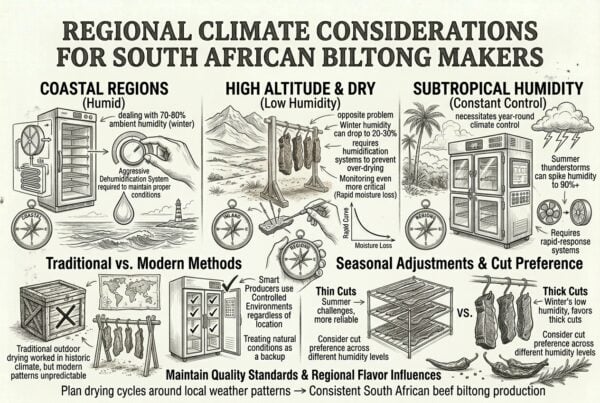
Infographic showing how South Africa’s diverse climates influence biltong drying, with tips for humidity control and consistent flavor year-round.
The marriage of ancient wisdom and modern innovation creates fascinating possibilities for sustainable food production. Traditional air-curing methods provide a foundation that food technologists and sustainability experts are building on, developing hybrid approaches that maintain environmental benefits while improving efficiency and scalability.
Smart monitoring systems now track humidity, temperature, and airflow in traditional curing environments without disrupting the natural process. These technologies help producers optimize conditions while preserving the integrity of time-tested methods. Some facilities integrate solar panels to power ventilation systems, creating completely renewable energy cycles for meat preservation.
Controlled-atmosphere packaging represents another frontier of innovation, in which traditional air-cured products maintain their natural qualities while extending shelf life through modified storage environments. This reduces food waste without compromising the chemical-free nature that makes traditional air-curing so appealing to environmentally conscious consumers.
Consumer demand driving eco-friendly food production
The shift toward sustainable consumption patterns is reshaping how food companies approach production methods. Consumers increasingly research the environmental impact of their dietary choices, creating market demand for transparency in processing methods and ingredient sourcing.
This conscious consumption trend particularly benefits traditional air-curing because the process aligns naturally with sustainability values. When people discover that South African beef biltong requires no artificial preservatives, synthetic additives, or energy-intensive heat processing, they recognize it as a genuine alternative to mass-produced snacks.
Social media amplifies this awareness, with sustainability-focused influencers and nutritionists highlighting the environmental advantages of choosing air-cured products. Food blogs and wellness platforms regularly feature comparisons showing how traditional preservation methods reduce carbon footprints compared to industrial processing.
Restaurant chains and specialty food retailers respond by featuring air-cured products more prominently and often include sustainability messaging in their marketing. This creates a positive feedback loop in which consumer education drives demand, encouraging more producers to adopt or maintain traditional methods.
Policy changes supporting sustainable food practices
Government initiatives increasingly recognize traditional food preservation methods as valuable components of sustainable food systems. Regulatory frameworks are evolving to support artisanal producers who use environmentally friendly techniques, often providing tax incentives or grants for operations that demonstrate lower environmental impact.
Agricultural policies in various regions now include provisions for supporting traditional knowledge systems, recognizing that indigenous and time-tested preservation methods often align with modern sustainability goals. These policies encourage documentation and preservation of traditional techniques while supporting their commercial viability.
International trade agreements increasingly include sustainability clauses that favor products with lower environmental footprints. This creates competitive advantages for traditionally processed foods in global markets, as importers and distributors seek products that meet stricter environmental standards.
Food safety regulations are also adapting to better accommodate traditional methods, recognizing that natural preservation techniques can achieve safety standards without relying on chemical interventions. This regulatory evolution removes barriers that previously disadvantaged traditional producers.
How individual choices create collective environmental impact
Every purchase decision represents a vote for the kind of food system we want to support. When individuals choose traditionally air-cured products over heavily processed alternatives, they contribute to a market signal that rewards sustainable practices and encourages more producers to adopt environmentally friendly methods.
The cumulative effect of conscious food choices extends beyond immediate environmental benefits. Supporting traditional air-curing helps preserve cultural knowledge and artisanal skills that might otherwise disappear, maintaining biodiversity in food production methods and reducing reliance on industrial systems.
Community-level impact becomes visible when local businesses stock more sustainable options in response to customer requests. This creates accessibility for other consumers who might not have previously considered the environmental implications of their snack choices, but become interested when better options are readily available.
Looking toward Earth Day 2026 and beyond, the food choices we make today shape the preservation landscape of tomorrow. Each time someone chooses air-cured products, they participate in a larger movement toward sustainable food systems that honor both environmental responsibility and culinary tradition. When individuals commit to sustainability, and that commitment spreads across communities like Carlsbad and Escondido, it creates the market conditions that help traditional preservation methods thrive today and contribute to a healthier planet for future generations.