Blog
May Weather Humidity Challenges for INdoor Biltong Drying Setups

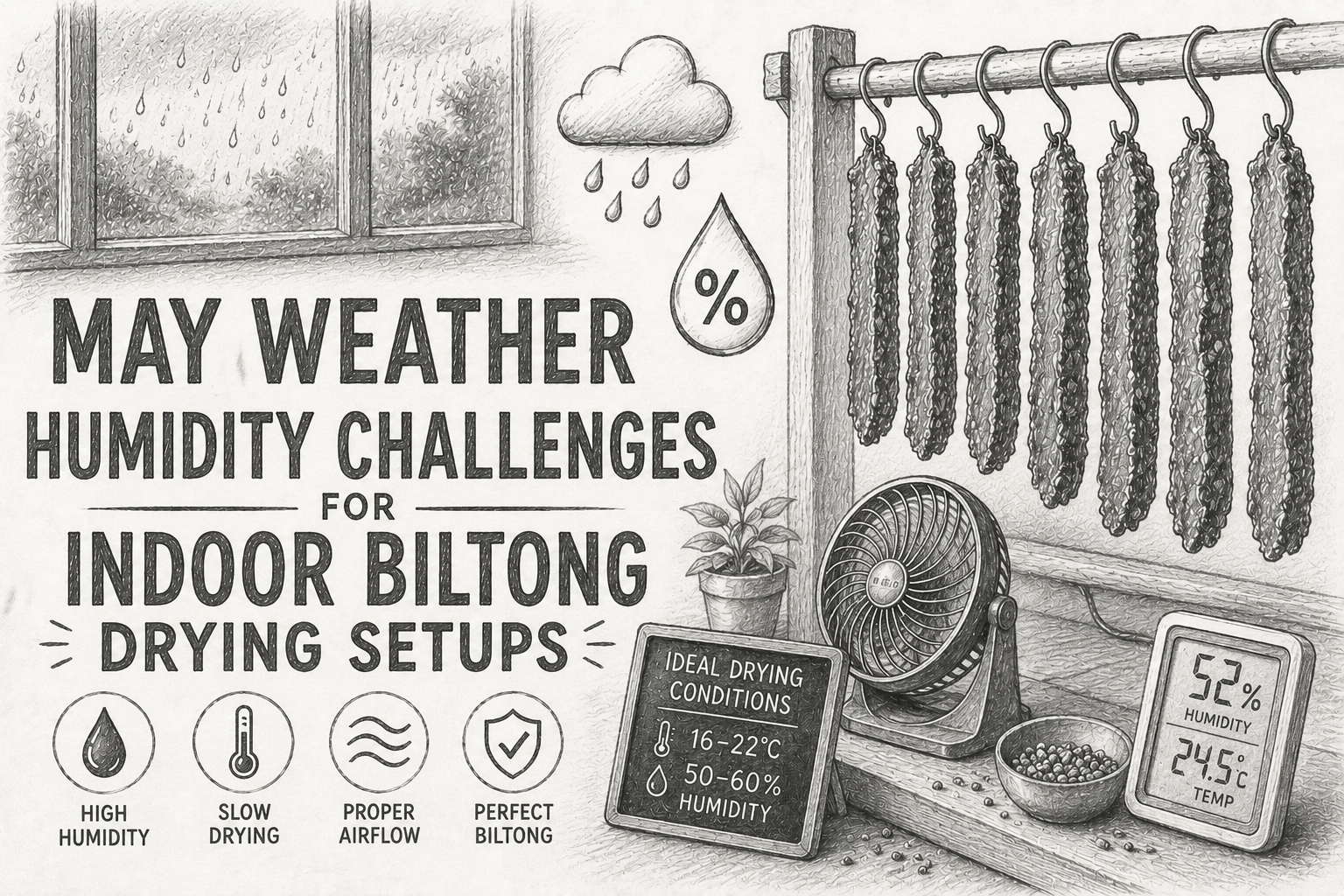
Understanding May’s Humidity Challenges for Indoor Biltong Making
Picture this: you’ve got your biltong strips hanging perfectly, the recipe nailed down to the last pinch of coriander, and then May weather rolls in with its sneaky humidity spikes. One day, your indoor setup is running perfectly, the next, you’re staring at meat that’s developing a slightly tacky surface instead of that beautiful dry exterior you’re after.
May presents a unique challenge for indoor biltong enthusiasts in Southern California. Even though the meat is drying indoors, changing outdoor weather still influences indoor humidity levels, especially in garages, spare rooms, laundry rooms, and utility spaces. Marine layers, warmer afternoons, and coastal moisture all affect your indoor drying environment.
The difference between perfectly cured biltong and a batch that ends up in the trash often comes down to controlling humidity, airflow, and temperature inside your drying area. Indoor setups offer much better consistency than outdoor drying, but May’s changing weather still requires careful monitoring and adjustments.
Why May Weather Creates Indoor Drying Challenges
May weather in Carlsbad and Escondido creates a tricky environment for traditional indoor air-curing methods. The month typically starts with dry spring conditions, but coastal marine layers become more frequent as summer approaches. Even indoors, these humidity shifts can raise moisture levels significantly.
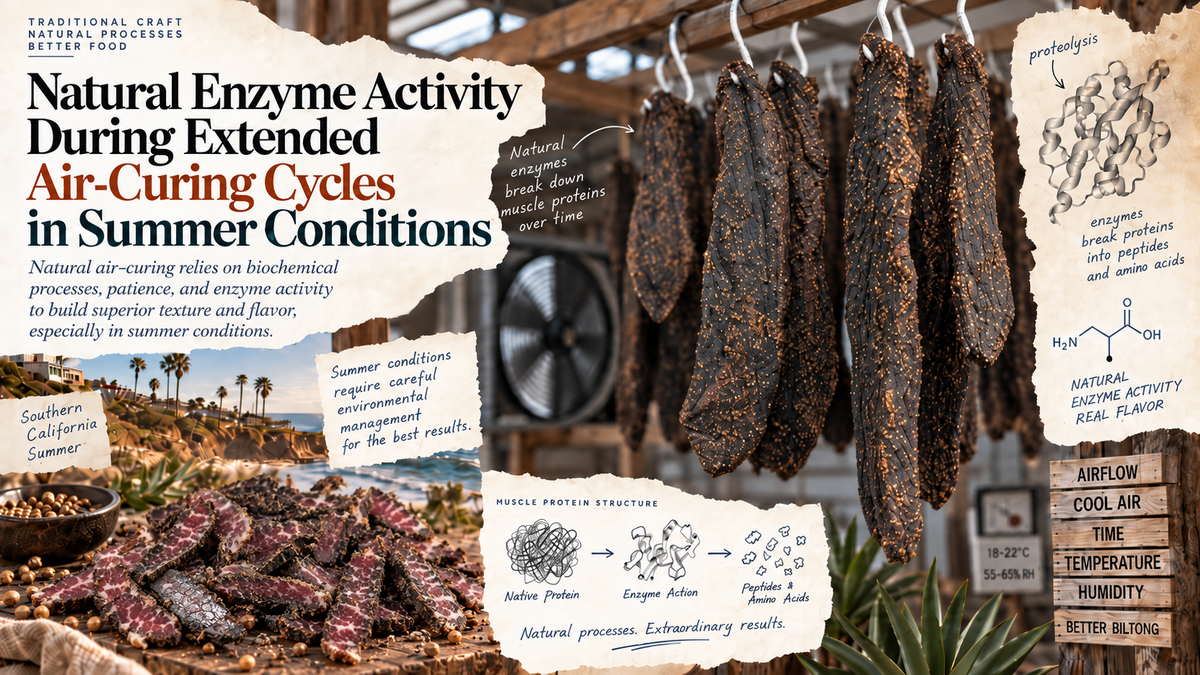
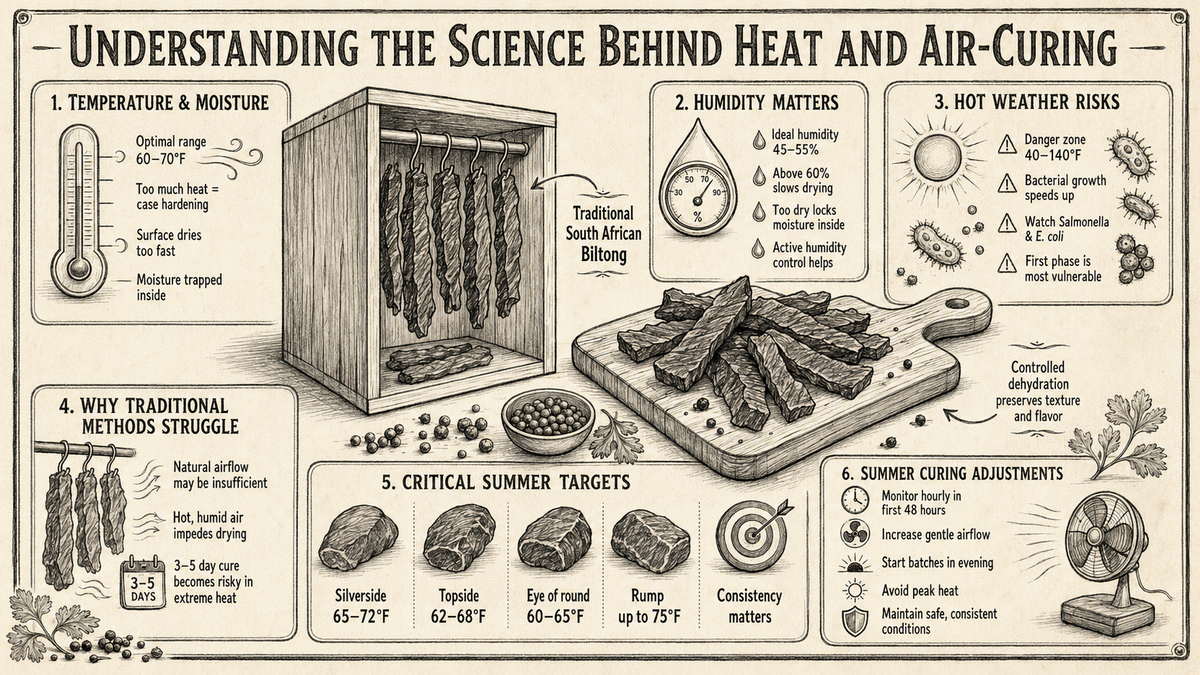
Temperature fluctuations add another layer of complexity. Indoor temperatures may start the morning at around 18°C, ideal for controlled drying, but rise to 24°C or higher during the afternoon. These changes affect drying speed and how moisture moves through the meat during the curing process.
Unlike outdoor setups that rely on natural breezes, indoor drying depends entirely on controlled airflow. If air circulation slows or humidity builds up in the room, moisture can settle around the meat, creating conditions in which spoilage organisms may grow rather than allowing proper preservation.
How Humidity Levels Affect Your Biltong Quality
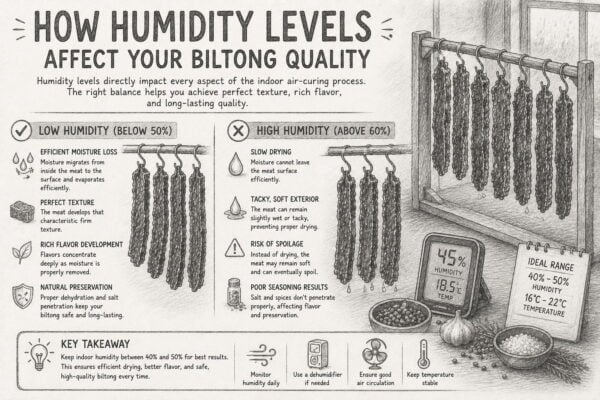
Illustrated guide showing how different humidity levels affect biltong drying, texture, flavor, and preservation.
Humidity levels directly impact every aspect of the indoor air-curing process. When indoor humidity stays below 50%, moisture naturally migrates from the meat’s interior to the surface, where it evaporates efficiently. The meat develops that characteristic firm texture while concentrating flavors and naturally preserving itself through dehydration.
But when indoor humidity creeps above 60%, the entire process slows dramatically. Moisture cannot leave the meat surface efficiently, creating a slightly wet or tacky exterior that prevents proper drying. Instead of developing deep, concentrated flavors, the meat can remain soft and may eventually spoil.
High humidity also affects how salt and spices interact with the meat. The traditional vinegar-and-spice mixture that gives biltong its distinctive flavor profile works best in a stable, controlled environment. Proper seasoning relies on controlled moisture loss to allow salt penetration and flavor development.
Reading the Signs: When Indoor Conditions Turn Against You
Experienced biltong makers learn to read their indoor drying conditions carefully. If your room feels damp, stuffy, or lacks air movement, your biltong is experiencing those same conditions.
Visual cues on the meat tell the story clearly. Properly drying biltong develops a darker, matte surface as moisture evaporates. If the surface remains shiny or develops a sticky feel after the first 24 hours, humidity levels are likely too high for safe curing.
Air circulation matters enormously indoors. Dead air combined with elevated humidity creates ideal conditions for spoilage. Your indoor setup needs continuous airflow to carry moisture away from the meat surface and maintain safe drying conditions.
The Science Behind Moisture and Meat Curing
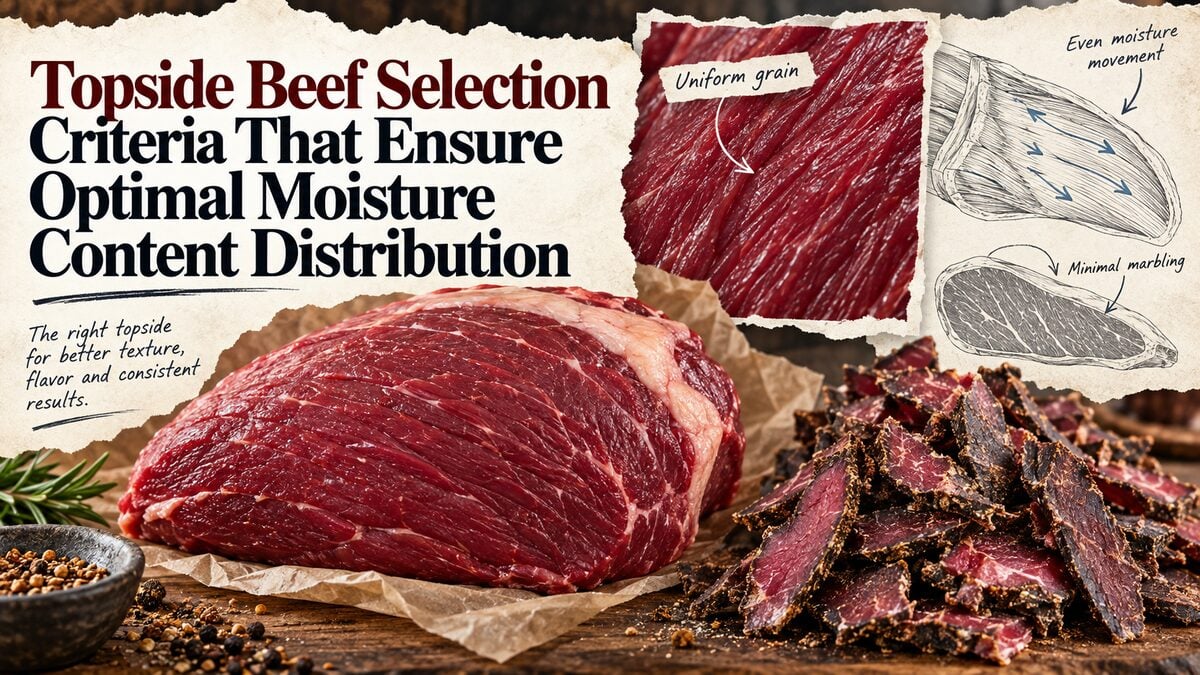
The science of indoor air-curing relies on controlled dehydration that concentrates proteins while creating an environment hostile to harmful bacteria. This process requires ambient humidity low enough to allow moisture to migrate from the meat’s interior to its surface, where it evaporates into the surrounding air.
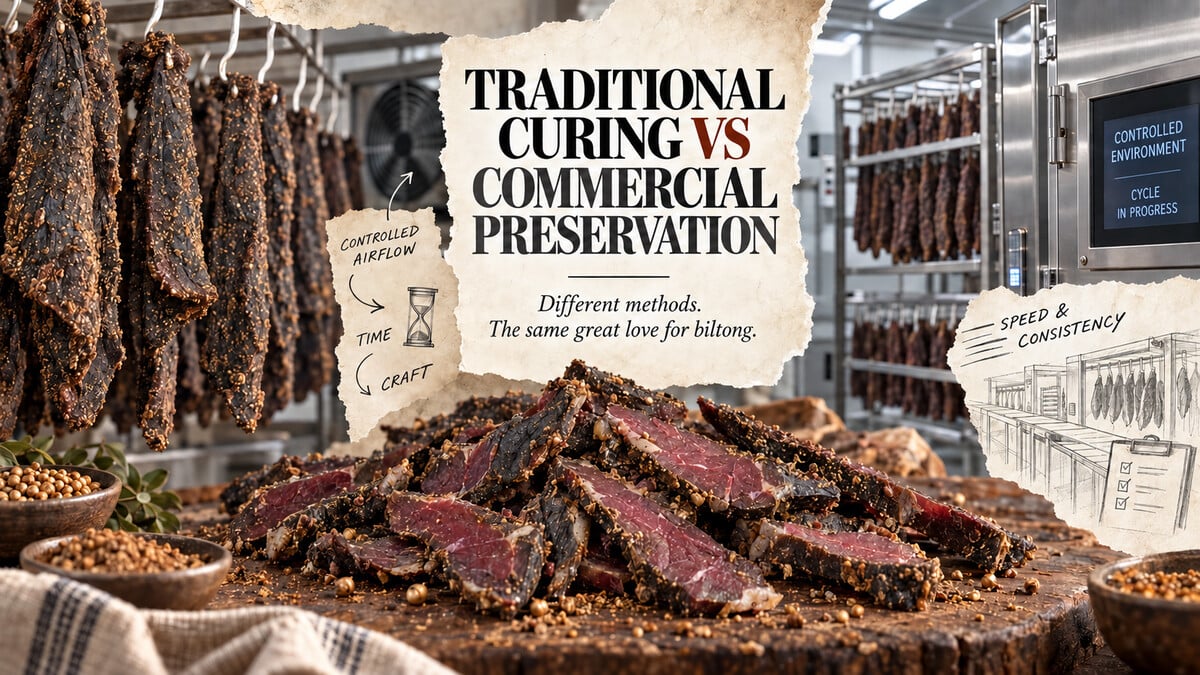
Traditional air-curing methods were developed in South Africa’s dry climate, where steady airflow and low humidity naturally supported the preservation process. Indoor setups attempt to recreate these conditions through fans, ventilation, and humidity control.
Temperature control works hand in hand with humidity management. Gentle warmth and constant airflow help accelerate drying, but excessive heat without proper ventilation can trap moisture inside the meat and increase the risk of spoilage.
Setting Up Your Indoor Biltong Box for Success
Choosing the Right Indoor Location
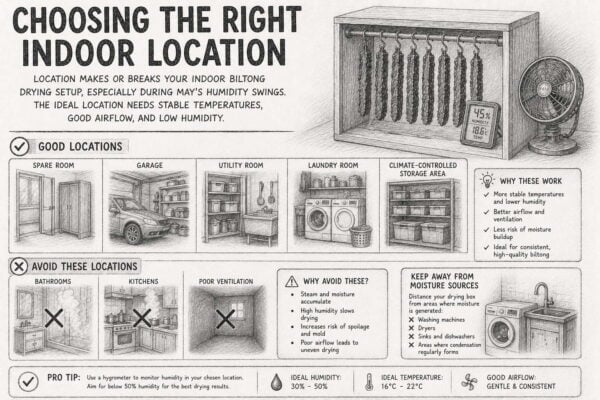
Guide showing how to choose the best indoor location for drying biltong, with tips on ideal humidity, temperature, and airflow.
Location makes or breaks your indoor biltong drying setup, especially during May’s humidity swings. The ideal location needs stable temperatures, good airflow, and low humidity.
Spare rooms, garages, utility rooms, laundry rooms, and climate-controlled storage areas often work best. Avoid bathrooms, kitchens, or rooms with poor ventilation, where steam and moisture regularly accumulate.
Air-conditioned spaces generally provide the most stable drying conditions because air conditioning naturally removes moisture from the air. Garages can also work well if they remain relatively dry and have adequate ventilation.
Distance from moisture sources matters. Keep your drying box away from washing machines, dryers, sinks, dishwashers, or areas where condensation regularly forms.
Essential Ventilation Modifications for Humid Weather
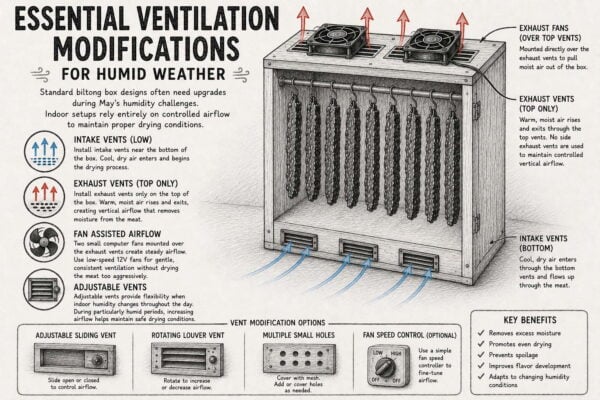
Illustrated guide showing how to improve biltong box airflow and ventilation for balanced drying and humidity control.
Standard biltong box designs often require upgrades during May’s humidity. Indoor setups rely entirely on controlled airflow to maintain proper drying conditions.
Install intake vents near the bottom of the box and exhaust vents near the top. This creates vertical airflow that continuously removes moisture released from the meat.
Small computer fans work exceptionally well for indoor biltong boxes. A low-speed 12V fan positioned near the exhaust area creates steady airflow without drying the meat too aggressively.
Adjustable vents provide flexibility when indoor humidity changes throughout the day. During particularly humid periods, increasing airflow helps maintain safe drying conditions.
DIY Solutions for Better Indoor Air Circulation
Passive airflow alone may not be enough during humid periods. Simple additions can significantly improve your indoor drying performance.
Install low-speed computer fans inside or near your drying box to create continuous air movement. Gentle airflow is ideal because aggressive airflow can cause case hardening, where the outside dries too quickly while the inside remains moist.
Create internal spacing channels using dowels or hanging rods positioned 10-15 cm apart. Proper spacing prevents dead air pockets and allows moisture to escape evenly from all surfaces of the meat.
Add moisture-absorbing materials nearby, such as silica gel containers or small dehumidifiers positioned close to the drying area. These help stabilize humidity in damp weather.
Avoid overcrowding the drying box. Each strip needs sufficient airflow around all sides to dry safely and evenly.
Protecting Your Indoor Setup from Excess Moisture
Indoor setups still require protection from environmental moisture. Coastal humidity, marine layers, and household moisture sources can all affect drying performance.
Use a dehumidifier if indoor humidity consistently rises above 60%. Even small household dehumidifiers can dramatically improve drying consistency during humid months.
Keep windows closed during humid mornings, especially when marine fog is present. Opening windows may introduce moisture rather than improve ventilation.
If your drying area is in a garage, avoid drying during periods when condensation forms on floors or walls. Moisture buildup in enclosed garages can interfere with proper curing.
Protect all electrical components from moisture. Fans and electrical connections should remain dry and elevated to prevent condensation.
Monitoring and Managing Moisture Levels
Simple Tools Every Biltong Maker Should Own
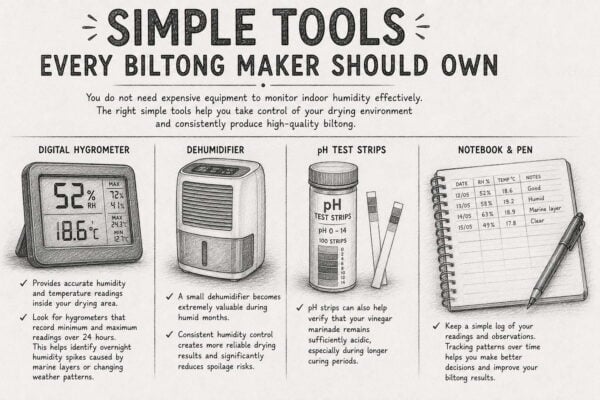
Illustrated guide showing simple tools for monitoring biltong drying humidity and improving homemade biltong quality.
You do not need expensive equipment to monitor indoor humidity effectively. A digital hygrometer provides accurate humidity and temperature readings inside your drying area.
Look for hygrometers that record minimum and maximum readings over 24 hours. This helps identify overnight spikes in humidity caused by marine layers or changing weather patterns.
A small dehumidifier becomes extremely valuable during humid months. Consistent humidity control yields more reliable drying results and significantly reduces the risk of spoilage.
pH strips can also help verify that your vinegar marinade remains sufficiently acidic, especially during longer curing periods.
Creating Your Daily Checking Routine
Check your drying environment at least twice daily. Morning checks are especially important because overnight humidity often rises significantly.
Record humidity and temperature readings regularly. Indoor humidity between 40% and 55% generally provides excellent drying conditions for biltong.
Touch-test the meat carefully during each inspection. Properly drying biltong should feel progressively firmer each day without becoming slimy or sticky.
Inspect all strips for even color development. Consistent airflow produces uniform darkening and shrinkage across the meat surface.
Document which areas inside your drying box dry the fastest. This helps optimize placement for future batches.
Warning Signs That Humidity Is Too High
White fuzzy growth on the surface signals mold development and indicates excessive humidity or inadequate airflow. Affected pieces should be removed immediately.
Unpleasant sour, rotten, or ammonia-like odors indicate bacterial growth rather than normal curing. Properly cured biltong should smell savory and meaty.
Strips that remain soft after several days usually indicate poor moisture removal. Healthy drying should produce gradual firming throughout the curing process.
Condensation inside the drying box is a major warning sign. Visible moisture accumulation creates unsafe drying conditions and significantly increases the risk of spoilage.
Temperatures consistently above 24°C combined with humidity above 65% create dangerous conditions for indoor air-curing.
Quick Fixes When Things Go Wrong
When humidity spikes unexpectedly, increase airflow immediately by adding fans or opening additional vents.
Reduce overcrowding inside the drying box. Wider spacing allows moisture to escape more efficiently.
Move your setup into a more climate-controlled room if necessary. Air-conditioned spaces often provide significantly better drying conditions during humid weather.
Use dehumidifiers near the drying area during periods of elevated humidity. Even a moderate reduction in humidity can dramatically improve drying performance.
If moisture levels remain too high, temporarily pause the drying process by refrigerating the partially dried strips until conditions improve.
Proven Techniques for Humid Season Success

Infographic showing proven biltong drying techniques for humid conditions, including spice adjustments, timing, salt ratios, and indoor airflow tips.
Adjusting Your Spice Mix for Better Preservation
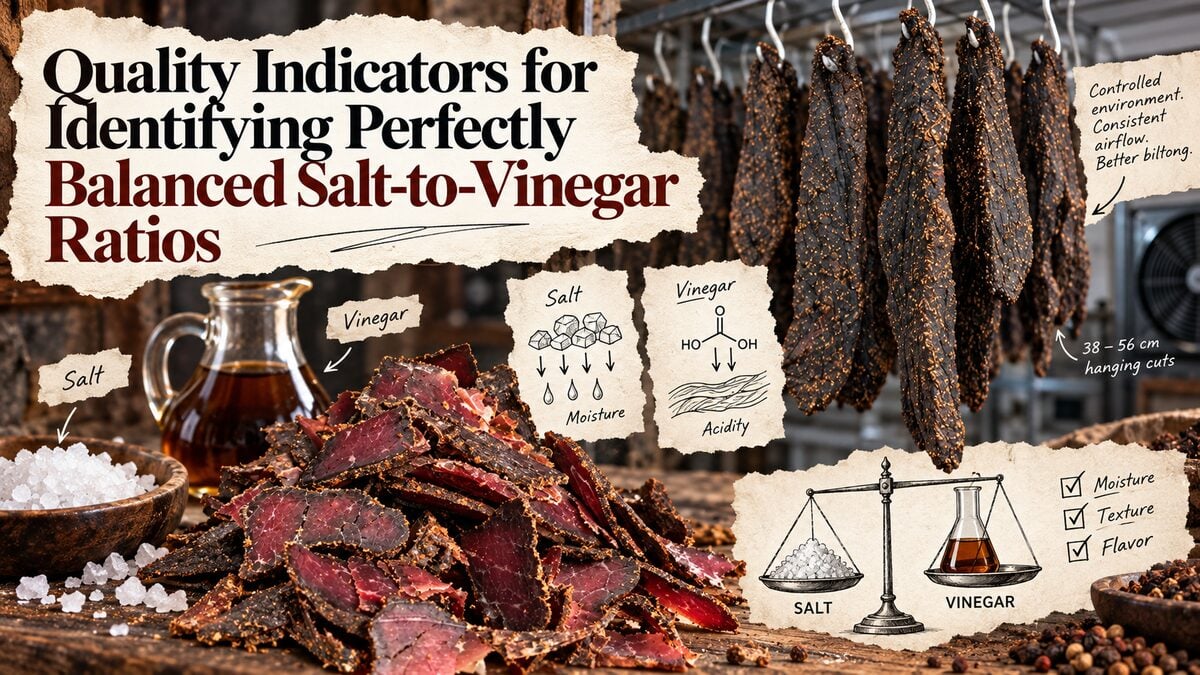
During humid periods, a slight increase in salt content can improve moisture extraction and preservation. Salt creates osmotic pressure that helps pull moisture from the meat.
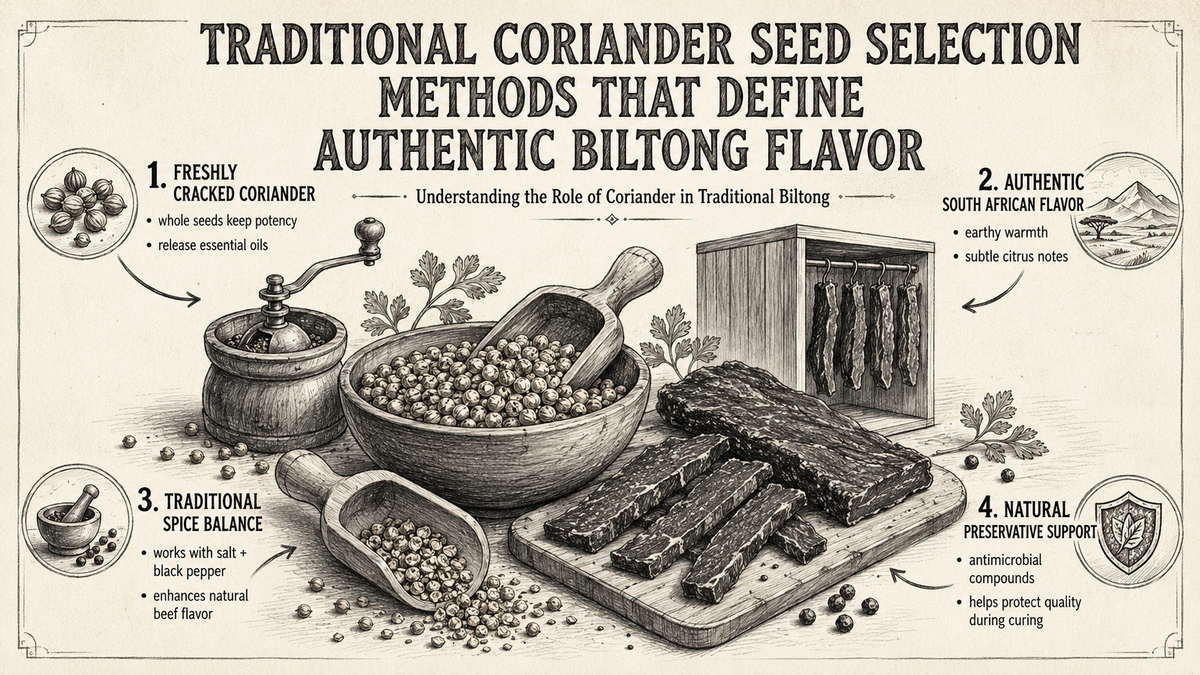
Freshly crushed coriander and black pepper provide additional antimicrobial properties while enhancing flavor development.
Vinegar becomes even more important during humid weather. A thorough vinegar coating helps lower surface pH and discourages bacterial growth during slower drying periods.
Avoid excessive sugar in humid conditions, as it can attract additional surface moisture and slow drying.
Strategic Timing: When to Start Your Batches
Timing still matters even with indoor drying. Starting batches during periods of lower humidity gives the meat a stronger initial drying phase.
Early-morning preparation often works well because cooler temperatures allow gradual moisture removal before afternoon humidity rises.
Avoid starting large batches when weather forecasts predict several consecutive days of high humidity or rain.
Indoor setups provide flexibility, but stable environmental conditions still produce the best results.
Salt Ratios That Work in High Humidity
Coarse sea salt or kosher salt works particularly well during humid conditions because larger crystals dissolve more slowly and maintain effective surface contact.
Allow salted meat to rest for 30-60 minutes before hanging. This gives the salt time to begin drawing moisture from the meat before the drying process starts.
If strips remain excessively wet after the first several hours, lightly pat the surface dry with paper towels before rehanging.
Consistent airflow remains more important than excessive salt levels. Too much salt can overpower flavor without improving drying efficiency.
Traditional Methods Adapted for Indoor Drying
Traditional South African techniques adapt very well to controlled indoor environments.
Continuous airflow remains one of the most important factors in successful indoor drying. Small fans recreate the steady air movement found in traditional drying climates.
Activated charcoal placed near the drying area may help absorb odors and minor moisture buildup, although proper airflow and humidity control remain the primary priorities.
Rotating strips every 12-24 hours improves drying consistency, especially in smaller homemade drying boxes where airflow may vary slightly between positions.
Indoor drying succeeds when stable airflow, controlled humidity, and moderate temperatures work together consistently.
Troubleshooting Common Indoor Drying Problems
Dealing with White Mold Formation
White mold typically appears as fuzzy patches caused by excessive humidity and inadequate airflow.
If mold appears early and remains isolated, remove affected pieces immediately and wipe nearby surfaces with a vinegar solution.
Increase ventilation and reduce humidity before continuing the drying process. Mold problems almost always indicate insufficient airflow or excessive moisture.
Prevention remains the best strategy. Proper airflow, correct humidity levels, and adequate strip spacing dramatically reduce mold risks.
Saving Batches That Are Drying Too Slowly
Slow drying increases the risk of spoilage and affects the final texture.
If strips remain soft after 48 hours, increase airflow immediately and reduce room humidity using air conditioning or dehumidifiers.
Rotate strips regularly to improve drying consistency throughout the box.
Thinner cuts dry more reliably during humid conditions and may help reduce future problems.
Preventing Case Hardening in Indoor Conditions
Case hardening occurs when the outside dries too quickly while the inside remains moist.
Excessive fan speed or direct heat can cause this problem indoors. Airflow should remain gentle and consistent rather than aggressive.
Test thicker pieces regularly by gently pressing the center. Properly dried biltong should feel evenly firm without hard outer shells and soft centers.
Moderate temperatures and balanced airflow provide the best protection against uneven drying.
When to Pause or Adjust Your Drying Process
Indoor setups provide far more control than outdoor drying, but extremely humid conditions may still require adjustments.
If humidity remains excessively high despite fans and dehumidifiers, temporarily refrigerating partially dried strips may help prevent spoilage until conditions stabilize.
Indoor drying works best when environmental conditions remain predictable and controlled.
Planning Ahead for Next Season
Upgrading Your Equipment Before Next May
After experiencing May’s humidity challenges, many home biltong makers realize their setups need better environmental control.
Digital hygrometers with data-logging capabilities help identify hidden humidity patterns in your drying area.
Variable-speed fans improve airflow control and reduce the risk of case hardening.
Dedicated dehumidifiers dramatically improve drying reliability during humid seasons.
Building Better Indoor Drying Solutions
Purpose-built indoor drying boxes create much more stable conditions than improvised setups.
Well-designed boxes include controlled ventilation, steady airflow, removable racks, and adequate strip spacing.
Stainless steel components resist corrosion and remain easy to sanitize in humid environments.
Materials that absorb moisture should generally be avoided, as they can introduce unwanted fluctuations in humidity.
Learning from This Season’s Mistakes
Every failed batch provides useful information about your drying environment.
Track humidity, airflow, temperature, and drying times carefully to identify patterns and improve future results.
Indoor drying becomes much more consistent once you understand how your specific space responds to changing seasonal conditions.
Alternative Preservation Methods to Try
If indoor humidity becomes too difficult to manage, low-temperature oven drying can help salvage batches experiencing drying problems.
Refrigerated curing methods may also help during periods of extremely unstable humidity.
Still, properly controlled indoor air-curing remains the gold standard for achieving authentic biltong texture and flavor.
Building resilience into your indoor biltong process ensures consistent results regardless of seasonal weather changes. With proper airflow, humidity control, and monitoring, indoor drying provides one of the safest and most reliable ways to produce high-quality traditional biltong at home.