Blog
Topside Beef Selection Criteria That Ensure Optimal Moisture Content Distribution

Understanding Topside Cuts for Premium Biltong Production
Most biltong makers can spot poor topside beef from across the butcher shop, but identifying truly premium cuts requires understanding the intricate relationship between muscle structure and moisture distribution. The difference between good biltong and exceptional biltong often comes down to selecting topside cuts that naturally support even moisture removal during traditional air-curing.
While many factors influence the final quality of South African Beef Biltong, the foundation starts with understanding how specific anatomical features of topside beef affect drying. This isn’t just about picking the leanest cut available (though that matters). It’s about recognizing how muscle fiber direction, fat marbling patterns, and even the animal’s age create the perfect conditions for moisture to migrate consistently throughout the meat during air-curing.
Professional biltong producers know that topside selection directly impacts texture, flavor development, and shelf stability. The natural structure of properly selected topside beef creates channels for moisture to escape evenly, preventing the common problems of over-dried edges and under-cured centers that plague amateur biltong makers.
Identifying Prime Topside Sections and Muscle Groups
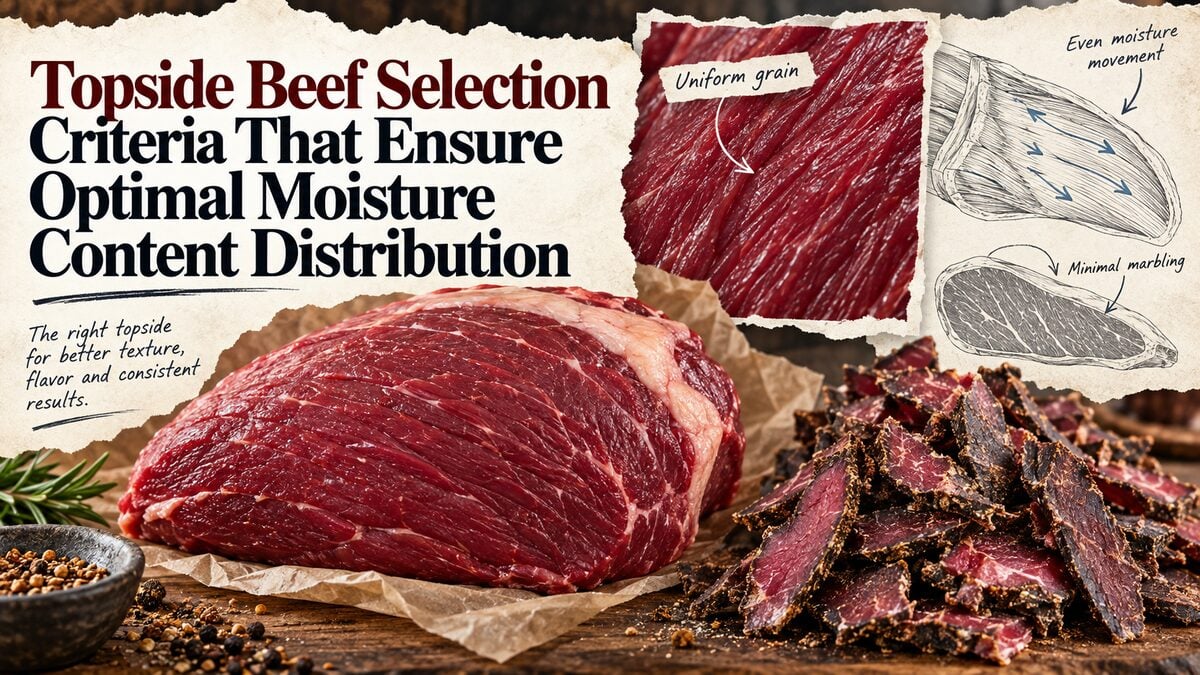
The topside primal contains several distinct muscle groups, but not all sections perform equally during air-curing. The eye of silverside muscle provides the most consistent results, offering uniform thickness and predictable grain structure. This section typically weighs between 3-5 pounds and exhibits minimal connective tissue interference.
Look for the thick, cylindrical portion that runs along the inner thigh. This area maintains consistent muscle fiber density and lacks the irregular thickness variations found in other topside sections. The muscle should feel firm under pressure without excessive give, indicating proper protein structure that will support controlled moisture loss.
Avoid sections near joint connections where multiple muscle groups intersect. These areas contain higher concentrations of connective tissue and irregular grain patterns that create uneven drying. The heel muscle, while technically part of the topside, contains too much variation in fiber direction to produce consistent biltong quality.
Grain Structure Analysis for Optimal Slicing Direction
Understanding muscle grain direction determines both slicing technique and final texture. Prime topside beef displays long, parallel muscle fibers running lengthwise through the cut. These fibers should appear distinct and uniform on close inspection, without excessive cross-hatching or irregular patterns.
The grain structure directly affects moisture migration during air-curing. Fibers running in consistent directions create natural channels for moisture to travel, promoting even dehydration throughout the meat. When fibers are chaotic or heavily cross-linked, moisture becomes trapped in pockets, leading to inconsistent curing.
Test grain direction by gently separating muscle fibers with your fingernail along different angles. Quality topside will separate cleanly along the primary grain direction while resisting separation across the grain. This indicates the proper protein alignment necessary for traditional air-curing methods to work effectively.
Fat Distribution Patterns That Impact Moisture Retention
External fat coverage should measure no more than 1/8 inch thick and appear white to cream-colored without yellow discoloration. This thin fat layer helps control moisture by creating a natural barrier that slows surface drying, preventing case hardening that seals moisture inside the meat.
Internal marbling is more complex. While excessive marbling disrupts the air-curing process, minimal intramuscular fat (less than 3% by visual assessment) enhances flavor development without compromising moisture removal. The fat should appear as fine, thread-like veins rather than large deposits or pockets.
Avoid cuts with thick fat seams running through the muscle or irregular fat distribution patterns. These create moisture barriers that prevent even curing and can lead to spoilage in traditionally processed craft biltong where controlled environments rely on natural air circulation rather than forced dehydration.
Age and Grade Classifications for Biltong-Quality Beef
Younger animals (18-30 months) produce topside with optimal moisture content and protein structure for biltong production. The muscle fibers remain tender enough to slice cleanly while maintaining sufficient protein density to support the air-curing process without becoming overly tough.
USDA Select grade typically provides the ideal balance of leanness and flavor for traditional biltong production. Choice grade may contain excessive marbling for optimal air-curing, while Standard grade often lacks sufficient flavor development. The lower fat content in Select grade promotes more predictable moisture removal patterns.
Check for proper aging indicators such as a deep red color without brown spots, a firm texture that springs back when pressed, and a fresh aroma without any off-odors. Properly aged beef develops the complex protein structures that contribute to the distinctive texture and flavor profiles expected from authentic South African air-cured preparations.
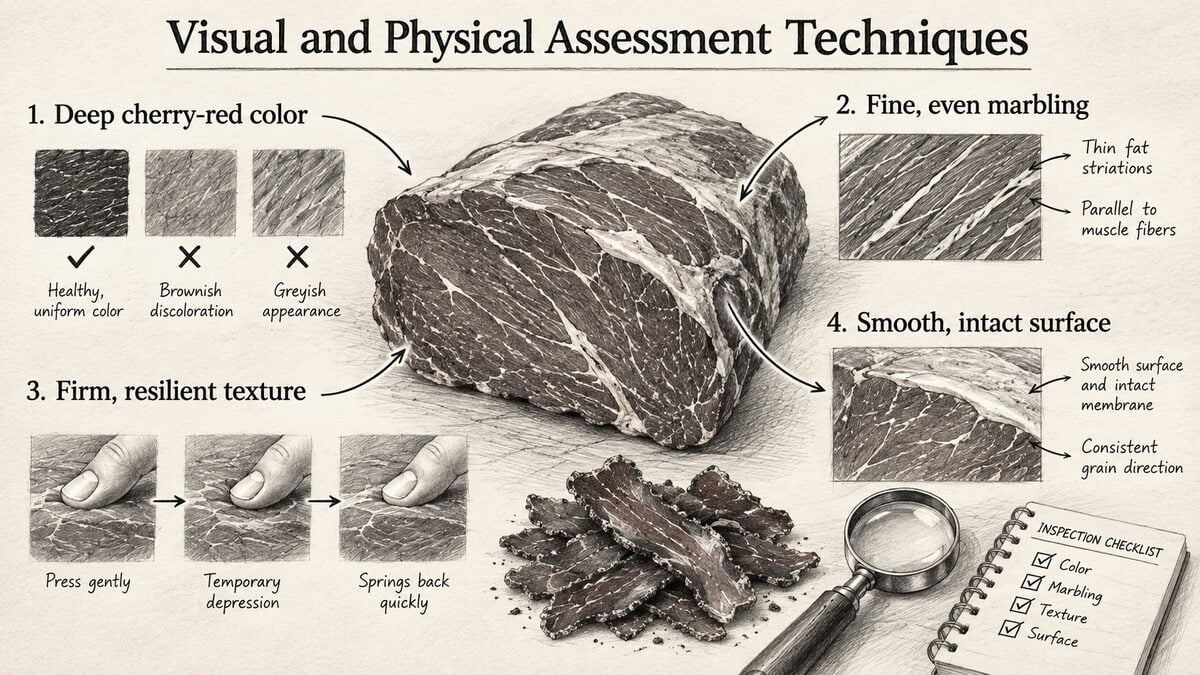
Color, marbling, firmness, and surface condition help identify suitable topside cuts.
Visual and Physical Assessment Techniques
Color Indicators of Proper Meat Maturation
The visual assessment of topside beef begins with examining color patterns that indicate proper aging and maturation. Fresh topside should display a deep, cherry-red hue throughout the muscle fibers, signaling optimal oxygen exposure and healthy muscle development. This vibrant red coloration directly correlates with the meat’s ability to retain moisture during the air-curing process.
Avoid cuts showing brown or grayish discoloration, particularly along the surface edges. These color variations suggest oxidation or improper storage conditions that compromise the meat’s cellular structure. When selecting topside for South African Beef Biltong production, look for uniform color distribution without dark patches or uneven tones that indicate moisture inconsistencies.
The fat cap covering should appear creamy white to pale yellow, never gray or yellowish-green. This external fat layer plays a crucial role in moisture regulation during traditional air-curing methods. Proper fat coloration indicates the animal’s diet quality and stress levels before processing, both of which influence final moisture-content distribution.
Marbling Evaluation for Consistent Moisture Distribution
Marbling assessment requires examining the intramuscular fat distribution throughout the topside cut. Unlike heavily marbled cuts used for grilling, topside for biltong production benefits from minimal, evenly distributed marbling that supports consistent moisture retention without creating uneven drying patterns.
Run your fingers along the muscle grain to identify thin, white fat striations running parallel to the muscle fibers. These fine marbling lines should appear consistently spaced rather than concentrated in specific areas. Excessive marbling creates moisture pockets that dry unevenly, while insufficient marbling creates overly lean sections that dry too quickly during air-curing.
The ideal topside cut displays subtle marbling that feels firm but yields slightly to pressure. This balance ensures the fat contributes to flavor development and moisture control without interfering with the natural dehydration process. Heavy marbling concentration along one edge while the opposite side remains completely lean indicates poor muscle development that will create moisture content variations in the finished product.
Firmness Testing and Texture Analysis Methods
Physical texture assessment begins with the finger-press test to evaluate muscle firmness and elasticity. Press your index finger firmly into the thickest part of the topside cut and observe how long the depression takes to recover. Quality topside should spring back within 2-3 seconds, indicating proper muscle tone and intact cellular structure.
Muscle fibers should feel dense and tightly bound when examined along the grain. Loose or separating muscle bundles suggest protein breakdown that affects moisture retention capabilities. Fresh topside maintains a slightly firm texture that doesn’t feel mushy or overly soft under gentle pressure.
Temperature plays a critical role in texture evaluation. The meat should feel cool to the touch, not frozen solid or overly warm from improper storage. Understanding the science helps explain how initial meat temperature affects the air-curing process and final moisture distribution.
Check for any slimy or tacky surface texture that indicates bacterial activity or moisture loss. The surface should feel slightly moist but clean, without sticky residue that suggests protein degradation. Proper topside cuts maintain natural moisture content and feel firm and resilient under gentle handling.
Surface Quality Standards for Air-Curing Success
Surface inspection focuses on identifying cuts, tears, or damaged areas that create irregular moisture-loss points during air-curing. The topside surface should appear smooth and intact, without deep knife marks or torn muscle fibers that expose internal tissues to accelerated drying.
Examine the muscle membrane (silver skin) coverage for uniformity and adherence to the underlying muscle. This natural barrier helps regulate moisture loss during traditional air-curing methods, so areas where the membrane has been removed or damaged require careful consideration during the curing process.
Surface moisture levels should appear consistent across the entire cut without dry patches or overly wet areas. Fresh topside displays a slight surface sheen from natural muscle moisture, but excessive wetness suggests improper drainage or storage conditions that compromise air-curing effectiveness.
The muscle grain direction should run consistently throughout the cut without abrupt changes or twisted sections. Uniform grain direction ensures even moisture distribution during the air-curing process and prevents sections from drying at different rates. Consistent surface quality directly impacts the final biltong texture and moisture content distribution achieved through traditional South African air-curing techniques.
Moisture Content Evaluation and Prediction Methods
Pre-Selection Moisture Testing Techniques
Professional biltong producers rely on systematic moisture assessment before committing to specific topside cuts. The most effective approach involves using a calibrated meat moisture meter to establish baseline readings across different sections of the cut. These handheld devices provide instant feedback on water content distribution, typically showing readings between 70-75% for fresh topside beef.
Visual compression testing offers another reliable evaluation method. Gently pressing various sections of the topside cut reveals how moisture distributes under pressure. Areas that release excessive liquid or feel unusually soft indicate uneven water retention that could compromise air-curing. Experienced producers often perform this assessment at multiple points along the grain direction.
Temperature variation testing provides additional insights into moisture behavior. Allowing the cut to reach room temperature naturally (rather than rushing from refrigeration) reveals how different muscle sections respond to environmental changes. This simple technique helps predict how the meat will behave during the controlled temperature phases of traditional air-curing.
Understanding Natural Water Distribution in Topside Cuts
Topside beef naturally contains varying moisture levels throughout its muscle structure, creating distinct zones that affect air-drying outcomes. The outer fascia layer typically holds more surface moisture, while the dense center muscle fibers contain bound water that releases more slowly during curing. Understanding these natural variations helps predict which sections will achieve optimal texture consistency.
Muscle fiber orientation significantly impacts moisture distribution patterns. Topside cuts with consistent grain direction tend to release moisture more evenly, creating superior texture in the finished South African Beef Biltong. Cuts showing irregular fiber patterns or significant marbling variations often produce inconsistent results during the air-curing process.
The aging process before selection also influences water distribution. Fresh topside cuts (within 24-48 hours of processing) maintain more uniform moisture content compared to cuts aged for extended periods. This timing matters most for producers in Carlsbad and Escondido, where climate variations can accelerate natural moisture loss during transport and storage.
Identifying Cuts That Dry Uniformly During Curing
Uniform drying depends largely on selecting topside cuts with consistent thickness throughout the muscle. Variations exceeding 15-20% in thickness typically result in uneven moisture removal, with thinner sections over-drying while thicker areas remain under-cured. Professional producers use calipers to measure thickness at multiple points before making selection decisions.
Surface texture analysis reveals important clues about drying potential. Smooth, even surfaces without deep scoring or irregular cuts allow air circulation to work consistently across the entire piece. Rough or damaged surfaces create pockets where moisture can accumulate, leading to inconsistent curing results that affect both safety and flavor development.
The relationship between cut thickness preferences and moisture behavior becomes critical during selection. Thinner cuts (typically 10-15mm) require topside sections with minimal fat distribution to prevent uneven drying. Thicker cuts (20-25mm) need more uniform muscle density to ensure proper moisture removal reaches the center core.
pH Level Assessment and Its Impact on Final Product Quality
pH levels in topside beef directly influence moisture retention and release patterns during air-curing. Optimal pH readings fall between 5.4-5.8, creating the ideal environment for controlled dehydration while maintaining protein integrity. Higher pH levels (above 6.0) often indicate stress factors that can compromise moisture control during processing.
Testing pH requires specialized meter equipment, but experienced producers also rely on visual and tactile indicators. Meat with proper pH levels maintains a bright red color and firm texture when fresh. Darker coloration or unusually soft consistency often signals pH imbalances that affect moisture behavior during traditional air-curing methods.
The interaction between pH levels and natural enzyme activity becomes particularly important for flavor development. Proper pH ranges allow beneficial enzymes to break down proteins gradually, creating the complex amino acid profiles that distinguish quality biltong. This process requires carefully controlled moisture removal that starts with selecting cuts showing optimal pH characteristics.
Understanding seasonal pH variations helps producers adjust selection criteria throughout the year. Cattle stress levels, feed quality, and processing timing all influence pH readings. Professional biltong producers often establish relationships with suppliers who understand these variables and can provide consistent quality topside cuts that meet specific pH requirements for optimal air-curing results.
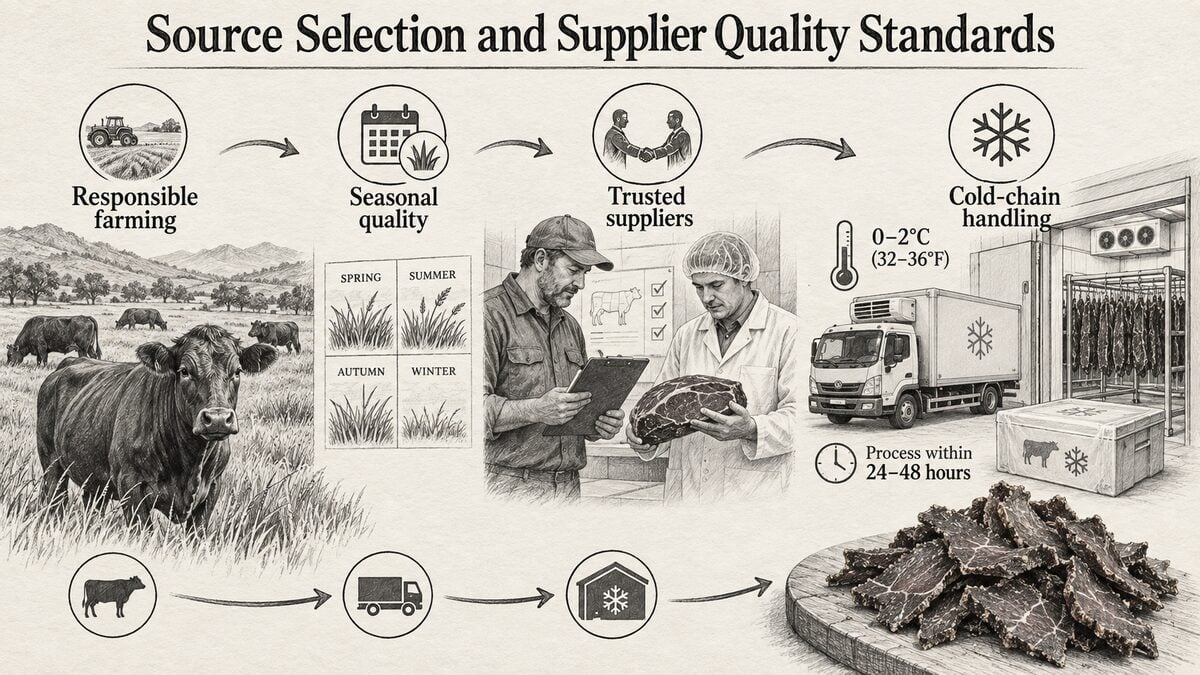
Reliable sourcing and controlled cold-chain handling protect topside quality before processing.
Source Selection and Supplier Quality Standards
Evaluating Local Cattle Farming Practices
Exceptional biltong starts with understanding how cattle are raised before they reach processing facilities. Grass-fed cattle that graze on natural pastures develop superior muscle structure and intramuscular fat distribution compared to grain-finished animals. This difference directly impacts moisture retention during the air-curing process.
Cattle raised in stress-free environments produce meat with more consistent pH levels, which affects how moisture behaves during traditional air-curing methods. When evaluating farming practices, look for operations that prioritize rotational grazing and avoid overcrowding. These conditions create muscle tissue with better fiber alignment, essential for achieving the proper texture in South African Beef Biltong.
Age at slaughter significantly influences meat quality and moisture content potential. Cattle harvested between 18-24 months typically provide the ideal balance of tenderness and flavor development. Younger animals may lack the complex muscle structure needed for optimal air-drying, while older cattle often require longer processing times due to tougher connective tissue.
Seasonal Considerations for Optimal Meat Quality
Weather patterns and seasonal changes strongly affect cattle condition and, in turn, meat quality. Spring and early summer typically produce the highest quality topside cuts because cattle have access to fresh, nutrient-rich grasses that improve muscle development and natural enzyme activity.
During drought conditions or harsh winters, cattle may experience stress that affects muscle pH and water-holding capacity. These factors matter when selecting meat for biltong production because stressed animals often produce cuts with irregular moisture distribution that can lead to uneven drying.
Understanding regional climate patterns helps predict when premium topside cuts will be available. In Southern California’s Carlsbad and Escondido regions, suppliers often source from areas with stable year-round weather, ensuring more consistent quality. Building relationships with suppliers who track seasonal variations lets you plan production schedules around peak meat-quality periods.
Temperature fluctuations during transportation also affect meat quality. Suppliers that maintain consistent cold-chain management through seasonal changes preserve the muscle integrity needed for successful air-curing.
Establishing Relationships with Trusted Beef Suppliers
Building long-term partnerships with reputable suppliers provides access to premium topside cuts with consistent quality. Reliable suppliers understand the specific requirements for biltong production and can provide detailed information about cattle origin, feed programs, and processing methods.
Quality suppliers maintain comprehensive records including breed information, feeding schedules, and harvest dates. This transparency allows you to track patterns between source conditions and final product quality. Suppliers experienced with traditional processing requirements often reserve their best cuts for established customers who appreciate superior quality.
Regular communication with suppliers enables you to order specific cuts in advance during optimal availability periods. Many experienced suppliers can predict quality fluctuations based on seasonal factors and farming conditions, helping you maintain consistent production standards throughout the year.
Backup supplier relationships protect against supply chain disruptions while maintaining quality standards. Multiple supplier relationships also provide access to different cattle breeds and farming practices, allowing you to optimize selection based on specific biltong production goals.
Transportation and Storage Requirements Before Processing
Proper handling between supplier and processing facility directly affects moisture content distribution and meat quality. Temperature control during transportation must remain consistently between 32-36°F to preserve muscle structure and prevent bacterial growth that could compromise the air-curing process.
Minimize transportation time to prevent moisture loss and maintain optimal pH levels. Extended transport can stress muscle and reduce water-binding capacity, leading to irregular drying patterns during traditional air-curing.
Upon arrival, storage conditions require immediate attention to temperature and humidity control. Topside cuts should be processed within 24-48 hours of delivery to maintain peak quality characteristics. Proper storage prevents surface dehydration that can interfere with even moisture distribution during initial processing stages.
Packaging during transportation affects meat surface condition and moisture retention. Vacuum-sealed packaging protects against contamination while preventing moisture loss, but must be removed promptly to allow proper air exposure before processing begins. Understanding these handling requirements ensures topside cuts arrive in optimal condition for biltong production.
Processing Preparation and Initial Handling
Proper Trimming Techniques to Maximize Yield
Effective trimming during preparation directly affects moisture distribution throughout the final product. The key lies in understanding how different fat layers and connective tissue affect the air-curing process in South African Beef Biltong production.
Remove excess external fat while preserving the natural marbling within the muscle. External fat doesn’t contribute to flavor development and can create uneven drying patterns. However, intramuscular fat (the thin white streaks running through the meat) should remain intact since it enhances moisture retention during the traditional air-curing process.
Cut against the grain in strips approximately 25- 30 mm thick. This thickness allows for proper moisture migration from the center to the surface while maintaining structural integrity. Thinner cuts dry too quickly and become brittle, while thicker pieces develop moisture gradients that compromise quality.
Silver membrane removal requires careful attention. This tough connective tissue on the surface prevents proper spice penetration and blocks moisture evaporation. Use a sharp, flexible knife to separate the membrane from the underlying muscle, working in smooth, consistent motions to avoid gouging the meat surface.
Temperature Management During Selection and Prep
Temperature control during processing affects protein structure and moisture retention. Working with meat at temperatures between 2-4°C (36-39°F) maintains optimal muscle fiber integrity while preventing bacterial growth during the preparation window.
Cold meat holds its shape better during cutting, resulting in cleaner cuts that promote even moisture distribution. Warm meat softens and tears easily, creating irregular surfaces that dry unevenly and compromise final texture.
Processing environments should maintain temperatures below 15°C (59°F) with proper ventilation. Higher temperatures during preparation can trigger premature moisture loss from surface tissues before proper spice application and controlled drying begins. This early moisture loss creates a surface barrier that impedes uniform drying throughout the process.
Monitor the time meat spends outside refrigeration during preparation. Limit exposure to room temperature to 30-45 minutes per batch. Extended exposure allows surface warming that disrupts the controlled moisture management essential for quality biltong production.
Timing Considerations from Selection to Spicing
The window between selection and spicing critically affects moisture behavior during air-curing. For optimal results, spice fresh meat within 24-48 hours of butchering. This timing ensures muscle glycogen levels remain appropriate for proper pH development during curing.
Aged meat (7-21 days post-butchering) requires a different approach. The natural enzyme activity during aging affects protein structure and moisture-holding capacity. While aged topside can produce excellent biltong, the preparation timing becomes more critical to prevent over-processing.
Plan preparation schedules around environmental conditions. On high-humidity days, process faster to prevent surface moisture buildup before controlled drying begins. Conversely, very dry conditions may necessitate slower preparation to prevent premature surface dehydration.
Batch processing timing affects consistency. Process similar-sized pieces together and maintain consistent timing intervals between trimming, spicing, and hanging. Variations in processing timing create different starting conditions, resulting in uneven final moisture content across the batch.
Quality Control Checklists for Consistent Results
Implement systematic quality checkpoints throughout the preparation phase to ensure consistent moisture content outcomes. Visual inspection should verify uniform piece thickness (±2mm variation maximum), complete silver membrane removal, and consistent grain direction across all cuts.
Temperature monitoring requires multiple checkpoint measurements. Verify meat internal temperature, processing room temperature, and spice mixture temperature before application. Record these measurements to identify patterns that correlate with successful batches.
Moisture baseline measurements provide reference points for tracking drying progress. While precise measurement requires specialized equipment, consistent visual and tactile assessment helps identify pieces that may need longer or shorter drying times based on preparation quality.
Documentation protocols should track source information, processing times, environmental conditions, and any deviations from standard procedures. This data becomes invaluable for identifying quality issues and refining techniques. Understanding proper storage methods also helps maintain the quality achieved through careful preparation.
Establish rejection criteria for pieces that don’t meet preparation standards. Remove cuts with excessive thickness variations, incomplete trimming, or surface damage rather than compromising batch quality. Consistent preparation standards translate directly into predictable moisture content distribution in the finished product.
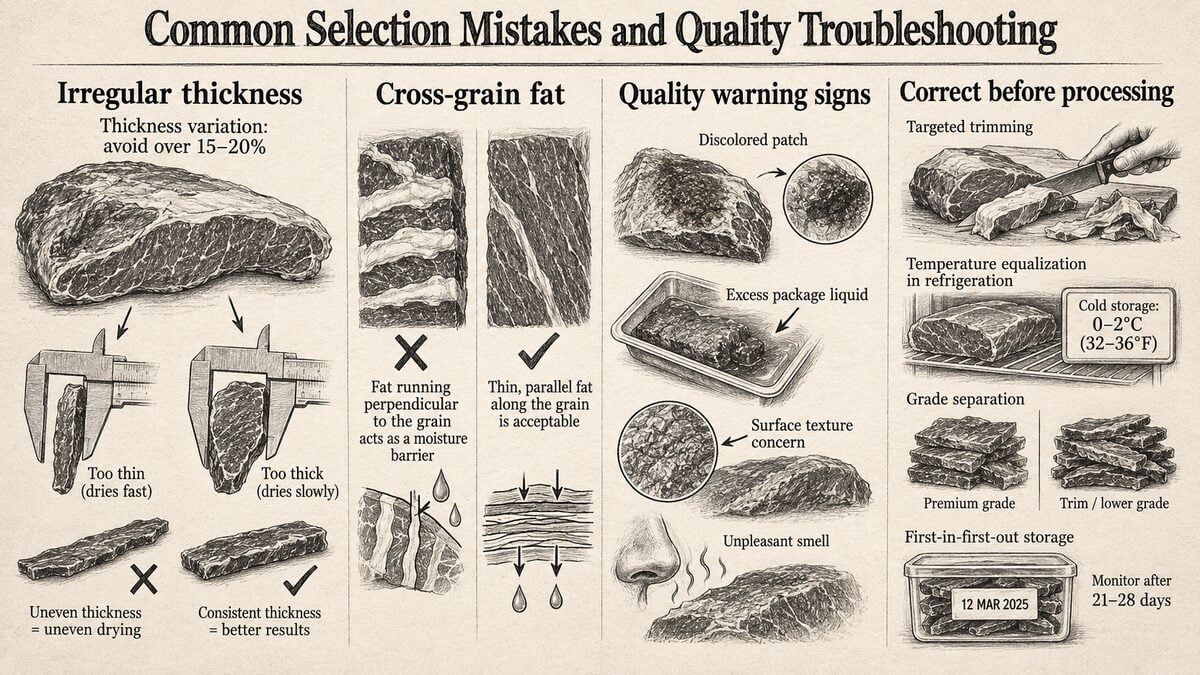
Identifying selection problems before processing helps prevent uneven drying and inconsistent results.
Common Selection Mistakes and Quality Troubleshooting
Avoiding Cuts with Irregular Moisture Distribution
Inconsistent moisture distribution represents the most common selection error that compromises final product quality. These irregularities typically show up as patches of varying density within the same cut, where some areas retain excess moisture while others become overly dry during processing.
The primary indicator of problematic moisture distribution appears as marbling that runs perpendicular to the muscle grain rather than parallel. This cross-grain fat creates moisture barriers that prevent even air circulation during traditional air-curing. Look for cuts where the fat runs consistently with the grain, creating natural channels that support uniform drying.
Edge irregularities also signal potential moisture problems. Cuts with thickness variations exceeding 15-20% will dry inconsistently, with thinner sections reaching optimal moisture content before thicker areas finish curing. Select topside cuts that maintain consistent thickness throughout, measuring at multiple points to verify uniformity.
Temperature shock during transport creates another moisture distribution issue. Cuts that have experienced rapid temperature changes develop micro-tears in muscle fibers, leading to unpredictable moisture release patterns. Always verify the cold chain history and reject any cuts showing signs of temperature abuse.
Recognizing Signs of Compromised Meat Quality
Surface discoloration beyond normal aging indicates a quality compromise that affects moisture-content predictability. Fresh topside cuts should display consistent deep red coloring without dark spots or greenish tinges. Any variation suggests bacterial activity that will interfere with controlled moisture reduction during air-curing.
Texture assessment reveals critical quality indicators often overlooked during visual inspection. Properly conditioned topside cuts should feel firm but yield slightly to finger pressure. Cuts that feel overly soft or show finger impressions that don’t spring back indicate protein breakdown that compromises moisture retention characteristics.
The smell test provides immediate quality feedback. Fresh topside cuts emit a clean, slightly metallic aroma characteristic of quality beef. Any sour, sweet, or ammonia-like odors indicate microbial activity that can accelerate unpredictably during processing, making moisture-content control impossible.
Package liquid accumulation signals quality deterioration. Excessive purge in vacuum packaging suggests protein denaturation that affects the meat’s ability to retain moisture during processing. Quality cuts should show minimal liquid accumulation, even after extended storage.
Correcting Selection Errors Before Processing
When cuts show minor quality issues, strategic trimming can salvage otherwise acceptable meat. Remove any areas showing discoloration or irregular fat distribution before beginning the curing process. This targeted approach often recovers 70-80% of questionable cuts for successful processing.
Moisture equalization techniques help address minor distribution irregularities. Let selected cuts reach a uniform temperature throughout before processing begins. This temperature equilibration promotes even moisture distribution within the muscle structure and improves processing predictability.
Partial processing delays can correct timing errors in selection. If cuts arrive with higher-than-optimal moisture content, controlled air exposure in refrigerated conditions for 24-48 hours often brings moisture levels within acceptable ranges without compromising quality.
Grade separation allows mixing of cuts with varying characteristics to achieve consistent batch quality. Combining slightly over-moist cuts with those showing optimal moisture content creates balanced batches that process uniformly when traditional air-curing methods are applied correctly.
Long-term Storage Solutions for Selected Topside Cuts
Proper vacuum packaging maintains selected cut quality during extended storage periods. Use commercial-grade vacuum bags rated for extended cold storage, removing 99% or more of air contact to prevent moisture migration and quality degradation.
Temperature control during storage directly impacts moisture content stability. Maintain consistent temperatures between 32-36°F to prevent cellular damage that affects moisture distribution patterns. Temperature fluctuations create freeze-thaw cycles that compromise muscle fiber integrity.
Rotation protocols ensure selected cuts maintain optimal processing characteristics. Implement first-in, first-out inventory management with clear dating systems. Even properly stored topside cuts begin showing quality changes after 21-28 days that affect moisture content predictability.
Quality monitoring during storage prevents processing failures. Weekly visual inspections catch developing issues early, while maintaining storage logs helps identify patterns that improve future selection decisions.
Mastering topside beef selection requires attention to these critical details that separate amateur efforts from professional results. When you understand these quality indicators and correction techniques, you can consistently select cuts that produce exceptional South African Beef Biltong with optimal moisture content and superior texture. The difference lies in recognizing that great biltong starts with perfect selection, long before the traditional air-curing process begins.