Blog
Natural Enzyme Activity During Extended Air-Curing Cycles in Summer Conditions

Understanding Natural Enzyme Activity in Meat Curing
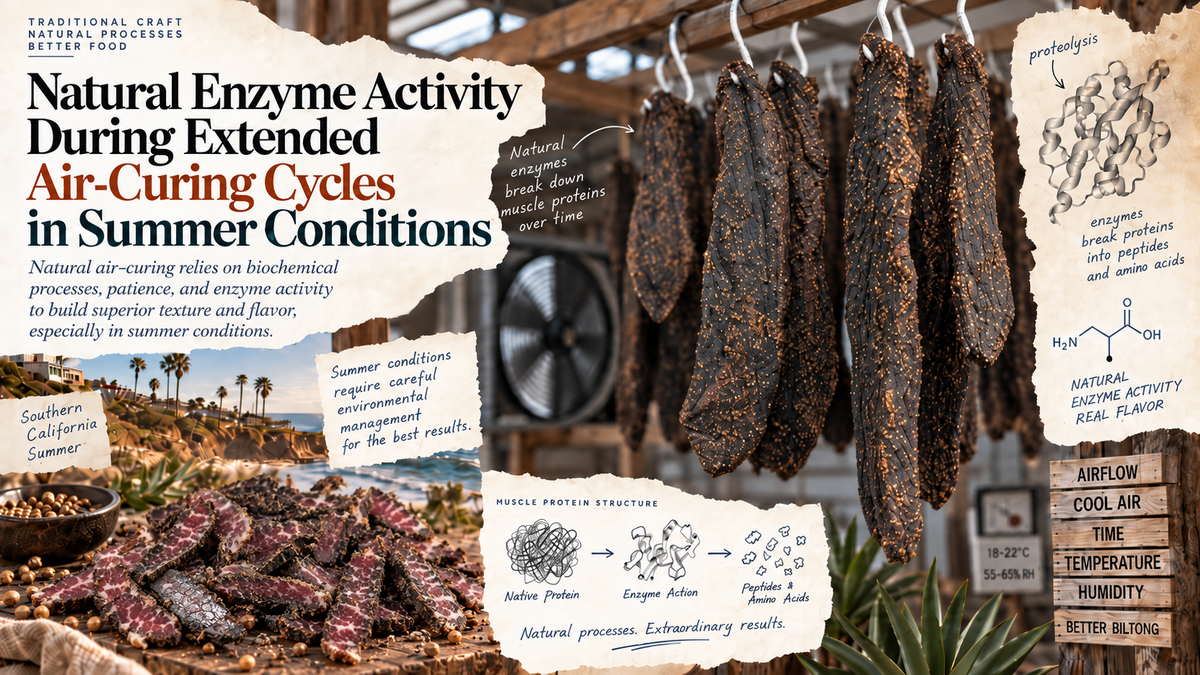
The ancient art of air-curing meat relies on complex biochemical processes that most people never consider when enjoying their favorite protein snack. While modern food production often bypasses these natural mechanisms in favor of speed and consistency, traditional South African Beef Biltong makers understand that patience and proper enzyme activity create superior texture and flavor profiles that simply can’t be rushed.
Understanding how enzymes work during extended curing cycles becomes especially critical during summer months in places like Carlsbad, where higher temperatures can accelerate these processes beyond optimal ranges. The difference between perfectly cured biltong and spoiled meat often comes down to managing these invisible molecular workers that break down proteins and transform tough muscle fibers into tender, flavorful strips.
The Role of Proteases in Meat Tenderization
Proteases represent the primary enzyme family responsible for breaking down muscle proteins during the air-curing process. These naturally occurring enzymes, including cathepsins and calpains, systematically cleave protein bonds within muscle fibers, gradually transforming tough silverside or topside cuts into the characteristic tender texture biltong enthusiasts expect.
The activity level of these proteases directly correlates with temperature and moisture conditions. During optimal curing (typically 15-20°C), proteases work steadily without overwhelming the meat’s structure. However, summer temperatures above 25°C can accelerate protease activity to problematic levels, potentially creating mushy textures or even contributing to spoilage if moisture content remains too high.
Cathepsin enzymes specifically target myofibrillar proteins, breaking down actin and myosin filaments that give raw meat its tough consistency. This breakdown occurs gradually over days or weeks during proper air-curing, allowing moisture to escape while proteins transform. The timing of this process explains why rushing biltong production rarely yields satisfactory results.
How Temperature Affects Enzyme Function
Temperature serves as the primary control mechanism for enzyme activity during air-curing. Each enzyme family has an optimal temperature range where it functions most effectively without causing unwanted side effects. For biltong production, maintaining temperatures between 15-20°C provides the sweet spot where proteases work efficiently while pathogenic bacteria remain suppressed.
When summer temperatures in Southern California climb into the 80s and 90s Fahrenheit, enzyme activity can increase exponentially rather than linearly. A 10°C temperature increase can double or triple enzyme reaction rates, potentially compressing what should be a week-long process into just a few days. This acceleration disrupts the careful balance between moisture loss and protein breakdown that creates quality craft biltong.
Excessive heat also affects enzyme specificity, meaning proteases might begin breaking down proteins they normally wouldn’t target at moderate temperatures. This non-specific breakdown can create off-flavors and undesirable textures that distinguish amateur attempts from professional production methods.
Moisture Content and Enzymatic Breakdown Patterns
Moisture content creates the environment where enzymes either thrive or become inhibited during the curing process. Fresh meat typically contains 70-75% moisture, which must drop to approximately 40-50% for properly cured biltong. The rate of this moisture loss directly impacts how enzymes function throughout the curing cycle.
High moisture levels early in the process support robust enzyme activity, which helps initiate protein breakdown. However, if moisture levels remain elevated too long (especially in humid summer conditions), enzymes continue working past their optimal point, potentially creating an overly soft product or enabling harmful bacterial growth.
The relationship between moisture and enzyme activity follows a bell curve. Too little moisture inhibits enzyme function entirely, while too much moisture extends enzyme activity beyond the desired timeframe. Successful biltong makers learn to read these moisture patterns and adjust their environment accordingly, particularly during challenging summer months when natural humidity levels fluctuate.
pH Changes During the Curing Process
The pH environment significantly influences enzyme activity throughout air-curing cycles. Fresh meat typically starts with a pH around 5.6-6.0, which creates favorable conditions for most proteases involved in tenderization. However, the vinegar application common in traditional South African curing temporarily lowers pH, affecting enzyme behavior.
Lower pH levels (around 4.5-5.0) initially slow protease activity while providing antimicrobial benefits. As the vinegar evaporates and curing progresses, pH gradually rises toward neutral levels, allowing enzymes to resume more active roles in protein breakdown. This pH cycle helps explain why vinegar treatment doesn’t prevent proper tenderization despite temporarily inhibiting enzymes.
Summer heat can accelerate pH changes by speeding vinegar evaporation and promoting faster bacterial acid production. Monitoring these pH shifts becomes crucial for maintaining control over enzyme activity and ensuring consistent results regardless of seasonal temperature variations.
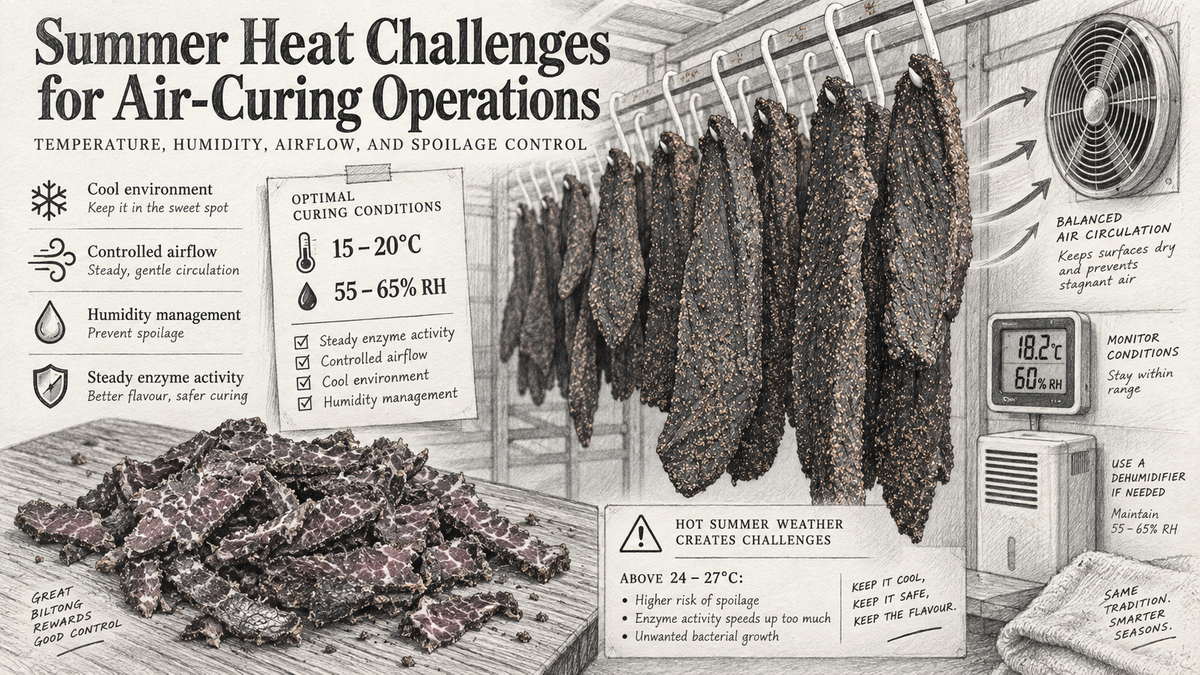
Summer Heat Challenges for Air-Curing Operations
Optimal Temperature Ranges for Enzyme Activity
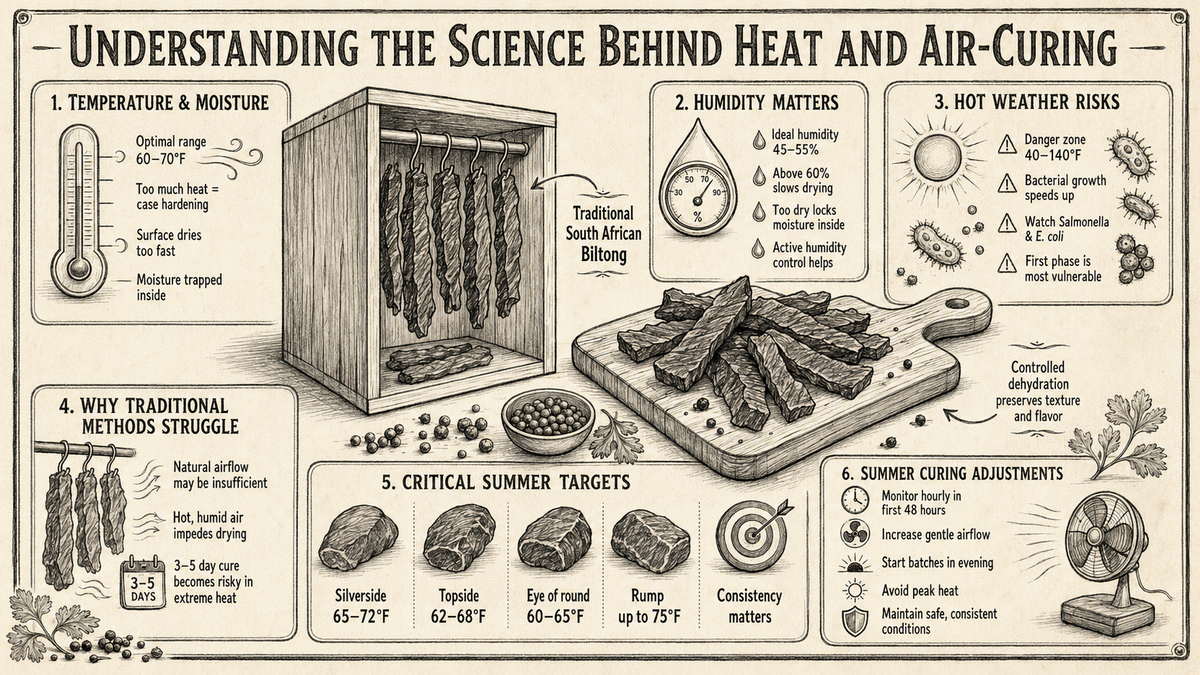
Summer temperatures in Southern California can push biltong production environments well beyond the ideal 60-68°F range that supports controlled enzyme activity. When ambient temperatures exceed 75°F, proteolytic enzymes begin working at accelerated rates, breaking down muscle proteins faster than moisture can evaporate naturally. This creates an unbalanced curing environment where the meat’s surface may appear ready while the interior remains inadequately processed.
Professional air-curing operations maintain strict temperature monitoring during summer months, often using cooling systems to prevent enzyme activity from overwhelming the natural dehydration process. The key lies in understanding that air-drying beef requires enzymes to work steadily rather than rapidly. Temperatures above 80°F can trigger unwanted bacterial growth alongside excessive enzyme activity, compromising both safety and flavor development.
Commercial producers often schedule intensive curing cycles during early morning hours when temperatures naturally drop below 70°F. This timing allows initial enzyme activation to occur under controlled conditions before heat stress begins affecting the process. Maintaining consistent temperatures becomes particularly challenging in coastal areas like Carlsbad, where marine layer conditions can create sudden temperature fluctuations that disrupt enzyme balance.
Managing Humidity Levels in Hot Weather
Summer humidity management presents unique challenges for traditional air-curing methods. High temperatures often coincide with increased atmospheric moisture, creating conditions where surface moisture evaporation slows dramatically while internal enzyme activity continues at accelerated rates. This imbalance can lead to case hardening, where the meat’s exterior forms a tough barrier that traps moisture inside.
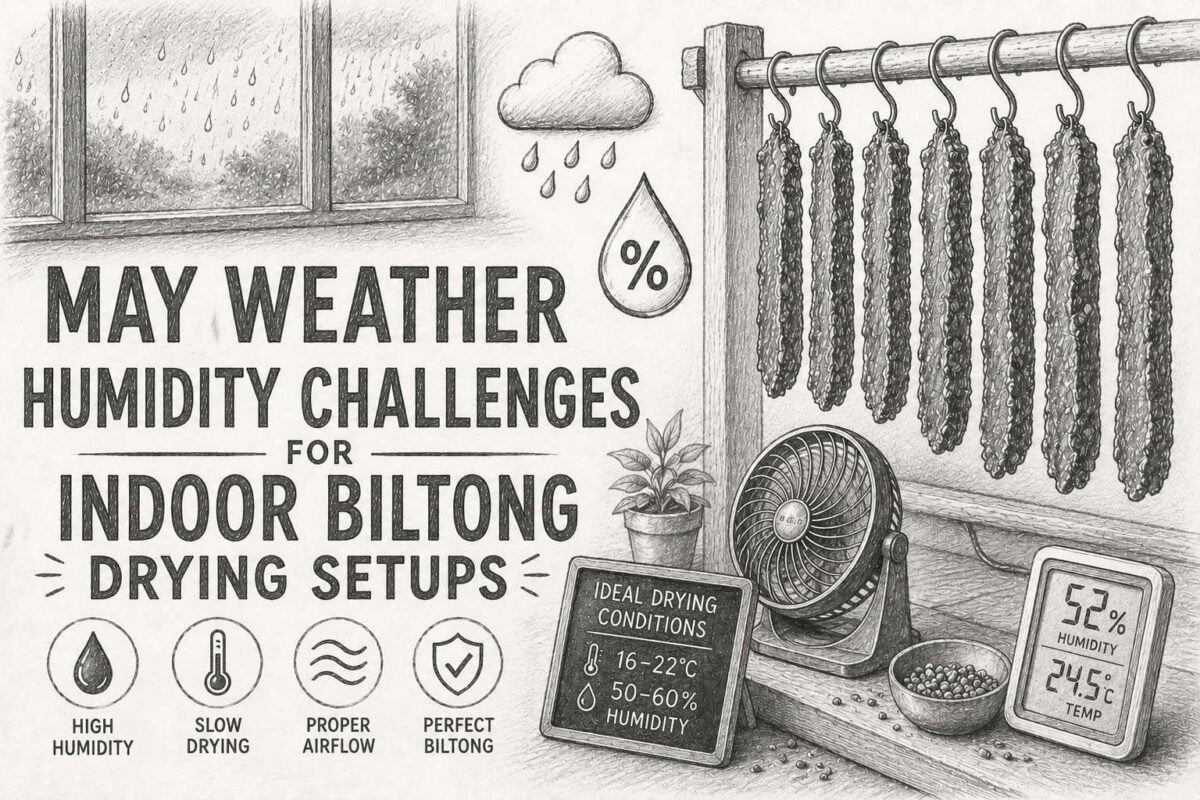
Experienced biltong makers monitor relative humidity levels closely, aiming for 55-65% during summer curing cycles. When humidity exceeds 70%, even with proper air circulation, the natural dehydration process becomes compromised. The meat’s surface may develop unwanted bacterial activity while enzymes continue breaking down proteins internally, creating texture inconsistencies that affect the final product quality.
Dehumidification becomes essential during extended heat waves, particularly in coastal environments where ocean moisture can push humidity levels above optimal ranges. Professional operations often invest in climate control systems that maintain consistent humidity regardless of external weather conditions. This investment proves crucial for maintaining the delicate balance between enzyme activity and moisture removal that defines quality South African Beef Biltong.
Preventing Accelerated Spoilage During Heat Waves
Heat waves create perfect conditions for spoilage bacteria to compete with beneficial enzyme activity during air-curing cycles. When temperatures consistently exceed 85°F, pathogenic organisms can multiply faster than the natural acidification and dehydration processes can control them. This bacterial competition disrupts the enzyme-driven flavor development that characterizes traditional biltong production.
Prevention strategies focus on creating microclimates that protect curing meat from temperature extremes. Many producers use insulated curing chambers with active temperature control to maintain optimal conditions even during severe heat events. The goal is to preserve the natural enzyme environment while preventing conditions that favor harmful bacterial growth.
Quality indicators become particularly important during summer months. Properly air-cured meat should develop a consistent surface texture without soft spots or unusual odors that indicate bacterial interference with enzyme activity. Visual inspection during heat waves should occur more frequently, as spoilage can develop rapidly when temperatures spike unexpectedly. Professional operations often implement automated monitoring systems that alert producers when conditions move outside safe parameters.
Balancing Air Circulation in Summer Conditions
Increased air circulation becomes critical during summer curing, but excessive airflow can create its own problems. While moving air helps remove surface moisture and control temperature, too much circulation can cause rapid surface drying that interferes with natural enzyme penetration. The meat’s exterior may become overly firm while interior enzyme activity continues, creating textural inconsistencies.
Effective summer air circulation requires strategic fan placement and variable speed control. Many experienced producers use oscillating fans rather than constant direct airflow, allowing periods of reduced circulation that support deeper enzyme activity. This approach helps maintain the gentle drying process that allows traditional south african to develop complex flavors through extended enzyme exposure.
Air circulation patterns must also account for increased insect activity during hot weather. Proper screening and filtration become essential to maintain clean air movement while preventing contamination. The balance between sufficient airflow for temperature control and gentle conditions for enzyme activity requires careful adjustment as summer conditions change throughout the day.
Extended Curing Cycles: Benefits and Considerations
Why Longer Curing Improves Flavor Development
Extended air-curing cycles during summer months allow natural enzymes more time to break down muscle proteins into complex amino acid compounds. This biological process, called proteolysis, intensifies significantly when temperatures consistently remain between 75-85°F (typical California summer conditions). The additional curing time means enzymes can fully convert proteins into flavor-rich compounds that create biltong’s characteristic umami depth.
During the first 48 hours, enzymes primarily work on surface proteins. But extended cycles of 5-7 days allow these natural catalysts to penetrate deeper into the muscle tissue. The result? A more pronounced, complex flavor profile that distinguishes artisanal South African Beef Biltong from rushed commercial alternatives.
Summer’s consistent warmth accelerates enzyme activity without requiring artificial heat processing. This natural acceleration creates superior flavor development while maintaining the gentle, traditional air-curing methods that preserve nutritional integrity. The longer timeline also allows traditional spices like coriander and black pepper to fully integrate with the developing amino acid matrix.
Monitoring Moisture Loss Over Time
Successful extended curing requires precise moisture monitoring throughout the entire cycle. Fresh meat typically contains 70-75% moisture content, and proper biltong should reach 35-40% final moisture levels. During summer conditions, this moisture reduction happens faster than in winter months, but the extended timeline allows for more controlled, gradual dehydration.
Professional producers track moisture loss daily using calibrated scales. A typical extended summer cycle shows 15-20% moisture loss in the first 24 hours, then 8-12% daily thereafter. This gradual reduction prevents the surface from hardening too quickly, which would trap moisture inside and compromise the curing process.
Environmental factors in Carlsbad’s coastal climate add complexity to moisture monitoring. Ocean breezes can introduce unexpected humidity fluctuations, requiring constant airflow adjustments. Many local producers use hygrometers to maintain optimal 55-65% relative humidity levels throughout extended curing cycles.
The key indicator isn’t just weight loss, but texture development. Properly air-cured biltong should feel firm but pliable, never brittle or spongy. Extended cycles allow this texture transformation to occur naturally without forcing rapid dehydration that compromises quality.
Signs of Proper vs. Over-Curing
Identifying the perfect curing endpoint requires understanding subtle visual and tactile indicators that develop during extended cycles. Properly cured biltong exhibits a deep, uniform color throughout the cross-section when cut. The surface should appear dry but not cracked, with a slight natural sheen from rendered fat.
Over-curing becomes evident when the exterior develops a hard, inflexible shell while the interior remains softer than desired. This happens when summer heat accelerates surface drying faster than moisture can migrate from the center. The texture becomes unpleasantly chewy rather than the desired firm-but-tender consistency.
Visual cues include surface cracking or white salt crystallization, both indicators that curing has progressed beyond optimal levels. The aroma also changes during over-curing, shifting from rich and meaty to sharp and acidic. Traditional methods used in creating modern biltong variations help producers avoid these common pitfalls.
Proper curing produces biltong that tears cleanly along muscle grain lines without excessive force. The interior should show consistent color and texture, indicating even moisture distribution throughout the extended curing process.
Adjusting Curing Times for Different Cut Thicknesses
Cut thickness dramatically affects extended curing requirements during summer conditions. Thin strips (8-10mm) may complete curing in 3-4 days, while thick cuts (20-25mm) require 7-10 days for proper enzyme activity and moisture reduction. The relationship isn’t linear because thicker cuts have proportionally more surface area relative to volume.
Professional producers often segment production by thickness, creating dedicated curing zones with different airflow and temperature controls. Thin cuts need gentler air circulation to prevent over-drying, while thick cuts benefit from stronger airflow that penetrates the dense muscle tissue.
Summer heat can cause rapid surface hardening in thick cuts, creating a moisture barrier that prevents even curing. The solution involves strategic scoring or creating shallow cuts that allow moisture to escape gradually. This technique requires skill to avoid compromising the meat’s structural integrity.
Timing adjustments also consider the specific muscle cut being processed. Silverside and topside respond differently to extended curing, with silverside typically requiring 24-48 additional hours due to its denser muscle fiber structure. Understanding these variations becomes crucial for proper storage once curing completes.
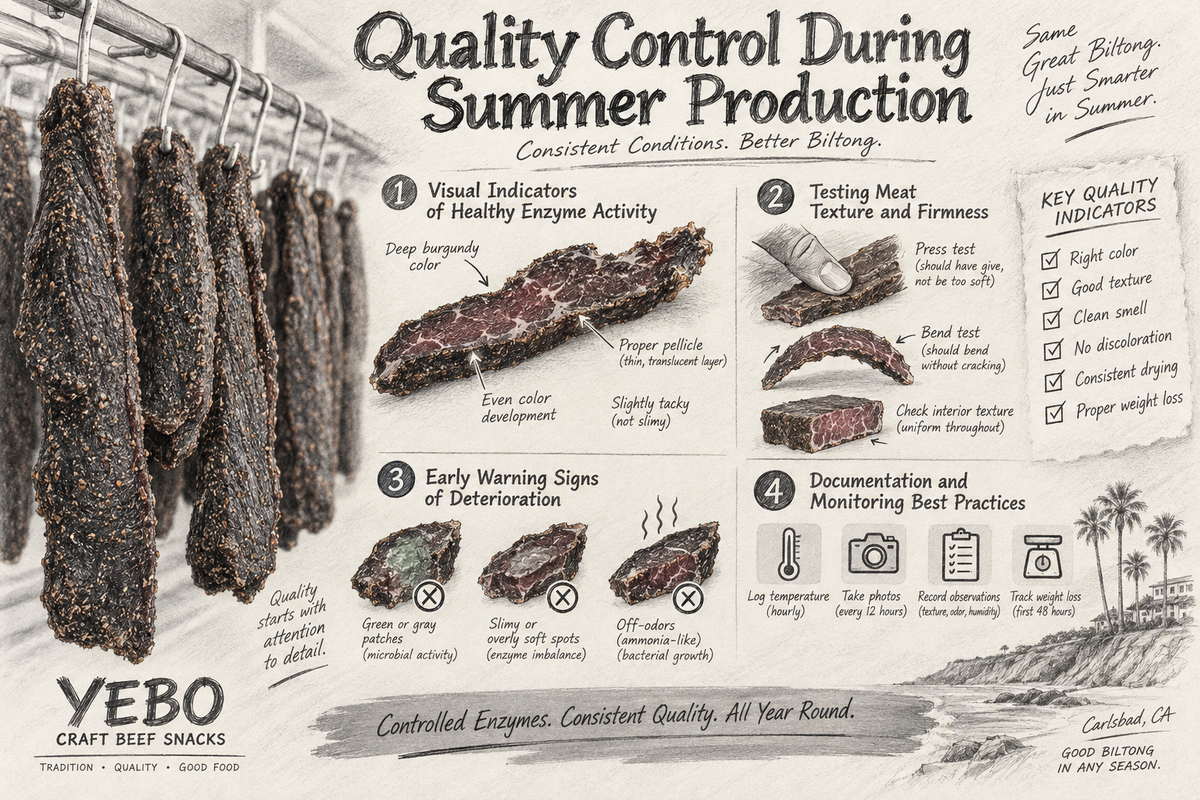
Summer biltong quality control requires careful monitoring of color, texture, airflow, temperature, humidity, and weight loss to maintain consistent curing conditions.
Quality Control During Summer Production
Visual Indicators of Healthy Enzyme Activity
Properly functioning enzymes during summer air-curing create distinct visual markers that experienced producers recognize immediately. The meat surface develops a characteristic deep burgundy color as proteolytic enzymes break down muscle proteins in controlled conditions. This color deepening occurs gradually over the first 48-72 hours, with healthy enzyme activity producing an even, consistent hue across the entire cut.
Surface moisture patterns tell another crucial story. Active enzymes facilitate controlled moisture migration from the interior, creating a slight tacky feel on the exterior without any slick or slimy texture. During summer conditions, this process accelerates, making visual monitoring even more critical for maintaining quality standards.
The formation of a proper pellicle indicates optimal enzyme function combined with appropriate air circulation. This thin, translucent layer protects the interior while allowing continued moisture release. In Carlsbad’s summer heat, a well-formed pellicle typically appears within 24-36 hours when enzyme activity progresses normally.
Testing Meat Texture and Firmness
Texture assessment provides the most reliable indicator of proper enzyme progression during extended summer curing cycles. Professional producers use a systematic approach, testing firmness at multiple points along each cut every 12 hours during the critical first three days.
The “press test” involves applying gentle pressure with clean fingertips to assess resistance. Healthy enzyme activity creates gradual firming from the outside in, with the surface maintaining some give while developing structural integrity. Meat that feels too soft indicates excessive enzyme activity, while premature hardening suggests insufficient moisture or enzyme function.
Interior texture evaluation requires careful monitoring through small test cuts on sample pieces. Properly functioning enzymes create a uniform texture throughout the muscle, avoiding the tough exterior with soft center that signals uneven curing. During summer production, this uniformity becomes challenging to achieve without precise environmental control and consistent monitoring protocols.
The bend test offers another valuable assessment method. Partially cured meat with healthy enzyme activity bends without cracking or feeling mushy. This flexibility indicates that proteins are breaking down at the appropriate rate for the ambient temperature conditions.
Identifying Early Warning Signs of Deterioration
Summer heat amplifies deterioration risks, making early detection crucial for preventing batch losses. Off-odors represent the first warning sign, with healthy enzyme activity producing a clean, slightly acidic smell. Any ammonia-like or putrid odors indicate bacterial interference with the natural curing process.
Surface discoloration beyond normal darkening requires immediate attention. Green or gray patches, especially in creases or areas with reduced air circulation, signal unwanted microbial activity overtaking beneficial enzyme function. These areas typically appear first where moisture accumulates or air movement is restricted.
Texture anomalies often precede visible problems. Overly soft spots, sliminess, or areas that feel different from the surrounding meat indicate enzyme activity has become unbalanced. During hot weather in Southern California, these issues can develop rapidly, sometimes within 6-8 hours if conditions aren’t properly maintained.
Temperature spikes create cascading effects on enzyme activity. When ambient temperatures exceed 85°F for extended periods, enzyme function accelerates beyond optimal rates, potentially creating protein breakdown that’s too rapid for proper moisture removal. This imbalance often manifests as surface softening combined with inadequate interior firming.
Documentation and Monitoring Best Practices
Systematic record-keeping becomes essential during challenging summer production cycles. Professional operations maintain hourly temperature logs, noting both ambient air temperature and internal meat temperature at multiple measurement points. This data reveals patterns that help predict enzyme behavior under varying conditions.
Photographic documentation captures visual changes that might be subtle to detect in real-time. Taking standardized photos every 12 hours from consistent angles and lighting allows producers to track color development, surface texture changes, and overall curing progression. These visual records prove invaluable for identifying optimal curing windows and troubleshooting issues.
Batch tracking sheets record texture assessments, odor evaluations, and any environmental changes that might affect enzyme activity. Include specific notes about air circulation patterns, humidity fluctuations, and any adjustments made to drying conditions. This documentation helps establish protocols for future South African Beef Biltong production during similar weather conditions.
Weight loss measurements provide quantitative data on moisture removal rates. Tracking hourly weight changes during the first 48 hours reveals whether enzyme-assisted dehydration proceeds at the expected pace. Excessive weight loss indicates too-rapid drying, while insufficient loss suggests inadequate enzyme activity or poor air circulation.
Optimizing Your Summer Curing Environment
Ventilation Strategies for Hot Climate Success
Proper airflow becomes absolutely critical when summer temperatures climb above 80°F in Carlsbad and surrounding areas. The key lies in creating consistent air movement without compromising the controlled environment that enzymes need for optimal activity.
Cross-ventilation systems work best during extended summer curing cycles. Position intake vents on the cooler side of your curing space (typically north-facing) and exhaust points opposite. This creates natural convection currents that maintain steady air circulation while preventing hot spots that can accelerate moisture loss too rapidly.
Fan placement requires strategic thinking. Low-speed circulation fans positioned to move air across the hanging meat, rather than directly onto it, prevent surface case-hardening while maintaining the gentle airflow that supports natural enzyme breakdown. Avoid high-velocity fans that create uneven drying patterns.
Consider the humidity factor carefully. Summer air often carries more moisture, which can slow the initial moisture extraction phase. Installing simple exhaust fans on timers helps remove excess humidity during peak afternoon heat while allowing natural moisture retention during cooler evening hours.
Using Natural Cooling Methods
Smart producers leverage natural temperature variations to their advantage during summer production cycles. The traditional South African approach emphasizes working with nature’s rhythms rather than fighting against them.
Thermal mass techniques prove remarkably effective in Southern California’s climate. Stone or concrete floors absorb heat during the day and release it slowly at night, creating more stable temperature swings. This prevents the rapid temperature fluctuations that disrupt enzyme activity and create inconsistent curing results.
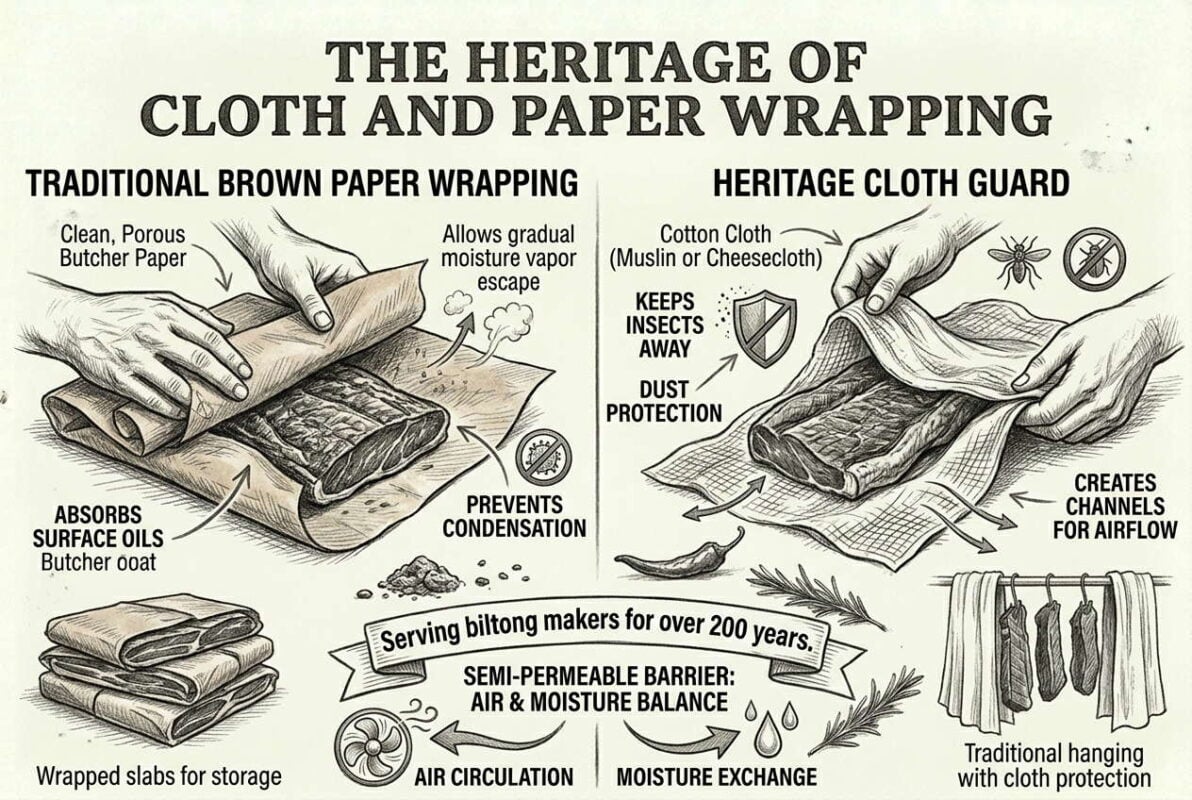
Evaporative cooling offers another natural solution. Wet hessian sacks or canvas sheets hung in airflow paths can drop ambient temperatures by 10-15°F through evaporation. The slight increase in humidity actually benefits the early stages of enzyme breakdown while the cooler temperatures prevent over-acceleration of the drying process.
Underground or semi-underground curing spaces tap into the earth’s natural insulation properties. Even shallow excavations (2-3 feet) can maintain temperatures 15-20°F cooler than surface-level spaces. This approach requires proper drainage but delivers remarkably stable conditions for South African Beef Biltong production during extended summer cycles.
Timing Production Around Weather Patterns
Weather awareness transforms summer biltong production from guesswork into strategic planning. Successful producers in Escondido and nearby areas monitor not just current conditions but 5-7 day forecasts to optimize their curing schedules.
Start extended cycles just before cooler weather fronts arrive. Even temporary drops in temperature and humidity create ideal conditions for initiating the enzyme activity that drives flavor development. The meat begins its transformation under optimal conditions, building momentum that carries through subsequent warmer days.
Marine layer patterns along the coast provide natural opportunities for enhanced curing conditions. Morning fog and cooler temperatures from ocean influence create perfect windows for beginning new batches or transitioning existing ones through critical phases.
Avoid starting production during Santa Ana wind events or extended heat waves. These conditions create rapid surface drying that prevents proper enzyme penetration and results in tough exterior layers with underdeveloped interior flavors.
Track daily temperature swings rather than just peak temperatures. Gentle variations (20-30°F between night and day) actually improve curing consistency compared to steady high temperatures that stress the natural processes.
Equipment Modifications for Summer Operations
Summer conditions demand thoughtful equipment adjustments that support rather than hinder natural enzyme processes. Simple modifications often deliver better results than expensive climate control systems.
Increase hanging space between pieces by 25-30% during hot weather. This improves airflow around each piece and prevents neighboring cuts from creating humid microclimates that slow proper moisture extraction. Overcrowding becomes far more problematic in summer heat.
Shade cloth installations filter harsh sunlight while maintaining ventilation. Choose materials with 30-50% shade factors that reduce radiant heat buildup without blocking beneficial air movement. Position these to protect during peak sun hours (10 AM to 4 PM) while allowing natural cooling during early morning and evening periods.
Temperature monitoring systems prove essential during extended summer cycles. Multiple sensors throughout the curing space reveal hot spots and air stagnation zones that compromise quality. Wireless monitoring allows real-time adjustments without disturbing the curing environment.
Humidity control becomes more nuanced in summer operations. Rather than maintaining constant levels, successful operations cycle humidity in sync with natural temperature patterns, allowing controlled variations that support optimal enzyme activity throughout the extended curing process.
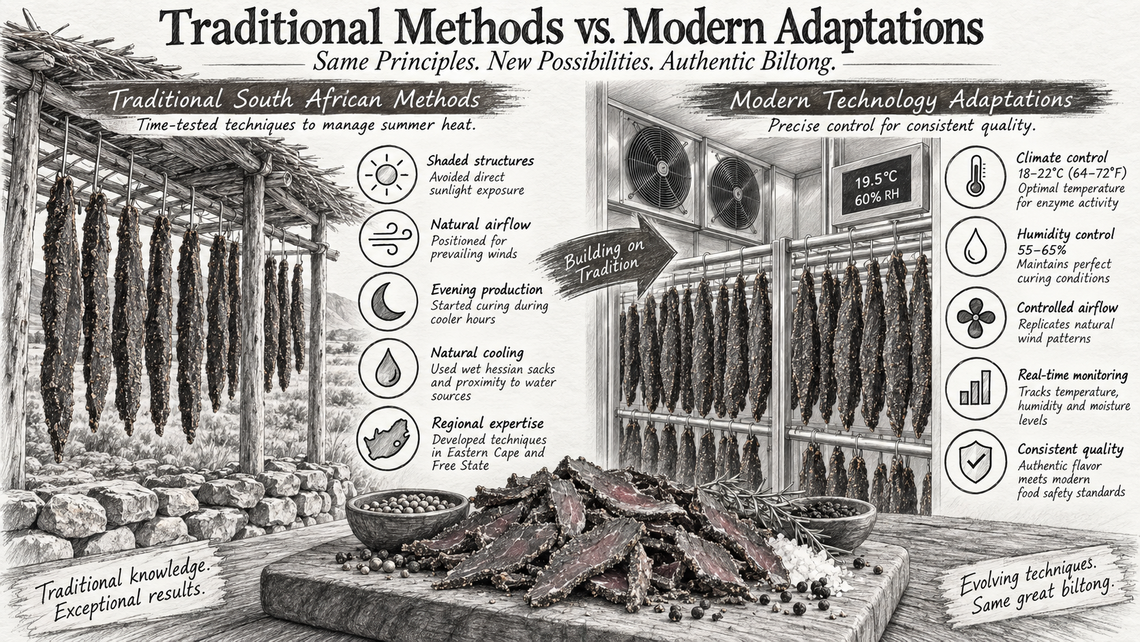
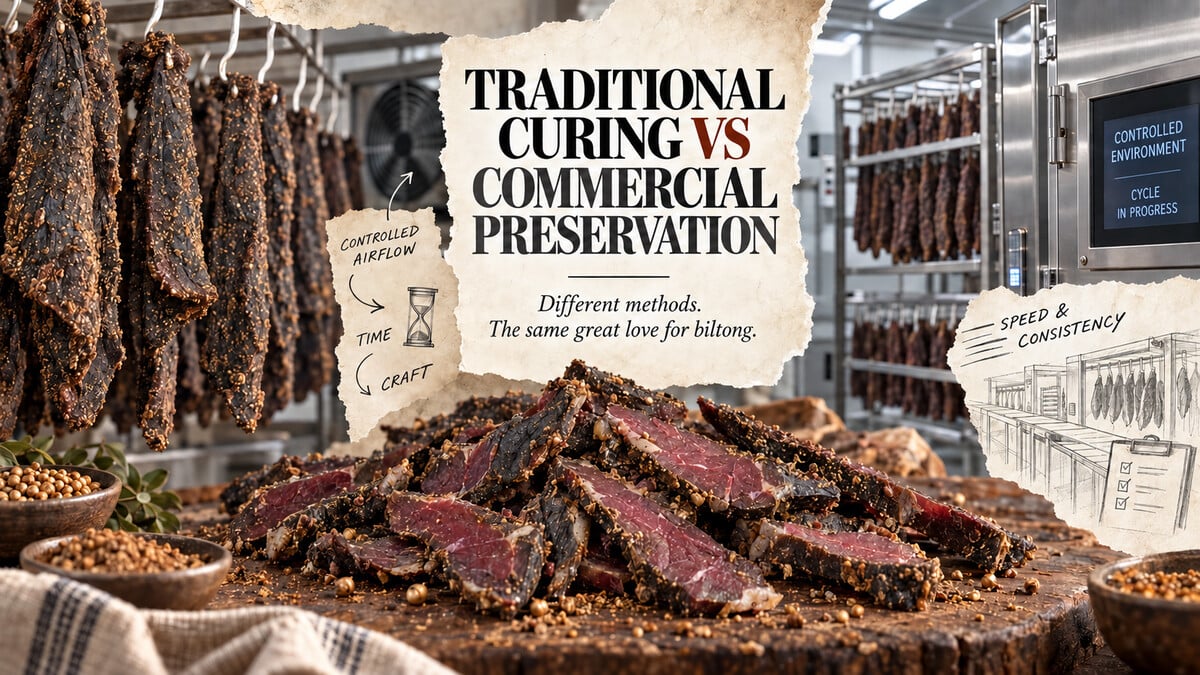
Traditional biltong curing relied on shade, natural airflow and cooler production times, while modern systems use precise temperature, humidity and airflow control to maintain authentic quality.
Traditional Methods vs. Modern Adaptations
How South African Producers Historically Managed Summer Curing
Traditional South African biltong makers developed sophisticated methods to overcome the intense summer heat that could derail the air-curing process. These pioneering producers understood that maintaining consistent enzyme activity required careful environmental management, particularly during the scorching months when temperatures regularly exceeded 30°C (86°F).
Historical records from the Eastern Cape and Free State regions reveal that producers strategically positioned their drying facilities to capture prevailing winds while avoiding direct sunlight exposure. They constructed shaded structures with elevated platforms that promoted natural air circulation, creating microclimates where enzyme activity could proceed at optimal rates despite challenging external conditions.
The timing of production cycles became crucial during summer months. Traditional producers would begin the curing process during cooler evening hours, allowing the initial moisture removal to occur before peak daytime temperatures arrived. This approach prevented the rapid surface dehydration that could halt beneficial enzyme activity and compromise the final product’s texture and flavor development.
Many producers also employed natural cooling techniques, such as wet hessian sacks draped around drying chambers or strategic placement near water sources. These methods maintained the delicate balance between moisture control and temperature regulation that traditional air-curing methods require for proper enzyme function.
Modern Technology Applications in Traditional Processes
Contemporary biltong production facilities have integrated precise climate control systems while maintaining the fundamental principles of traditional air-curing. Advanced humidity sensors and temperature regulation equipment allow producers to create optimal conditions for enzyme activity regardless of external weather patterns.
Modern air circulation systems replicate the natural wind patterns that traditional producers relied upon, but with consistent and controllable airflow rates. These systems ensure that enzyme activity proceeds at the proper pace throughout extended summer curing cycles, preventing the uneven drying that can occur with natural air movement alone.
Commercial producers now utilize specialized chambers that maintain temperatures between 18-22°C (64-72°F) with humidity levels precisely controlled between 55-65%. This technological precision allows for consistent enzyme activity that produces the complex amino acid profiles and protein breakdown patterns essential to authentic South African Beef Biltong flavor development.
Quality monitoring equipment provides real-time data on moisture content and internal temperature, enabling producers to adjust conditions dynamically. These tools help maintain the extended curing cycles necessary for superior flavor development while preventing the quality issues that extreme summer heat can create.
Maintaining Authentic Flavors in Controlled Environments
The challenge facing modern producers lies in preserving the distinctive flavor characteristics that natural air-curing methods create while utilizing controlled environments. Authentic biltong flavor depends on specific enzyme reactions that occur at particular temperature and humidity combinations during extended curing periods.
Research has shown that enzyme activity patterns differ significantly between naturally air-dried and artificially controlled environments. The gradual temperature fluctuations that occur in traditional settings promote certain enzymatic reactions that contribute to the complex flavor profiles associated with premium biltong products.
Leading producers address this challenge by programming controlled environments to mimic natural temperature variations while maintaining optimal ranges for enzyme activity. These systems gradually adjust conditions throughout the curing cycle, allowing the natural enzymatic processes to develop the characteristic tangy, rich flavors that define quality biltong.
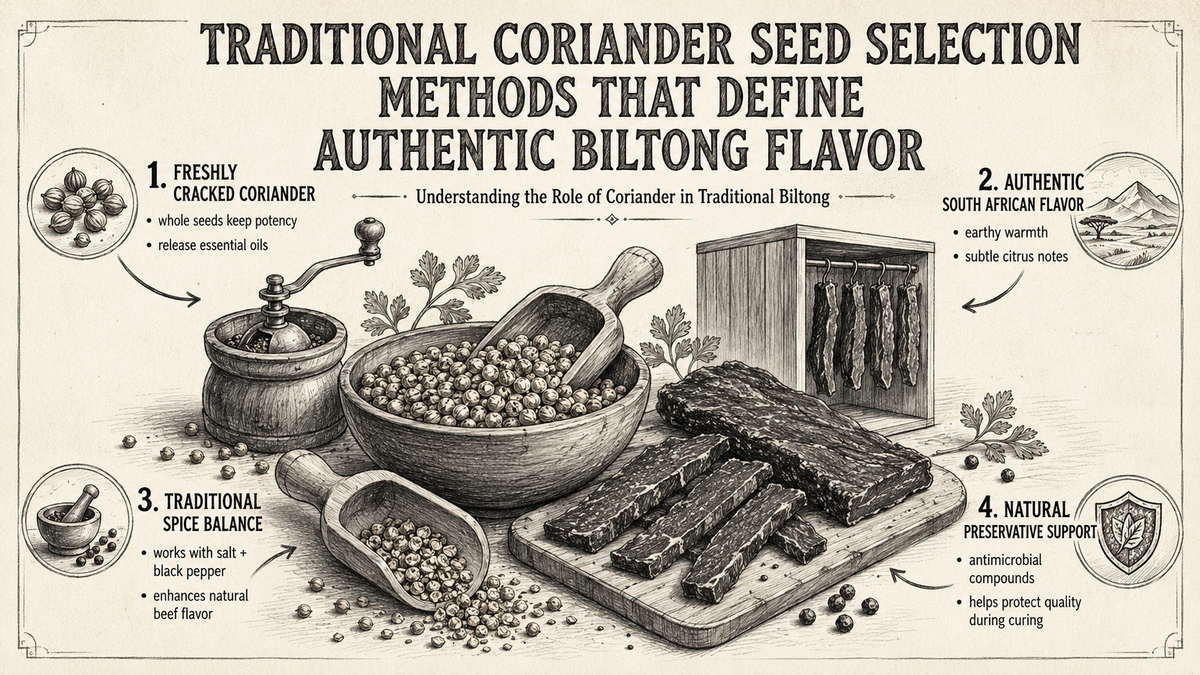
The selection of traditional spices—coriander, black pepper, and vinegar—remains critical in controlled environments. These ingredients not only provide flavor but also influence enzyme activity patterns during the curing process, supporting the natural preservation mechanisms that traditional air-curing methods rely upon.
Scaling Production While Preserving Quality Standards
Commercial biltong production faces the ongoing challenge of maintaining traditional quality standards while meeting increased demand, particularly during summer months when natural curing conditions become less predictable. Successful scaling requires careful attention to enzyme activity patterns across larger production volumes.
Modern facilities employ multiple controlled chambers operating at different stages of the curing cycle, ensuring consistent enzyme activity throughout the production process. This approach allows producers to maintain the extended curing times necessary for proper flavor development while increasing overall throughput capacity.
Quality control protocols now include enzyme activity monitoring at multiple points during the curing process. These measures ensure that each batch receives adequate time for proper protein breakdown and flavor development, regardless of production volume or external weather conditions.
The integration of traditional methods with modern technology has enabled producers in regions like Carlsbad and Escondido to maintain authentic South African biltong characteristics while meeting contemporary food safety standards. This balance ensures that the distinctive qualities of traditional air-curing methods continue to define premium biltong products, even as production scales to meet growing demand for these exceptional protein snacks.