Blog
Why Summer Heat Requires Modified Air-Curing Temperature Protocols

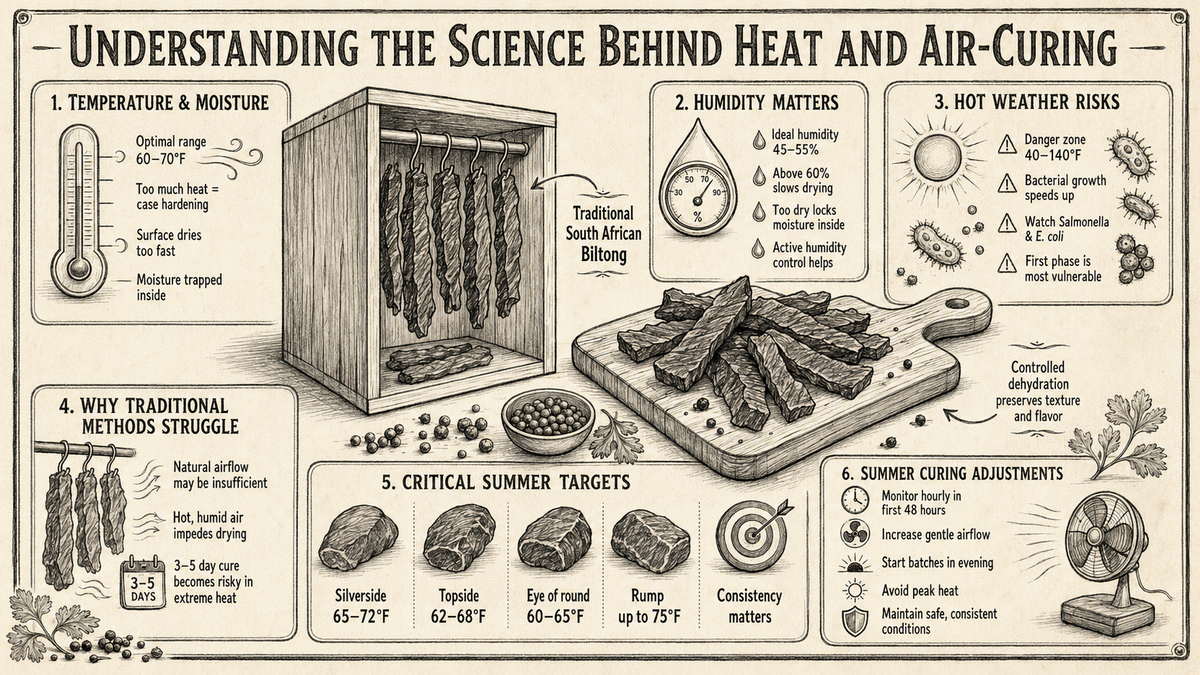
Understanding the Science Behind Heat and Air-Curing
The aroma of perfectly cured beef drifting through the kitchen on a summer day in Carlsbad might seem like the ideal scenario for biltong enthusiasts. But here’s the reality that catches many home curing aficionados off guard: those sweltering July afternoons that feel perfect for outdoor barbecues can actually sabotage your air-curing process in ways you never anticipated.
While traditional South African Beef Biltong has survived centuries of varied climates, the specific challenges of summer heat require a deeper understanding of what’s happening at the molecular level during the curing process. Temperature isn’t just about comfort—it’s about creating the precise environment where moisture extraction, enzymatic breakdown, and preservation converge to create that distinctive biltong texture and flavor.
The difference between successful summer curing and a batch gone wrong often comes down to understanding the delicate balance between too little heat (which slows the process dangerously) and too much (which accelerates bacterial growth faster than beneficial dehydration). This scientific foundation becomes your roadmap for adapting traditional methods to modern summer conditions.
How Temperature Affects Moisture Extraction in Biltong
At its core, biltong curing relies on controlled dehydration that removes moisture while preserving the meat’s protein structure. When temperatures climb above the optimal range of 60-70°F, the extraction process accelerates rapidly, but not in the way you want.
Higher temperatures cause surface moisture to evaporate too quickly, creating what professionals call “case hardening.” This forms a tough outer layer that actually traps moisture inside the meat, preventing proper curing throughout the entire piece. Instead of the gradual, even dehydration that creates biltong’s characteristic texture, you end up with jerky-like exteriors hiding potentially unsafe interiors.
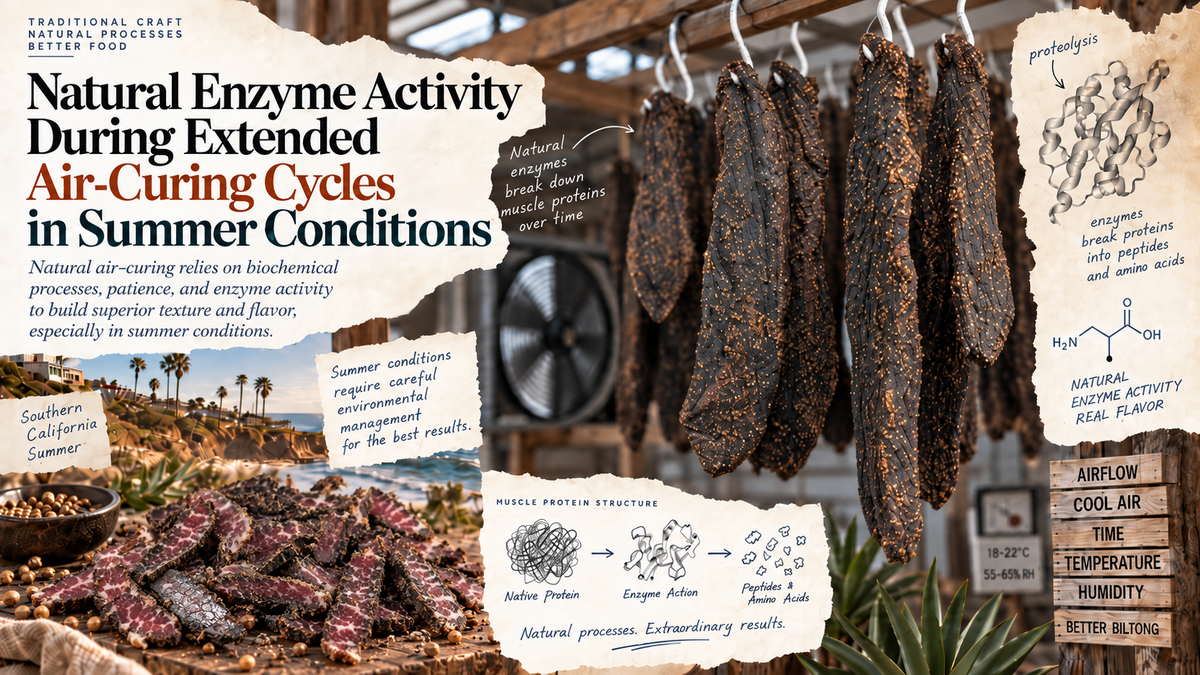
The enzyme activity that breaks down proteins and develops flavor also becomes hyperactive in excessive heat. While some enzymatic action is essential for proper air-drying beef, temperatures above 75°F push these reactions beyond the optimal range, potentially creating off-flavors and compromising the meat’s structure.
Temperature consistency matters just as much as the actual numbers. Summer heat fluctuations—cool mornings followed by blazing afternoons—create expansion and contraction cycles that can crack the developing crust and expose interior meat to contamination risks.
The Role of Humidity in Summer Curing Environments
Summer humidity transforms the entire curing equation, especially in coastal areas like Escondido where marine air adds moisture to already warm conditions. High humidity combined with heat creates the perfect storm for improper curing.
When relative humidity exceeds 60% during hot weather, the air becomes saturated and loses its ability to absorb moisture from the meat effectively. This stalled dehydration process extends curing time significantly, increasing the window for bacterial contamination while failing to achieve the moisture levels necessary for proper preservation.
Conversely, extremely low humidity paired with high temperatures—common during Santa Ana wind conditions—causes rapid surface drying that locks moisture inside. The ideal humidity range of 45-55% becomes even more critical to maintain when ambient temperatures are elevated.
Traditional curing relied on natural air circulation to manage humidity, but summer conditions often require active humidity control to maintain the precise environment needed for safe, consistent results.
Bacterial Growth Risks During Hot Weather Periods
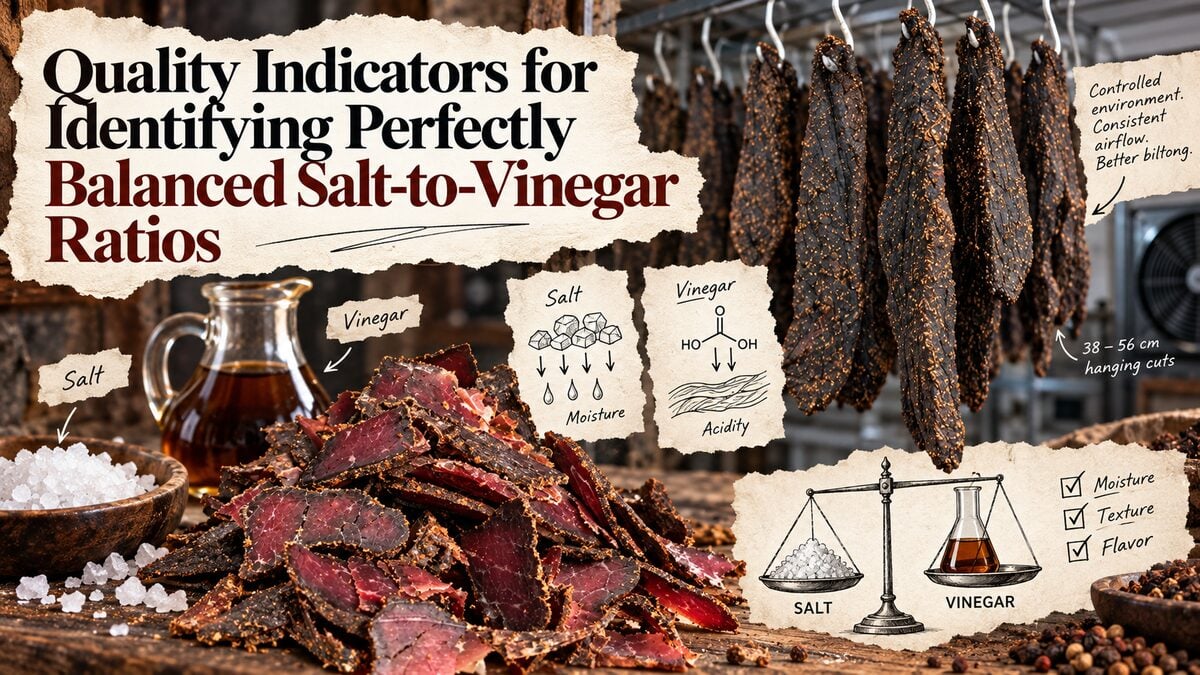
The temperature danger zone for meat—between 40°F and 140°F—becomes particularly treacherous during summer curing. While proper salt application and acidic conditions (from vinegar in traditional recipes) provide some protection, elevated temperatures accelerate both beneficial and harmful bacterial activity.
Pathogenic bacteria like Salmonella and E. coli multiply exponentially faster in warm conditions. What might take 12 hours to become dangerous at 60°F can happen in just 2-3 hours at 85°F. This compressed timeline leaves little margin for error in the critical first phase of curing when the meat is most vulnerable.
Surface bacteria pose particular risks because they can penetrate deeper into the meat when warm temperatures soften the exterior. Traditional salt curing creates a protective barrier, but summer heat can compromise this defense mechanism before it fully develops.
Why Traditional Curing Methods Fall Short in Extreme Heat
The air-curing techniques perfected in South Africa’s moderate climate zones assume specific temperature ranges that summer heat routinely exceeds. Traditional hanging methods that work beautifully in spring and fall can become liability in July and August.
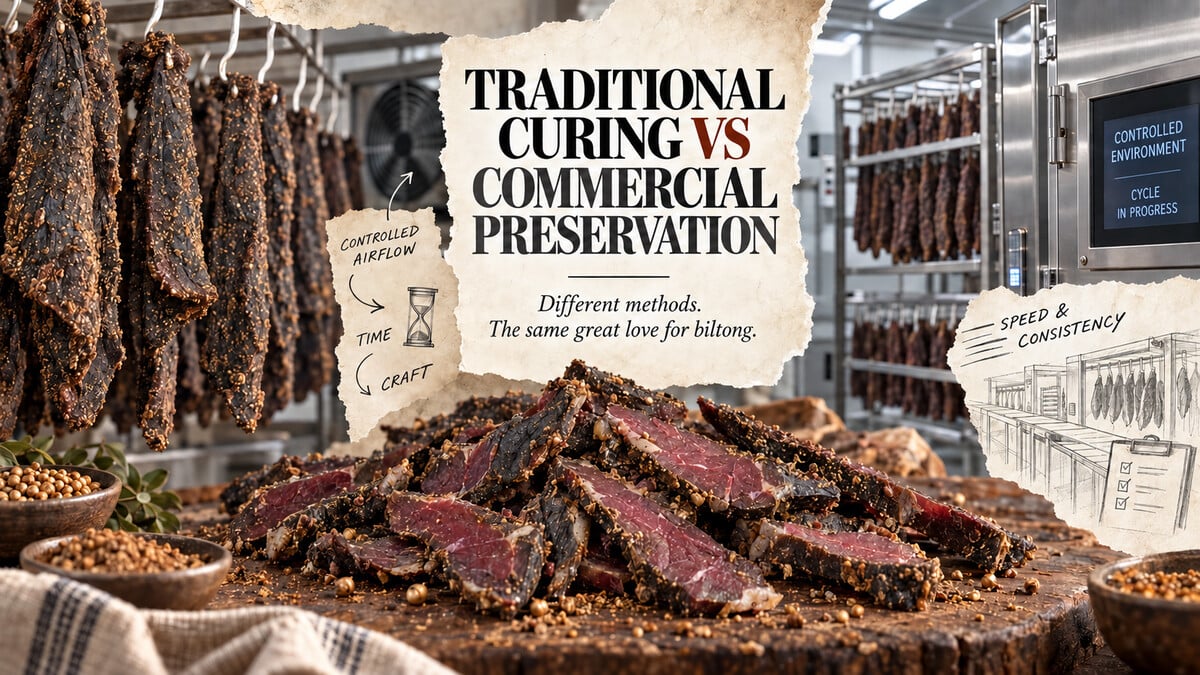
Natural air circulation—the cornerstone of traditional curing—becomes insufficient when ambient temperatures climb. The gentle airflow that normally carries away moisture instead circulates hot, humid air that impedes proper dehydration. Without active temperature control, even the most authentic traditional methods struggle against modern summer extremes.
Timing becomes compressed in ways that traditional methods don’t account for. The leisurely 3-5 day curing process that allows flavors to develop gradually becomes a race against bacterial growth when temperatures soar, forcing adaptations that maintain safety without sacrificing the quality that makes proper biltong exceptional.
Critical Temperature Thresholds for Summer Biltong Production
Optimal Temperature Ranges for Different Meat Cuts
The temperature sweet spot for summer biltong production varies dramatically depending on your meat cut selection. Silverside, the traditional favorite, performs best between 65-72°F (18-22°C) during hot weather months. This range allows the natural dehydration process to work without triggering bacterial growth or causing the meat fibers to tighten too rapidly.
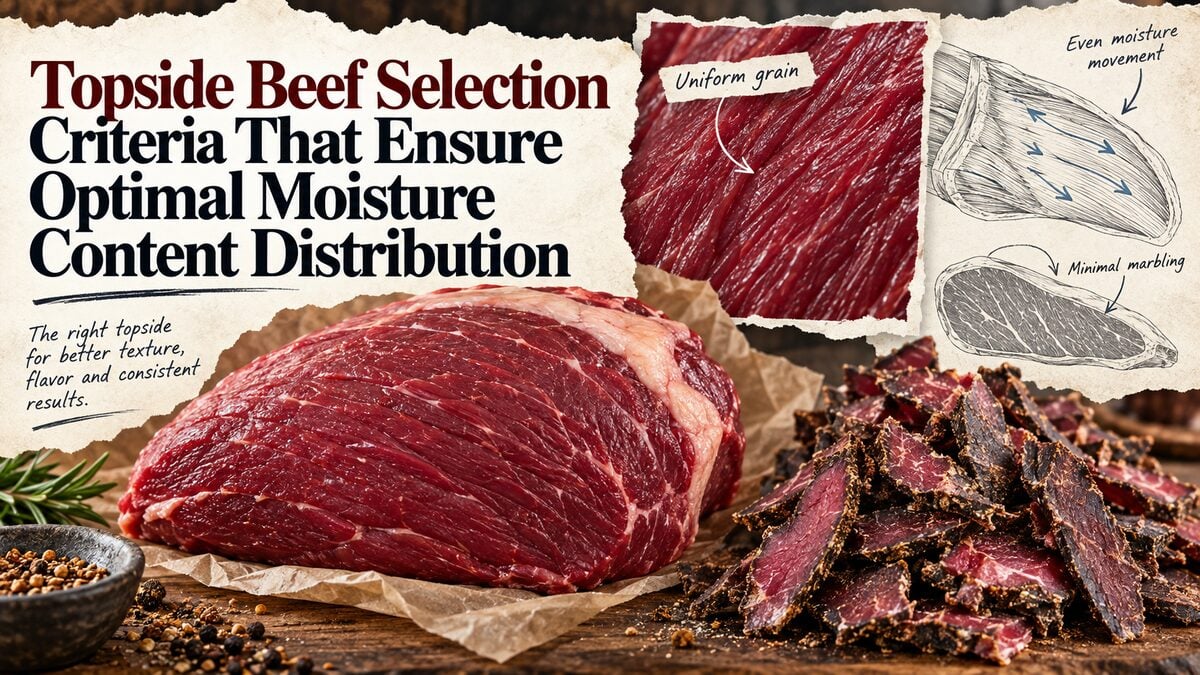
Topside cuts require slightly cooler conditions, ideally 62-68°F (17-20°C), because their denser muscle structure retains moisture longer. When Carlsbad temperatures climb into the 80s and 90s, these thicker cuts become particularly vulnerable to surface hardening while the interior remains dangerously moist.
Eye of round demands the most precise control, functioning optimally at 60-65°F (15-18°C). Its lean composition makes it extremely sensitive to heat fluctuations. Even a few degrees above threshold can transform what should become perfectly textured South African Beef Biltong into an inconsistent product with tough exteriors and soft centers.
Rump cuts offer more forgiveness, tolerating ranges up to 75°F (24°C) thanks to their marbling. However, the fat content that provides this flexibility also means you need consistent airflow to prevent rancidity during extended summer curing cycles.
Monitoring Internal vs. External Temperature Variations
Summer heat creates significant temperature differentials that can sabotage your curing process. External ambient readings tell only part of the story – the meat’s internal temperature often lags 8-12 degrees behind environmental changes during rapid weather shifts.
Professional biltong producers track both surface and core temperatures using dual-probe systems. Surface readings should remain within 2-3 degrees of your target range, while internal temperatures need 6-8 hours to stabilize after environmental changes. This lag time becomes critical during those brutal Escondido heat waves when afternoon temperatures can spike 20 degrees in two hours.
Meat thickness directly impacts temperature penetration rates. Strips cut to traditional 1-inch thickness require 4-6 hours for temperature equilibrium, while thicker 1.5-inch pieces need 8-10 hours. This timing difference means starting your monitoring protocol earlier in the day, before peak heat hits your curing environment.
Humidity interactions compound temperature variations. When external temperatures exceed 80°F (27°C) with humidity above 60%, the meat’s internal temperature can climb 5-8 degrees higher than ambient readings. Understanding the science becomes essential for managing these complex thermal relationships during summer months.
Equipment Calibration for Seasonal Adjustments
Standard thermostats lose accuracy during extreme temperature swings common in Southern California summers. Digital controllers require recalibration every 30 days when operating above 75°F consistently. Most units drift 2-4 degrees over extended high-temperature periods, enough to compromise your entire batch.
Airflow systems need seasonal adjustments to compensate for increased ambient temperatures. Fan speeds that work perfectly in spring may prove insufficient when fighting 90-degree external heat. Boosting circulation by 20-30% helps maintain target temperatures, but excessive airflow can cause surface hardening.
Insulation becomes your ally during summer production. Adding thermal barriers around your curing chamber reduces external heat intrusion by 8-12 degrees. Simple reflective wrapping or additional wall layers can mean the difference between successful summer batches and costly failures.
Timer systems require adjustment for extended summer curing cycles. Higher temperatures accelerate some aspects of the process while slowing others, creating timing conflicts that automated systems can’t resolve without manual intervention.
Warning Signs of Temperature-Related Curing Failures
Surface hardening appears as the first visible indicator of temperature problems. When exterior meat develops a tough, leathery skin while interiors remain soft, you’re dealing with excessive heat exposure. This condition typically develops within 12-16 hours of temperature spikes above optimal ranges.
Uneven color development signals inconsistent temperature control. Properly cured biltong develops uniform deep red coloration throughout. Patchy browns, grays, or black spots indicate temperature variations that compromise both safety and flavor development.
Accelerated moisture loss creates another red flag. Normal biltong loses 60-70% of its original weight over 3-7 days. Rapid weight loss exceeding 15% in the first 24 hours suggests temperatures too high for controlled dehydration.
Off-odors develop quickly when temperature control fails. Fresh, clean aromas should persist throughout curing. Sour, ammonia-like, or overly sweet smells indicate bacterial activity triggered by improper temperature management.
Texture inconsistencies become apparent during final testing. Properly temperature-controlled biltong tears cleanly along grain lines with consistent resistance. Brittle, crumbly textures or sections that compress rather than tear indicate temperature-induced structural damage to the meat fibers.
Modified Protocols for Hot Weather Curing Success
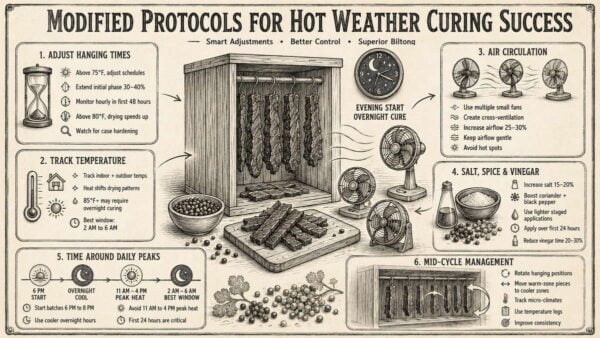
Infographic showing summer biltong curing tips with heat adjustments, airflow control, and seasoning changes for successful meat drying in hot weather.
Adjusting Hanging Times Based on Ambient Temperature
When temperatures climb above 75°F, traditional curing schedules need fundamental adjustments. The accelerated moisture loss in hot weather means your standard five to seven-day hanging period becomes dangerously condensed. Most craft producers find success extending initial hanging phases by 30-40% during peak summer months.
Temperature differentials create uneven drying patterns that require careful monitoring. While cooler spring conditions allow for predictable 12-hour cycles, summer heat demands hourly assessment during the first 48 hours. The key lies in recognizing that ambient temperatures above 80°F can reduce overall curing time by nearly half, but increase the risk of case hardening where the exterior dries too quickly.
Smart producers track both indoor and outdoor temperatures throughout the day. When outdoor temperatures exceed 85°F, many successful operations shift to overnight curing periods exclusively. This approach leverages natural temperature drops between 2 AM and 6 AM, when conditions more closely mirror traditional curing environments.
Strategic Air Circulation Modifications for Summer Months
Increased air movement becomes critical when working with elevated temperatures, but the approach requires precision rather than simply cranking up fan speeds. Gentle, consistent airflow prevents hot spots while maintaining the gradual moisture migration essential for quality South African Beef Biltong development.
The optimal summer setup involves positioning multiple smaller fans rather than relying on single high-powered units. This creates cross-ventilation patterns that prevent stagnant air pockets where bacteria can flourish. Most experienced producers increase air circulation by 25-30% during hot weather, but maintain the same gentle velocity to avoid rapid surface drying.
Timing becomes equally important as intensity. Running circulation systems during cooler evening and early morning hours, then reducing airflow during peak heat periods, helps maintain consistent drying rates. This rhythm mimics the natural temperature fluctuations that traditional outdoor curing methods relied upon in South African climates.
Salt and Spice Ratio Adaptations for Heat Resistance
Summer conditions demand modifications to traditional seasoning approaches, particularly regarding salt concentration and spice distribution. Higher temperatures accelerate salt penetration, requiring careful adjustment to avoid over-salting while maintaining proper preservation properties.
Many producers increase their base salt ratio by 15-20% during hot weather curing, recognizing that accelerated moisture loss can concentrate flavors unpredictably. Coriander and black pepper ratios often require similar increases, as volatile oils dissipate more rapidly in warm, humid conditions common to coastal areas like Carlsbad.
The application technique also shifts during summer months. Instead of the traditional single heavy application, successful summer curing often involves multiple lighter applications over the first 24 hours. This staged approach ensures even penetration without creating overly salty exterior layers that can inhibit proper moisture migration.
Vinegar application timing becomes particularly critical in hot weather. The acidic treatment that helps initiate proper curing must be adjusted for temperature, as higher heat accelerates the initial chemical reactions. Reducing vinegar contact time by 20-30% prevents over-acidification while maintaining food safety standards.
Timing Your Curing Cycles Around Daily Temperature Peaks
Successful summer curing requires strategic timing that works with natural temperature rhythms rather than against them. Starting new batches during evening hours, typically between 6 PM and 8 PM, allows initial moisture loss to occur during cooler overnight periods when conditions more closely resemble traditional curing environments.
The critical first 24-hour period determines success or failure in hot weather curing. Temperature logs from successful operations show the importance of avoiding the 11 AM to 4 PM peak heat window during initial hanging. This scheduling approach, while requiring adjustment to normal production routines, significantly improves consistency in final product quality.
Mid-cycle management involves rotating hanging positions based on daily temperature patterns. Moving pieces from warmer to cooler zones within your curing space prevents uneven drying that can compromise texture and flavor development. Understanding proper storage techniques becomes essential as finished products may reach completion faster than expected during hot weather periods.
Professional producers often maintain detailed temperature logs that track not just ambient conditions, but micro-climates within their curing environments. This data helps predict optimal timing for each stage of the process, ensuring consistent results despite challenging summer conditions.
Equipment and Environment Adaptations
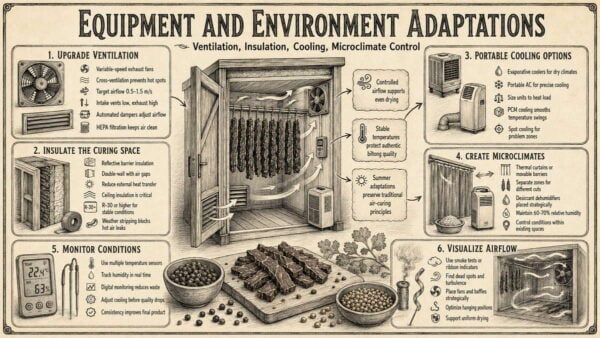
Illustrated guide showing ventilation, cooling, and humidity control tips for summer biltong curing in a well-designed meat drying cabinet.
Upgrading Ventilation Systems for Consistent Airflow
Effective ventilation becomes absolutely critical during summer months when ambient temperatures can disrupt the delicate balance required for proper biltong curing. Traditional air-curing relies on consistent airflow to remove moisture while maintaining optimal temperature ranges, but summer heat introduces variables that demand systematic upgrades to existing ventilation infrastructure.
Installing variable-speed exhaust fans allows for precise airflow control that adapts to changing external conditions. These systems should be positioned to create cross-ventilation patterns that eliminate hot spots and ensure uniform air distribution throughout the curing space. The key is maintaining air movement rates between 0.5 to 1.5 meters per second across all meat surfaces.
Strategic placement of intake vents at lower elevations and exhaust points at ceiling level capitalizes on natural thermal dynamics while preventing stagnant air pockets. Many successful operations in warmer climates like Southern California integrate automated damper systems that adjust ventilation rates based on real-time temperature and humidity readings.
Consider installing HEPA filtration systems to prevent dust and contaminants from compromising meat quality during extended summer curing cycles. Clean air circulation becomes even more important when higher temperatures could accelerate bacterial growth if proper protocols aren’t followed.
Insulation Strategies to Maintain Stable Curing Conditions
Proper insulation serves as the first line of defense against temperature fluctuations that can derail summer biltong production. Reflective barrier insulation installed on exterior walls helps deflect radiant heat while maintaining internal temperature stability throughout daily heat cycles.
Double-wall construction with air gaps creates thermal buffers that prevent external heat transfer. This approach is particularly effective for dedicated curing rooms where consistent environmental control is paramount. The investment in proper insulation typically pays for itself through reduced cooling costs and improved product consistency.
Ceiling insulation deserves special attention since heat naturally rises and can create temperature gradients within the curing space. R-30 or higher insulation values help maintain uniform temperatures from floor to ceiling, preventing the uneven drying patterns that compromise South African Beef Biltong quality.
Weather stripping around doors and windows eliminates air leaks that can introduce hot, humid air into controlled environments. Even small gaps can significantly impact temperature stability during peak summer heat when external conditions are most challenging.
Portable Cooling Solutions for Small-Scale Operations
Small-batch producers often lack the infrastructure for permanent climate control systems, making portable cooling solutions essential for summer operations. Evaporative coolers provide cost-effective temperature reduction while adding beneficial humidity control in dry climates common throughout California’s inland regions.
Portable air conditioning units offer precise temperature control but require careful sizing to avoid over-cooling that could disrupt the natural air-curing process. Units should be selected based on BTU requirements calculated from cubic footage and expected heat load rather than simply choosing the largest available option.
Phase change material (PCM) cooling systems offer innovative solutions for maintaining stable temperatures without constant energy consumption. These systems absorb excess heat during peak hours and release cooling effects gradually, smoothing temperature fluctuations that could impact curing quality.
Spot cooling with directed airflow helps address specific problem areas within larger curing spaces. This targeted approach allows producers to maintain optimal conditions in critical zones while managing energy costs more effectively than whole-space cooling systems.
Creating Microclimate Control in Existing Curing Spaces
Transforming existing spaces into effective summer curing environments requires strategic microclimate management that works within current infrastructure limitations. Thermal curtains or moveable barriers help create isolated zones with independent climate control, allowing different cuts to cure under optimal conditions simultaneously.
Humidity management becomes particularly challenging when implementing our processes during summer months. Desiccant dehumidifiers positioned strategically throughout the space help maintain the 60-70% relative humidity range essential for proper biltong development without over-drying.
Temperature monitoring networks with multiple sensors provide real-time data on conditions throughout the curing space. This information enables precise adjustments to cooling and ventilation systems before temperature variations can impact product quality. Digital monitoring systems typically pay for themselves through reduced waste and improved consistency.
Airflow visualization using smoke tests or ribbon indicators helps identify dead spots and turbulent areas that could compromise uniform drying. Understanding air movement patterns allows for strategic placement of fans, baffles, and meat hanging positions that optimize the curing environment.
Integration of these environmental adaptations requires careful planning to maintain the traditional air-curing principles that define authentic biltong while accommodating summer heat challenges.
Quality Control and Safety Measures
Testing Protocols for Heat-Stressed Biltong Batches
Summer heat creates stress conditions that require rigorous testing protocols to ensure consistent quality. The elevated ambient temperatures in regions like Carlsbad during peak summer months demand systematic evaluation of every batch to catch issues before they compromise the final product.
Start with moisture content testing at 24-hour intervals during the first three days of curing. Heat-stressed batches show accelerated surface drying while interior moisture remains elevated, creating a false sense of progress. A reliable moisture meter becomes essential equipment, with target readings of 35-40% moisture after day one, dropping to 25-30% by day two.
pH testing provides another critical checkpoint. Properly cured South African Beef Biltong maintains a pH between 5.8-6.2 throughout the process, but summer heat can drive rapid acidification. Test every 12 hours during peak temperature periods, looking for sudden drops below 5.5 that indicate accelerated fermentation.
Temperature logging at multiple points within your curing chamber reveals hot spots that standard ambient readings miss. Place sensors at different heights and distances from air circulation sources. Hot spots exceeding 78°F create microclimates that cure unevenly, producing tough spots alongside properly textured areas.
Visual and Textural Indicators of Proper Summer Curing
Summer curing demands heightened attention to visual cues that signal proper progression versus heat-induced complications. The natural darkening process accelerates in higher temperatures, but proper color development should remain gradual and even across the entire surface.
Look for the characteristic deep mahogany color developing uniformly rather than in patches. Heat-stressed biltong often shows mottled coloring with darker edges and lighter centers, indicating uneven moisture migration. The surface should develop a slight firmness without becoming hard or crusty, which happens when external temperatures force moisture out too rapidly.
Texture assessment requires a gentle press test at regular intervals. Properly curing biltong yields slightly to pressure while maintaining structural integrity. Summer heat can create a deceptive firm exterior while the interior remains soft and under-cured. The “give” should decrease gradually over 3-5 days, not dramatically within the first 24 hours.
White mold development, normally beneficial in traditional curing, requires careful monitoring in hot weather. Excessive heat promotes aggressive mold growth that can overwhelm the meat’s natural defenses. Acceptable mold appears as a light, powdery coating, while problematic growth shows thick, dark patches or fuzzy textures.
Storage Adjustments to Prevent Post-Cure Deterioration
Hot weather curing success extends beyond the drying phase into proper storage protocols that maintain quality in challenging ambient conditions. The transition from active curing to storage becomes critical when temperatures remain elevated throughout the day and night cycles common in Southern California summers.
Immediate refrigeration prevents continued moisture loss that turns properly textured biltong into an over-dried product. However, condensation management becomes crucial when moving from warm curing environments to cold storage. Allow batches to reach room temperature gradually before refrigeration to prevent moisture accumulation that promotes spoilage.
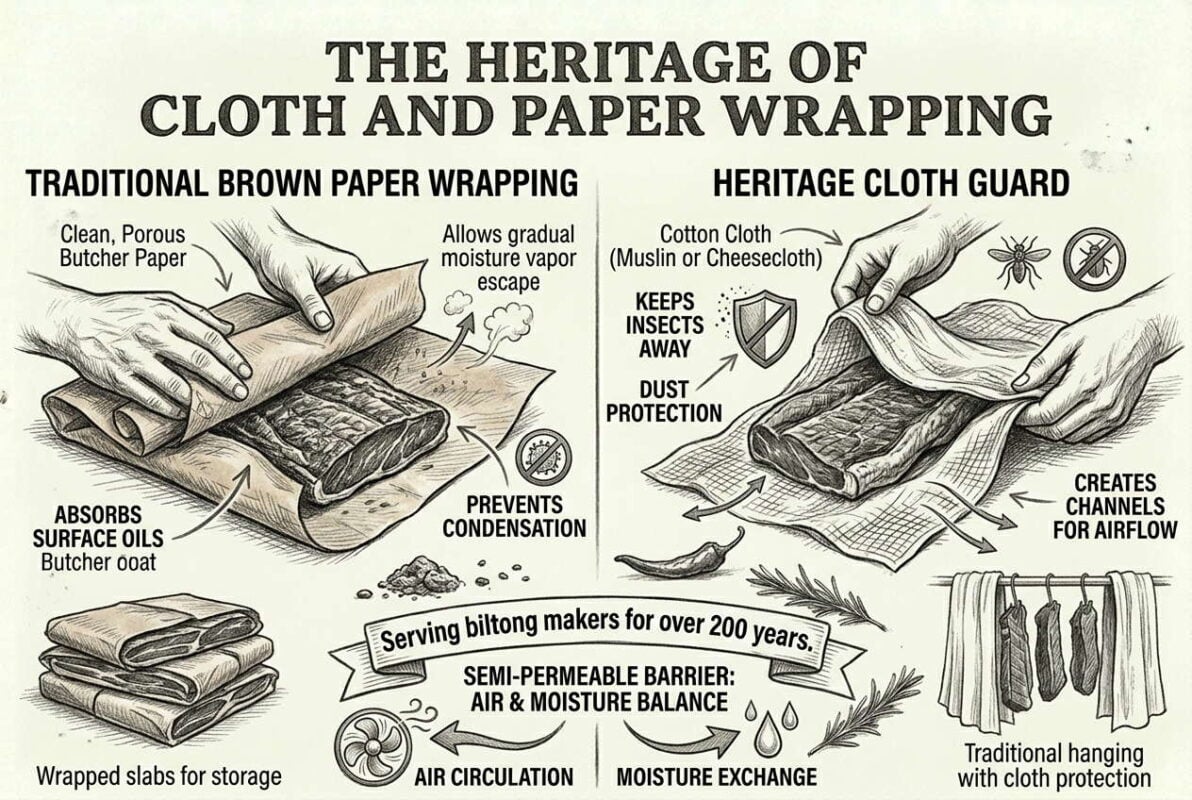
Container selection adapts to summer conditions by prioritizing breathability over moisture retention. Paper bags or perforated containers allow continued air circulation while preventing moisture buildup. Plastic containers, suitable for standard conditions, trap residual moisture in hot weather and create perfect conditions for bacterial growth.
Storage location within refrigeration units matters more during summer months. Lower shelves maintain more consistent temperatures as the cooling system works harder against ambient heat. Upper shelves experience temperature fluctuations that stress the product and reduce shelf life.
Documentation Systems for Tracking Temperature Variables
Systematic documentation transforms summer curing from guesswork into a reproducible process that accounts for temperature variables and their effects on different cuts and preparation methods. Digital logging systems capture data points that manual recording often misses during busy production periods.
Track ambient temperature, humidity, and air circulation rates alongside product-specific data including cut thickness, starting weight, and moisture content. This correlation reveals patterns between environmental conditions and curing outcomes that inform future batch adjustments.
Create temperature threshold alerts that trigger protocol modifications automatically. When ambient temperatures exceed 75°F for more than four consecutive hours, documentation should note corresponding changes in air circulation, humidity control, or batch positioning within the curing environment.
Batch outcome scoring provides quantitative feedback for continuous improvement. Rate texture, flavor development, and overall quality on consistent scales that identify which temperature management strategies produce superior results. This data becomes invaluable for optimizing protocols as seasonal conditions change throughout the year.
Troubleshooting Common Summer Curing Problems
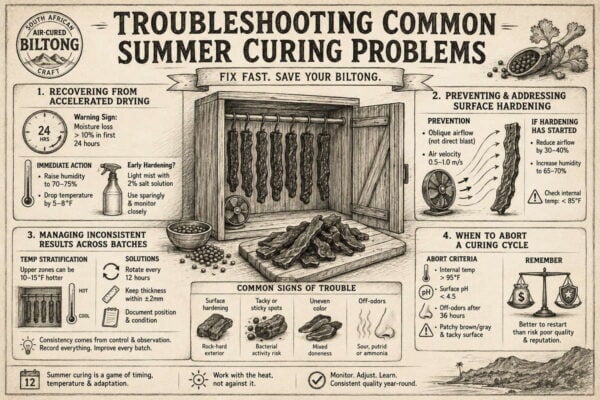
Illustrated guide showing how to troubleshoot summer biltong curing issues with tips for temperature, airflow, and humidity control.
Recovering from Accelerated Drying Incidents
When summer heat pushes your curing beyond ideal parameters, quick intervention can sometimes salvage affected batches. The key indicator is moisture loss exceeding 10% in the first 24 hours—a clear sign that surface proteins are coagulating faster than internal moisture can migrate outward.
Immediate humidity adjustment offers the best recovery path. Raise ambient humidity to 70-75% while dropping temperature by 5-8°F if possible. This creates a more balanced drying environment that allows remaining internal moisture to redistribute properly. The meat surface may appear darker than normal, but internal texture often normalizes within 48 hours of corrective measures.
For strips showing early hardening signs, gentle misting with a 2% salt solution can help rehydrate the outer layer. Apply sparingly—you’re not soaking the meat, just providing enough surface moisture to soften overly rigid proteins. Monitor closely for the next 12 hours, as this technique requires precise timing to avoid creating favorable conditions for bacterial growth.
Preventing and Addressing Surface Hardening Issues
Surface hardening represents the most common failure mode in hot weather curing. This occurs when external layers dry so rapidly that they form a moisture-impermeable barrier, trapping water inside and creating ideal conditions for spoilage.
Prevention starts with proper air circulation patterns. Position strips so airflow hits them at oblique angles rather than direct frontal exposure. This gentler air movement prevents the aggressive surface dehydration that leads to case hardening. Maintain air velocity between 0.5-1.0 meters per second—fast enough to promote evaporation but not so aggressive that it creates temperature differentials across the meat surface.
If surface hardening has already begun, the window for correction is narrow but achievable. Immediately reduce air velocity by 30-40% and increase humidity to 65-70%. The hardened exterior may crack slightly as internal pressure redistributes, but this cracking actually helps restore proper moisture migration. Monitor internal temperature with a probe thermometer; readings above 85°F indicate the hardened surface is trapping heat along with moisture.
Managing Inconsistent Curing Results Across Batches
Summer heat creates microclimates within your curing environment that can produce dramatically different results even among strips hung mere inches apart. Temperature stratification becomes particularly problematic, with upper areas potentially running 10-15°F hotter than lower zones.
Combat this inconsistency by implementing a rotation protocol every 12 hours. Move strips from high-temperature zones to cooler areas, ensuring even exposure across the entire batch. Document the position and condition of each batch segment—this data becomes invaluable for optimizing future summer curing cycles.
Batch consistency also depends on uniform piece sizing. Summer heat amplifies the impact of thickness variations, so maintain strict tolerances of ±2mm across all strips. Thicker pieces will lag behind in moisture loss, creating mixed doneness within a single batch. When consistency matters more than speed, consider extending curing times for larger pieces rather than forcing faster drying with higher temperatures.
When to Abort a Curing Cycle Due to Heat Damage
Recognizing when to cut losses saves both time and materials. Several indicators signal irreversible heat damage that no amount of protocol adjustment can fix. Internal temperatures sustained above 90°F for more than 4 hours typically cause protein denaturation that creates unpleasant textures and flavors.
Visual cues include surface discoloration beyond normal darkening—specifically, patchy brown or gray areas that feel tacky to the touch. These zones indicate bacterial activity accelerated by excessive heat and moisture retention. Trust your nose as well; properly curing South African Beef Biltong should smell clean and slightly tangy, never sour or putrid.
The decision to abort becomes clearer when you consider the economics. Materials lost to heat damage cost less than the reputation damage from delivering substandard products. Establish clear abort criteria before starting summer batches: internal temperature above 95°F, surface pH below 4.5, or any off-odors after 36 hours.
Understanding these troubleshooting techniques transforms summer curing challenges from production disasters into manageable seasonal adjustments. The craft of air-curing demands both technical precision and practical wisdom—knowing when to push forward with corrections and when to restart completely. Each batch teaches valuable lessons that improve your heat management protocols and ensure consistent quality regardless of external conditions.
Related Posts
- What is Biltong?
- Craving a Snack Makeover? Introducing Biltong: Healthy Deliciousness!
- Read On to Know How Biltong Differs From Beefy Jerky As A Meat Snack
- Healthy Beef Snacks: Hearty, and Heavenly
- Biltong: It’s More Versatile than You Think!
- Biltong vs. Jerky: What’s the Difference?
- Experience the Tasty Tradition of South African Biltong
- How South African Spices Define the Flavor of True Craft Biltong
- The Science of Air-Drying Beef: Why Biltong’s Texture Is Unmatched
- From Field to Flavor: The Journey of South African Biltong Craftsmanship
- Spice Stories: How Traditional South African Flavors Inspire Modern Biltong
- How To Store Biltong