Blog
Traditional Coriander Seed Selection Methods That Define Authentic Biltong Flavor

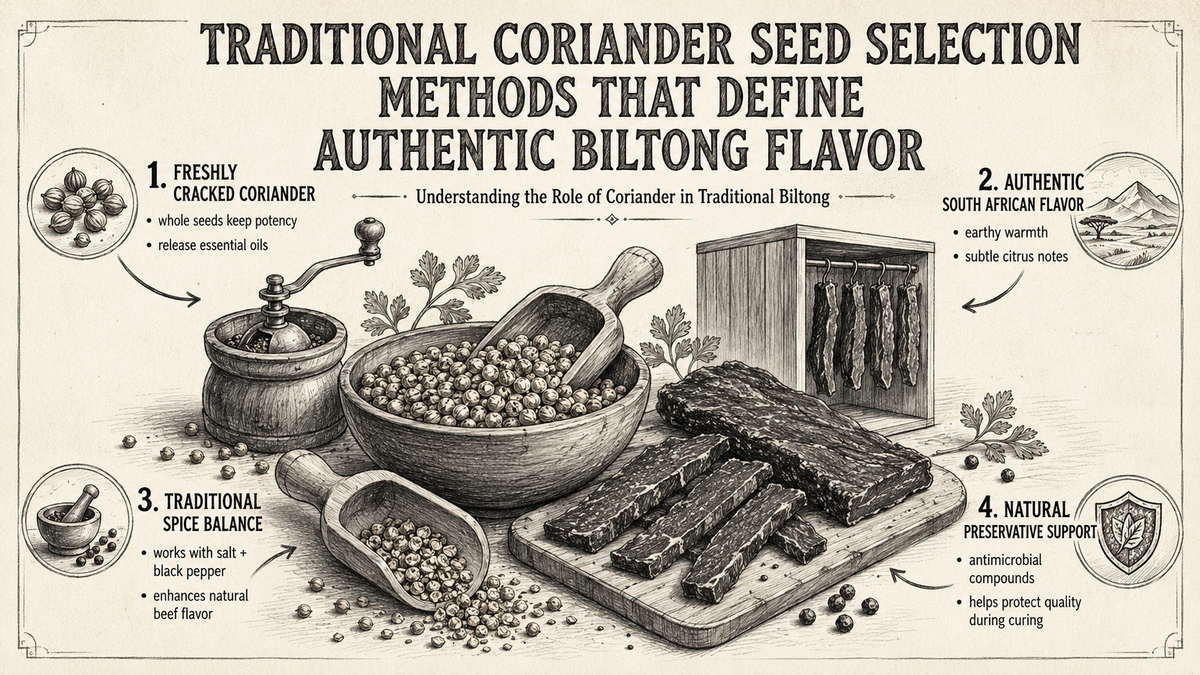
Understanding the Role of Coriander in Traditional Biltong
The distinctive aroma that wafts from properly prepared biltong comes from one unmistakable source: freshly ground coriander seeds. This small, ribbed seed transforms ordinary beef into the complex, aromatic delicacy that defines authentic South African air-cured meat. While many modern producers rely on pre-ground spices or artificial flavorings, traditional biltong makers understand that the quality and selection of whole coriander seeds determines whether your final product achieves that perfect balance of earthy warmth and subtle citrus notes.
In Carlsbad’s growing artisan food scene, discerning consumers increasingly seek out authentic flavors that connect them to traditional food preparation methods. The difference between commercial jerky and properly prepared South African Beef Biltong often comes down to this single ingredient choice.
Why Coriander Seeds Are Essential to Authentic Biltong Flavor
Coriander seeds provide the foundational flavor profile that distinguishes biltong from all other air-cured meats. Unlike the aggressive heat of commercial jerky seasonings, coriander delivers a gentle warmth that complements rather than masks the natural beef flavors. The seeds contain essential oils that release slowly during the air-curing process, creating layers of flavor that develop over days rather than minutes.
The whole seeds maintain their potency far longer than ground alternatives. When you crack fresh coriander just before use, you release volatile compounds that would otherwise dissipate in pre-ground versions. This freshness becomes particularly important during the extended curing period, where the spice needs to maintain its character while moisture slowly leaves the meat.
Traditional biltong makers prize coriander for its ability to enhance umami flavors without overwhelming the meat’s natural taste. The seeds contain compounds that actually work with the muscle proteins during curing, creating new flavor molecules that give properly prepared biltong its distinctive complexity.
The Historical Origins of Coriander in South African Meat Curing
Dutch settlers brought coriander to South Africa in the 17th century, where it quickly became integrated into local preservation techniques. The spice proved ideal for the hot, dry climate of the African interior, where traditional European preservation methods often failed. Indigenous Khoikhoi peoples had already developed sophisticated meat-drying techniques, and coriander enhanced these methods while adding antimicrobial properties.
The Voortrekkers who moved inland during the Great Trek relied heavily on biltong as a protein source during long journeys. They discovered that coriander not only improved flavor but helped maintain meat quality in challenging conditions. This practical application cemented coriander’s place as the primary seasoning in traditional biltong recipes.
By the 19th century, specific regional preferences had emerged. Cape regions favored higher coriander ratios, while inland areas developed variations that incorporated local indigenous spices alongside the standard coriander base. These regional differences persist today among traditional producers who maintain family recipes passed down through generations.
How Coriander Interacts with Other Traditional Spices
Coriander serves as the harmonizing element that binds other traditional biltong spices into a cohesive flavor profile. When combined with coarse salt, the coriander’s natural oils help distribute the salt evenly across the meat surface while moderating its intensity. This interaction prevents the harsh saltiness that can overpower delicate beef flavors.
The relationship between coriander and black pepper creates the classic biltong heat signature. Coriander’s warm, slightly sweet notes balance pepper’s sharp bite, creating a gentle warmth rather than aggressive spiciness. This balance allows the meat’s natural flavors to remain prominent while adding complexity.
Vinegar, essential for initial meat preparation, reacts with coriander’s essential oils to create new aromatic compounds. This chemical interaction begins the flavor development process before air-curing even starts. The experience the tasty demonstrates how these traditional combinations create superior results compared to modern shortcuts.
The Science Behind Coriander’s Preservative Properties
Coriander contains natural antimicrobial compounds, particularly linalool and geraniol, which help inhibit bacterial growth during the critical early stages of air-curing. These compounds work synergistically with salt to create an environment where beneficial flavor development can occur while preventing spoilage.
The essential oils in fresh coriander seeds also contain antioxidants that help prevent rancidity in the meat’s natural fats. This preservation effect becomes crucial during the extended curing period, where exposed fat surfaces could otherwise develop off-flavors that would ruin the final product.
Research shows that coriander’s preservative effects increase when the seeds are freshly cracked rather than pre-ground. The protective oils remain stable within the whole seed structure until released through grinding, maintaining their antimicrobial potency throughout the curing process.
Visual and Physical Selection Criteria for Premium Coriander Seeds
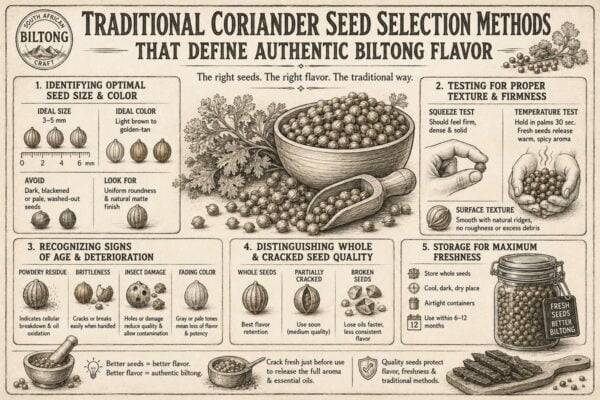
Illustrated guide showing how to choose the best coriander seeds for authentic South African biltong flavor.
Identifying Optimal Seed Size and Color
Premium coriander seeds for traditional biltong carry distinct visual markers that separate exceptional quality from mediocre options. The ideal seed measures between 3-5 millimeters in diameter, with uniform roundness that indicates proper maturation during harvest. Seeds displaying this optimal size contain the highest concentration of essential oils that create the complex flavor profile essential to authentic South African Beef Biltong.
Color serves as the most reliable initial quality indicator. Fresh, high-grade coriander seeds exhibit a light brown to golden-tan hue with subtle variations that reflect natural drying processes. Avoid seeds showing dark brown or blackened areas, which signal improper storage or moisture damage that compromises flavor development. The surface should display a consistent matte finish rather than glossy or oily appearances that indicate potential contamination.
Professional biltong makers examine seed batches under natural lighting to detect color inconsistencies that artificial lighting often masks. Seeds with pale, washed-out coloring typically lack the robust flavor compounds needed for traditional air-curing methods, while overly dark specimens may introduce bitter notes that overpower the meat’s natural taste.
Testing for Proper Texture and Firmness
Physical examination reveals crucial information about coriander seed quality that visual inspection alone cannot determine. Premium seeds maintain firm structure when pressed between fingers, resisting compression without cracking or crumbling. This firmness indicates proper moisture content and intact cellular structure that preserves volatile compounds during the grinding process.
The traditional squeeze test involves applying gentle pressure to individual seeds using thumb and forefinger. Quality coriander should feel dense and solid, never hollow or spongy. Seeds that compress easily or feel lightweight often contain insufficient essential oils due to premature harvesting or extended storage periods.
Surface texture provides additional quality clues. Run fingers through seed batches to assess consistency and detect foreign materials or damaged specimens. Premium coriander feels smooth with natural ridging patterns, while inferior quality often displays rough, pitted surfaces or excessive debris that indicates poor processing standards.
Temperature sensitivity testing involves holding seeds in closed palms for 30 seconds. Fresh, high-quality coriander releases subtle aromatic compounds from body heat, creating a warm, spicy fragrance. Seeds lacking this response typically contain degraded oils that won’t contribute meaningful flavor to the biltong curing process.
Recognizing Signs of Age and Deterioration
Aged coriander seeds display telltale deterioration signs that dramatically impact biltong flavor development. Examine seed surfaces for fine powdery residue that indicates cellular breakdown and oil oxidation. Fresh seeds maintain clean surfaces without dust accumulation or powdery coatings that suggest extended storage periods.
Brittleness serves as another aging indicator. Premium coriander maintains structural integrity when handled, while aged seeds crack or break apart during normal inspection. This brittleness occurs when moisture levels drop below optimal ranges, causing cellular walls to weaken and essential oils to evaporate.
Check for insect damage or small holes that indicate pest activity during storage. These penetrations allow air exposure that accelerates oil degradation and introduces contaminants affecting flavor purity. Quality suppliers implement proper storage protocols that prevent such damage, maintaining seed integrity throughout distribution chains.
Fading represents gradual quality loss that occurs over time. Compare suspect batches against known fresh samples to detect color shifts toward gray or pale tones. Traditional methods emphasizing natural spice selection rely on these visual cues to maintain consistent biltong flavor profiles across production cycles.
Distinguishing Between Whole and Cracked Seed Quality
Whole coriander seeds preserve flavor compounds more effectively than pre-cracked alternatives, making seed integrity assessment critical for authentic biltong production. Examine batches for crack patterns that reveal handling history and storage conditions. Natural hairline cracks following seed ridges indicate normal aging, while irregular breaks suggest mechanical damage or moisture fluctuations.
Broken seed fragments lose essential oils rapidly through increased surface area exposure. Quality batches contain minimal fragmentation, typically less than 5% broken pieces per volume. Higher fragment ratios indicate rough handling or aged inventory that compromises flavor consistency during traditional air-curing processes.
Partial cracking often occurs along natural fault lines without fully separating seed halves. These partially damaged seeds retain more flavor than complete breaks but less than intact specimens. Professional biltong makers separate these intermediate-quality seeds for immediate use rather than extended storage.
Evaluate seed separation patterns when examining cracked specimens. Clean breaks along natural divisions suggest proper drying and handling, while jagged or splintered edges indicate mechanical stress or improper processing. This distinction affects how efficiently seeds release flavor during grinding and mixing with other traditional biltong seasonings.
Traditional Aroma and Taste Testing Methods
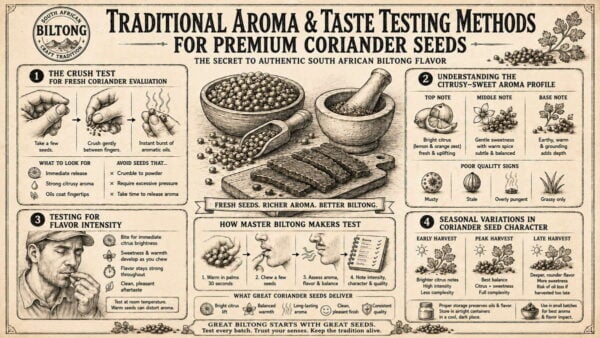
Vintage infographic showing traditional aroma and taste testing methods for premium coriander seeds used in authentic South African biltong.
The Crush Test for Fresh Coriander Evaluation
Traditional biltong makers rely on the crush test as their primary method for evaluating coriander seed freshness and potency. This hands-on technique involves crushing a small quantity of seeds between your fingers and immediately assessing the release of essential oils. Fresh, high-quality coriander seeds will produce an immediate burst of aromatic oils that coat your fingertips with a distinct citrusy fragrance.
The crushing motion should be gentle but firm, applying just enough pressure to break the seed’s outer shell without pulverizing it completely. Master biltong craftsmen can determine seed quality within seconds of this initial crush. Seeds that crumble to powder immediately are often over-dried or aged beyond their prime, while those requiring excessive pressure may indicate poor initial drying or storage conditions.
When performing the crush test, timing matters significantly. The aromatic release should be instantaneous and intense. Seeds that take several seconds to release their oils, or those producing weak aromas, lack the flavor intensity necessary for creating authentic South African Beef Biltong with proper depth and character.
Understanding Proper Citrusy-Sweet Aroma Profiles
Authentic coriander seeds for traditional biltong production display a complex aroma profile that combines bright citrus notes with subtle sweet undertones. The initial scent should remind you of fresh orange peel mixed with delicate floral hints, creating a balanced fragrance that’s neither overpowering nor weak.
Professional biltong makers describe the ideal aroma as having three distinct layers. The top note provides immediate citrusy brightness, similar to lemon zest but softer and more rounded. The middle note introduces gentle sweetness with hints of warm spice, while the base note offers earthy depth that grounds the entire profile. This complexity develops naturally in properly cured and stored coriander seeds.
Poor-quality seeds often present single-dimensional aromas or unpleasant off-notes. Seeds with musty, stale, or overly pungent odors indicate improper storage or contamination. Similarly, coriander that smells purely grassy without citrus complexity lacks the essential oils necessary for developing authentic biltong flavor during the air-curing process.
How Master Biltong Makers Test for Flavor Intensity
Experienced biltong craftsmen employ taste testing methods that go beyond simple aroma evaluation. The traditional approach involves chewing a small quantity of raw coriander seeds to assess their flavor intensity and balance. This direct tasting reveals the seed’s true potential for flavoring biltong during the curing process.
The initial bite should release immediate citrus brightness followed by developing sweetness and gentle warmth. Master biltong makers look for seeds that maintain flavor intensity throughout the chewing process rather than fading quickly. The aftertaste should remain clean and pleasant, with lingering citrusy notes that complement rather than overpower the natural beef flavors in traditional south african.
Temperature plays a crucial role during flavor testing. Seeds should be evaluated at room temperature, as cold conditions can suppress essential oils while excessive heat may create false intensity readings. Professional biltong makers often warm seeds slightly between their palms before testing, activating the oils without artificially enhancing their natural characteristics.
Seasonal Variations in Coriander Seed Character
Traditional biltong production acknowledges significant seasonal variations in coriander seed quality and flavor profiles. Seeds harvested during optimal growing conditions typically display more pronounced citrusy characteristics and better oil retention, directly impacting the final biltong flavor development.
Early harvest coriander often provides brighter, more intense citrus notes but may lack the full complexity that develops with proper field maturation. Late-season seeds usually offer deeper, more rounded flavor profiles with enhanced sweetness, though they risk losing essential oils if harvesting extends too long past peak maturity.
Climate conditions during the growing season significantly influence seed character. Dry, warm growing conditions typically produce seeds with concentrated essential oils and intense flavors, while excessive moisture can dilute oils and create weaker flavor profiles. Traditional biltong makers often source seeds from multiple harvests, blending different seasonal characteristics to achieve consistent flavor results throughout the year.
Storage timing becomes critical when working with seasonal variations. Seeds from different harvest periods may require adjusted storage conditions to maintain optimal flavor intensity. Understanding these seasonal patterns allows master biltong makers to predict and compensate for natural variations, ensuring consistent authentic flavor in their finished products regardless of when production occurs.
Sourcing and Storage Techniques for Authentic Results
Finding Reliable Suppliers for Traditional-Grade Seeds
The foundation of authentic biltong flavor starts with sourcing coriander seeds from suppliers who understand traditional quality standards. Look for distributors who specialize in whole spices rather than ground alternatives, as whole seeds maintain their essential oils and flavor compounds significantly longer.
Established spice importers often work directly with South African farms that cultivate coriander specifically for biltong production. These seeds typically exhibit the robust, citrusy profile that distinguishes authentic South African Beef Biltong from commercial alternatives. When evaluating potential suppliers, request samples from multiple harvest batches to assess consistency in size, color, and aromatic intensity.
Local specialty food stores in areas like Carlsbad and Escondido sometimes carry premium coriander varieties that meet traditional standards. Building relationships with these vendors can provide access to seasonal imports and notification when fresh harvests arrive. Always verify the harvest date and country of origin, as seeds from certain regions consistently deliver the complex flavor profile essential for authentic biltong preparation.
Proper Storage Methods to Maintain Freshness
Coriander seeds lose their potency rapidly when exposed to light, heat, and moisture. Store whole seeds in airtight glass containers away from direct sunlight, maintaining temperatures below 70°F whenever possible. The natural oils that create the distinctive biltong flavor begin degrading within months of exposure to improper storage conditions.
Professional biltong makers often use vacuum-sealed containers with desiccant packets to extend seed viability. This method preserves the volatile compounds responsible for the bright, citrusy notes that balance the rich umami flavors in traditional air-curing processes. Avoid storing seeds near heat sources like ovens or in humid environments like refrigerators, where condensation can promote mold growth.
Consider dividing larger purchases into smaller portions, keeping the majority sealed while working from a smaller active supply. This approach minimizes repeated exposure to air and moisture, which accelerates the breakdown of essential oils. Label containers with purchase dates and supplier information to track freshness over time.
When to Replace Your Coriander Seed Stock
Fresh coriander seeds should release a pronounced citrus aroma when gently crushed between your fingers. When this characteristic scent becomes faint or develops musty undertones, replacement becomes necessary to maintain flavor quality. Most whole coriander seeds retain optimal potency for 12 to 18 months under proper storage conditions.
Visual changes also indicate declining quality. Seeds that appear dull, shriveled, or show signs of moisture damage will compromise the complex flavor development that occurs during the traditional air-curing process. The natural oils that contribute to authentic biltong taste become rancid over time, creating off-flavors that no amount of seasoning adjustment can correct.
Commercial producers typically rotate stock quarterly, but home practitioners can extend this timeline by purchasing smaller quantities more frequently. This approach ensures consistent access to peak-quality seeds while minimizing waste from deteriorated inventory.
Creating Your Own Quality Control Standards
Develop a systematic approach for evaluating each batch of coriander seeds before use. Start with visual inspection, checking for uniform size, consistent color, and absence of foreign matter or damaged seeds. Seeds should feel firm and dry, never soft or sticky to the touch.
Establish an aroma baseline by testing known high-quality samples against new acquisitions. Document these comparisons to build a reference standard that reflects your specific flavor preferences. Some practitioners create simple rating systems that track characteristics like traditional south african and aromatic intensity across different suppliers and harvest periods.
Test small batches before committing to large-scale production. Prepare sample seasonings using new coriander seeds and compare results against established formulations. This practice helps identify subtle variations in seed quality that might affect the final product’s authentic flavor profile.
Keep detailed records of supplier performance, including consistency ratings, delivery schedules, and any quality issues. This documentation becomes invaluable when scaling production or switching between seasonal suppliers while maintaining the traditional flavor standards that define exceptional biltong.
Grinding and Preparation Best Practices
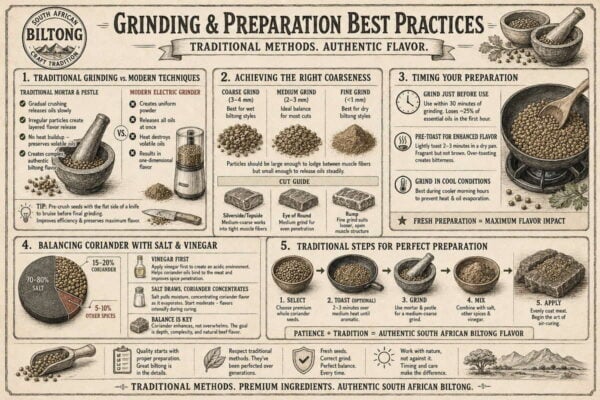
Traditional guide showing how to grind coriander seeds for authentic South African biltong flavor and balanced spice preparation.
Traditional Grinding Methods vs. Modern Techniques
The difference between traditional mortar and pestle grinding versus electric spice grinders fundamentally changes how coriander releases its essential oils. Traditional grinding methods crush the seeds gradually, creating irregular particle sizes that release flavor compounds at different rates during the air-curing process. This uneven release creates the complex, layered flavor profile that defines South African Beef Biltong.
Using a heavy granite mortar and pestle allows you to control pressure and grinding speed, preventing the heat buildup that destroys volatile oils. The crushing action breaks cell walls without generating friction heat, preserving the delicate terpenes that contribute to authentic biltong flavor. Electric grinders, while convenient, create uniform powder that releases all flavor compounds simultaneously, resulting in a one-dimensional taste that lacks the depth traditional methods achieve.
Many Carlsbad biltong makers find that pre-crushing seeds with the flat side of a knife before final grinding helps maintain better oil retention. This technique, borrowed from traditional spice preparation, bruises the seeds without fully breaking them, making the final grinding process more efficient while preserving maximum flavor potential.
Achieving the Right Coarseness for Different Biltong Styles
Coarseness directly impacts how coriander integrates with meat fibers during air-curing. For traditional wet biltong styles, a coarse grind (similar to cracked black pepper) allows the spice to penetrate muscle fibers while maintaining distinct flavor bursts. Fine powder works better for dry biltong varieties where rapid flavor absorption is needed.
The optimal particle size should allow individual pieces to lodge between muscle fibers without creating gritty texture. Testing reveals that 2-3mm particles provide the best balance, large enough to maintain structural integrity during the curing process but small enough to release oils steadily. Anything finer than 1mm tends to create dusty coatings that don’t penetrate effectively.
Different cuts require adjusted grinding approaches. Silverside and topside, with their tight muscle structure, benefit from medium-coarse grinds that can work between fibers. Looser cuts like rump handle fine grinds better, as the open muscle structure allows smaller particles to distribute evenly throughout the meat.
Timing Your Coriander Preparation for Maximum Impact
Fresh grinding timing affects oil content dramatically. Coriander should be ground no more than 30 minutes before application to preserve maximum volatile oil concentration. Ground coriander loses approximately 25% of its essential oils within the first hour of grinding, making immediate use critical for authentic flavor development.
Pre-toasting seeds before grinding intensifies flavor compounds but requires precise timing. Light toasting (2-3 minutes in a dry pan) enhances the nutty undertones that complement beef flavors, but over-toasting creates bitter compounds that overpower the meat’s natural taste. The seeds should release fragrant oils without developing brown coloration.
Temperature control during preparation becomes crucial in warmer climates. Grinding during cooler morning hours prevents heat from accelerating oil evaporation. Many traditional producers in Escondido schedule their spice preparation for early morning when ambient temperatures support better oil retention throughout the mixing and application process.
Balancing Coriander with Salt and Vinegar Components
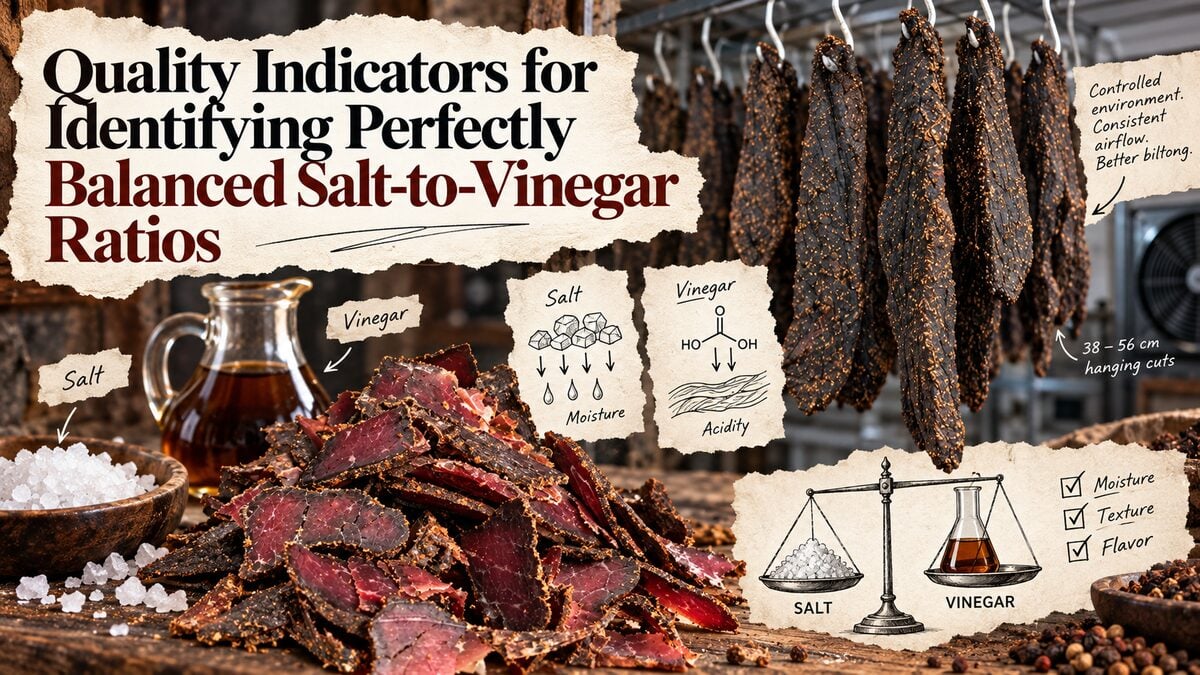
Coriander interacts chemically with both salt and vinegar, requiring careful proportion management. The traditional ratio maintains coriander as approximately 15-20% of the total spice blend weight, with salt comprising 70-80% and remaining spices filling the balance. This proportion ensures coriander provides flavor complexity without overwhelming the meat’s natural characteristics.
Vinegar application timing affects coriander adhesion significantly. Applying vinegar first creates an acidic environment that helps coriander oils bind to meat surfaces more effectively. The acid helps break down muscle proteins slightly, creating better spice penetration while the coriander’s oils provide protective barriers that prevent over-acidification.
Salt draws moisture from meat fibers, concentrating coriander flavors as water evaporates. Understanding this concentration effect helps prevent over-seasoning. Many experienced producers start with lighter coriander applications, knowing that proper storage techniques will intensify flavors as the biltong continues developing complexity during the air-curing process.
Quality coriander preparation requires patience and attention to traditional methods. These techniques, developed over generations, create the authentic flavor profiles that distinguish genuine South African biltong from commercial alternatives that rely on shortcuts and artificial flavor enhancement.
Common Selection Mistakes That Compromise Biltong Quality
Why Pre-Ground Coriander Falls Short of Authentic Standards
The convenience of pre-ground coriander comes at a devastating cost to your biltong’s flavor profile. Commercial grinding operations expose coriander seeds to high heat and extended air contact, which destroys the volatile oils that create that distinctive warm, citrusy note essential to authentic South African Beef Biltong. Within weeks of grinding, these essential compounds oxidize and dissipate, leaving behind a flat, dusty powder that bears little resemblance to fresh coriander.
Traditional biltong makers understand that grinding releases maximum flavor only at the moment of use. Pre-ground coriander sitting on store shelves has already lost 60-80% of its aromatic compounds. The difference becomes obvious when you taste biltong made with freshly ground seeds versus the pre-ground alternative. Fresh grinding creates bright, complex flavors that penetrate the meat during the air-curing process, while stale powder merely sits on the surface without contributing meaningful depth.
Manufacturing dates on pre-ground coriander packages often reveal products that are months old before they reach your hands. Even worse, some commercial blends mix coriander with anti-caking agents and preservatives that interfere with the natural air-curing environment your biltong requires.
Avoiding Low-Grade Seeds That Lack Flavor Depth
Inferior coriander seeds reveal themselves through telltale signs that many producers overlook in their rush to save costs. Small, shriveled seeds with uneven coloring indicate poor growing conditions or premature harvesting. These low-grade seeds contain significantly less coriandrol (the compound responsible for coriander’s signature flavor) and produce weak, bitter notes that create harsh undertones in your finished biltong.
Machine-damaged seeds present another common quality issue. Aggressive mechanical harvesting often cracks seed coats, allowing essential oils to escape during storage and transport. You can identify damaged seeds by their powdery residue and inconsistent appearance. When selecting coriander, look for plump, uniform seeds with intact shells and a consistent golden-brown color.
Geographic origin matters more than most producers realize. Indian and European coriander varieties contain different oil profiles that dramatically affect your biltong’s final taste. European seeds tend toward lemony, floral notes, while Indian varieties offer deeper, nuttier characteristics. Mixing origins without understanding these differences can create muddy, conflicting flavors that mask your meat’s natural qualities rather than enhancing them.
The Impact of Improper Storage on Final Taste
Temperature fluctuations destroy coriander’s flavor compounds faster than any other storage mistake. Seeds stored in warm environments (above 70°F) experience rapid oil degradation that creates rancid, off-putting flavors in your biltong. Many producers unknowingly compromise their coriander by storing it near heat sources, in sunny locations, or in poorly insulated storage areas where temperatures swing wildly.
Moisture exposure presents an equally serious threat to coriander quality. Seeds absorb atmospheric humidity, which encourages mold growth and enzyme activity that breaks down flavor compounds. Proper storage requires airtight containers with moisture levels below 10%. Silica gel packets or vacuum-sealed storage systems help maintain optimal conditions, but many producers rely on inadequate zip-lock bags that allow moisture infiltration.
Light exposure, particularly UV radiation, accelerates the breakdown of coriander’s volatile compounds. Clear glass jars might look appealing, but they expose your seeds to light damage that gradually diminishes their potency. Dark glass containers or opaque storage systems protect against photodegradation while maintaining easy access for daily use.
How to Recover When Your Coriander Selection Goes Wrong
Recognizing poor coriander selection early in your biltong process allows for corrective action before the entire batch suffers. If your ground coriander lacks aroma or produces harsh, bitter notes during initial mixing, immediately source fresh, high-quality seeds and adjust your spice ratios accordingly. The additional cost of premium coriander pales compared to losing an entire batch of expensive meat.
When dealing with slightly stale coriander that still retains some aromatic qualities, gentle toasting can revive dormant flavor compounds. Heat seeds in a dry pan for 30-45 seconds until they release their aroma, then cool completely before grinding. This technique works only with moderately degraded seeds and cannot rescue completely oxidized coriander.
Blending techniques offer another recovery method when you discover quality issues mid-process. Combining questionable coriander with a smaller amount of premium seeds can salvage borderline situations. However, this approach requires careful testing to ensure the final flavor profile meets your standards rather than simply masking deficiencies.
The path to authentic biltong flavor demands unwavering attention to coriander quality at every stage. From initial seed selection through final grinding, each decision shapes your product’s character and authenticity. These traditional methods require patience and investment, but they create the distinctive taste that separates true craft biltong from mass-produced alternatives. Your commitment to proper coriander selection ensures every batch honors the centuries-old tradition that makes South African biltong a culinary treasure worth preserving.