Blog
Quality Indicators for Identifying Perfectly Balanced Salt-to-Vinegar Ratios

Understanding the Science Behind Salt-to-Vinegar Balance in Biltong Production
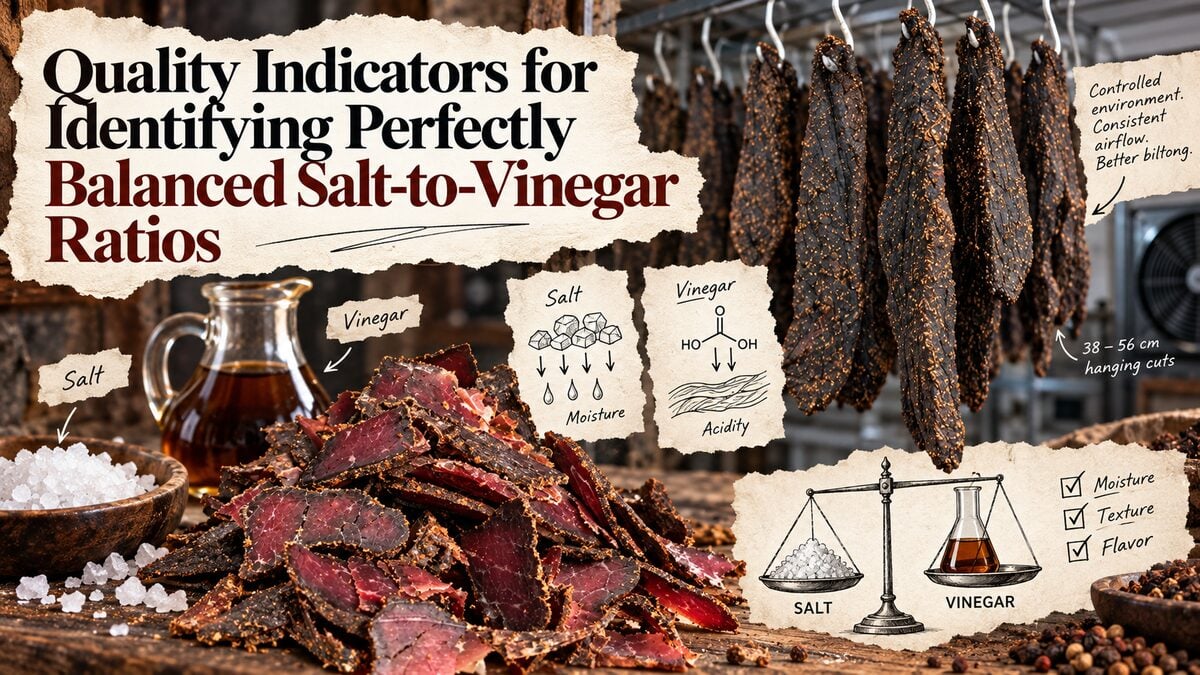
Walk into any artisanal food market in Carlsbad, and you’ll find shelves lined with jerky products boasting bold flavors and extended shelf lives. But traditional South African biltong operates on entirely different principles. The magic lies not in aggressive seasoning or artificial preservatives, but in the precise balance between two simple ingredients: salt and vinegar. This delicate chemistry determines whether you end up with properly cured, tender biltong or a disappointing, overly salty mistake.
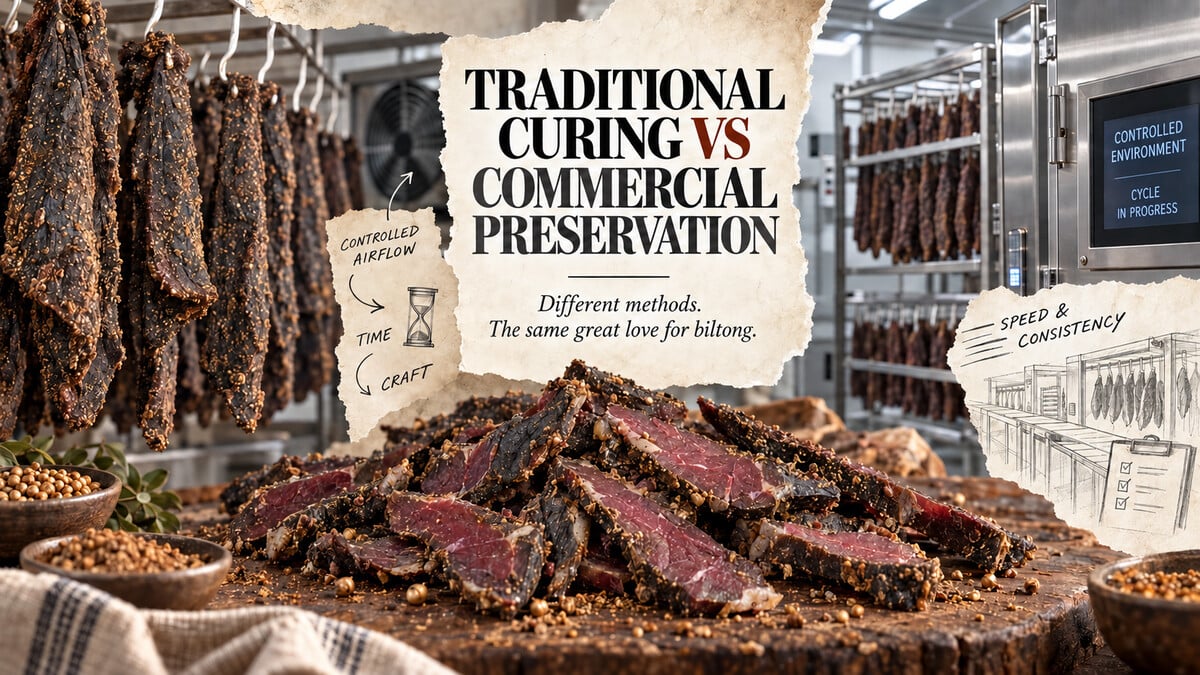
The science behind this balance involves complex molecular interactions refined through generations of traditional air-curing methods. Unlike commercial jerky production, which relies on high temperatures and chemical additives, biltong depends on the natural chemical reactions between salt and vinegar to create the perfect environment for preservation and flavor development.
How Salt Concentration Affects Moisture Extraction and Preservation
Salt acts as the primary dehydrating agent in biltong production, drawing moisture from muscle tissue through osmosis. The concentration typically ranges between 2-3% of the meat’s weight, but this percentage must be precisely calibrated to avoid over-salting. When salt levels exceed 3.5%, the osmotic pressure becomes too aggressive, creating an overly dry surface that prevents proper air circulation through the meat.
The preservation mechanism works by reducing water activity below 0.95, the threshold where harmful bacteria cannot survive. This process requires 24-48 hours of initial curing, during which salt penetrates approximately 2-3 millimeters into the muscle fiber. Traditional South African methods achieve this with coarse rock salt, which dissolves slowly and extracts moisture gradually rather than through the rapid dehydration seen in commercial processing.
Salt concentration also affects protein structure. Sodium ions break down myosin and actin filaments, tenderizing the meat without heat. This chemical tenderization process is crucial for achieving the characteristic texture that distinguishes quality biltong from tough, chewy alternatives.
The Role of Vinegar Acidity in Tenderizing and Flavoring
Vinegar serves multiple functions beyond simple flavoring. Acetic acid (typically 5-6% in quality vinegars) lowers the pH of the meat surface to about 4.2-4.6, creating an inhospitable environment for pathogenic bacteria while encouraging beneficial enzymatic activity. This acidic environment activates natural proteases that further break down muscle proteins.
The tenderizing effect occurs when acid molecules disrupt the cross-linking between collagen fibers. Brown malt vinegar, traditional in South African spice, contains additional compounds that enhance this process while contributing distinctive flavor notes that synthetic alternatives cannot replicate.
Vinegar also acts as a natural antimicrobial agent. Studies show that acetic acid reduces harmful bacteria by up to 99% within the first hour of application. This rapid pathogen reduction is essential for safe air-curing, particularly in the variable humidity conditions found in coastal areas like Escondido.
Chemical Interactions Between Salt and Vinegar During Curing
The interaction between salt and vinegar creates a synergistic preservation effect that exceeds either ingredient’s individual capabilities. When sodium chloride dissolves in the acidic vinegar solution, it forms a brine with enhanced penetrating properties. This acidified brine moves deeper into muscle tissue than salt alone, ensuring complete curing throughout thicker cuts.
The chemical reaction also produces trace amounts of sodium acetate, which contributes to the complex flavor profile while maintaining the meat’s natural color. This compound prevents the graying that occurs in improperly balanced mixtures, where excess acid denatures proteins too aggressively.
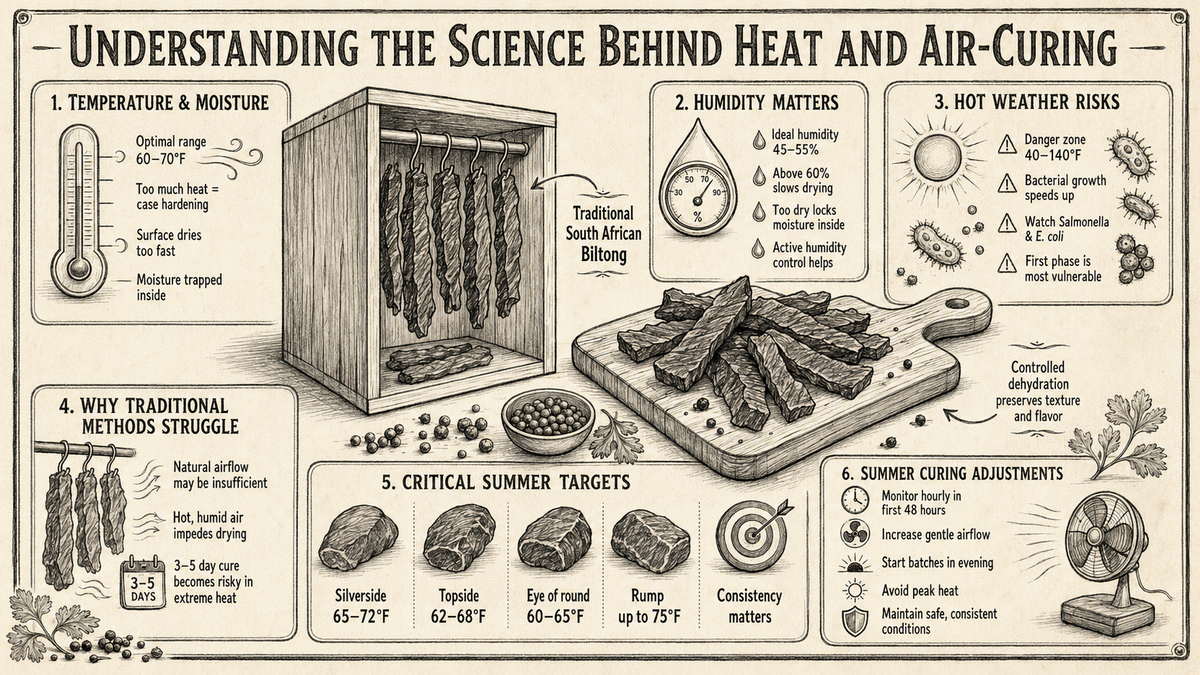
Temperature plays a crucial role in these interactions. The optimal range of 60-70°F allows for controlled chemical reactions without promoting bacterial growth. Higher temperatures speed up the process but can cause uneven curing, while lower temperatures slow penetration and may lead to surface spoilage.
Traditional South African Ratios vs Modern Precision Methods
Traditional South African biltong makers historically used a 3:1 ratio of coarse salt to brown vinegar by volume, adjusted based on visual and textural feedback during the curing process. This method required extensive experience to master, as variables like meat thickness, ambient humidity, and seasonal temperature changes affected optimal proportions.
Modern precision methods now quantify these ratios more accurately. Research indicates that a 2.5% salt concentration combined with 1.5% vinegar by meat weight consistently produces optimal results across different conditions. This scientific approach ensures consistent texture while maintaining the authentic flavor profiles that define traditional craft production.
However, the best artisanal producers combine both approaches, using precise measurements as a foundation while adjusting based on sensory evaluation and environmental factors. This hybrid method honors traditional wisdom while leveraging modern understanding of food science principles.
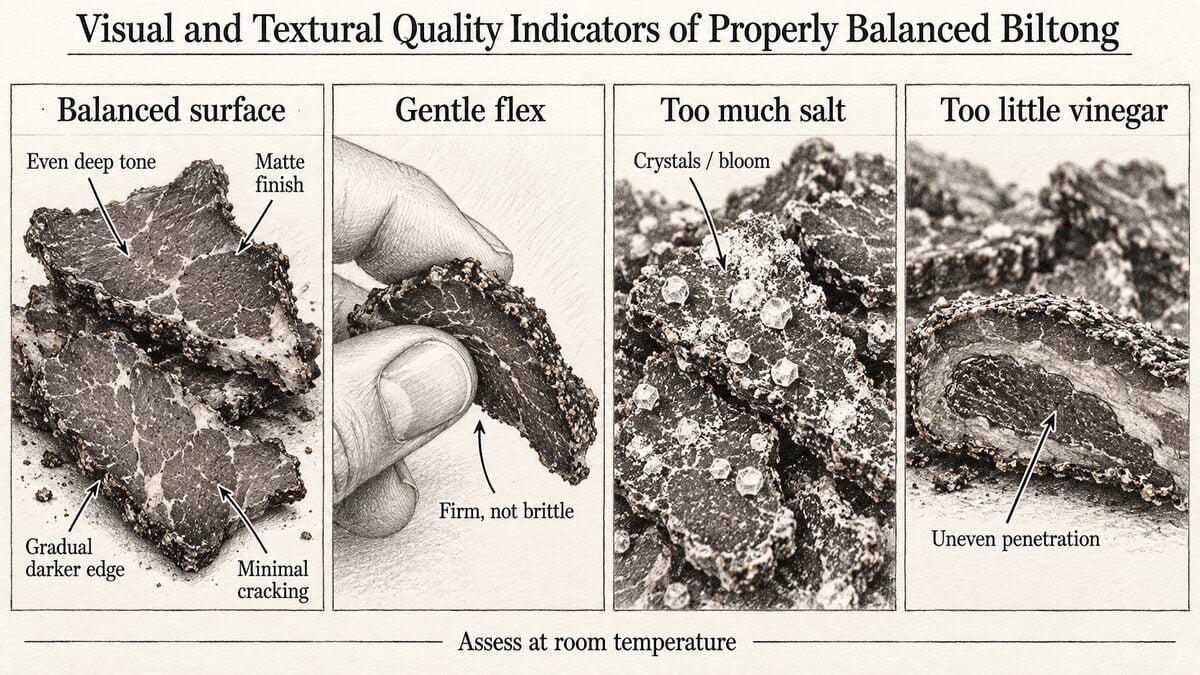
Color, flexibility and the cut surface reveal whether salt and vinegar penetrated evenly.
Visual and Textural Quality Indicators of Properly Balanced Biltong
Surface Appearance and Color Development Patterns
The visual appearance of properly balanced biltong tells a complete story about the curing process. When salt and vinegar ratios achieve optimal balance, the meat develops a distinctive deep mahogany color that’s uniform across the entire surface. This rich coloration results from the controlled interaction between natural enzymes and the acidic environment created by vinegar.
Look for an even, matte finish without glossy patches or white crystalline deposits. The surface should appear slightly darker at the edges, where moisture evaporates most rapidly, but color transitions should be gradual rather than stark. Quality South African Beef Biltong consistently shows this characteristic color development pattern throughout each piece.
Properly balanced pieces also show minimal surface cracking. While some natural fissuring occurs during the air-curing process, excessive cracking often indicates salt imbalance that draws moisture too aggressively from the muscle fibers. The ideal surface maintains structural integrity while developing that signature leather-like appearance traditional to authentic biltong production.
Texture Firmness and Flexibility Testing
The tactile qualities of well-balanced biltong provide immediate feedback about salt-to-vinegar ratios. Properly cured pieces yield slightly to gentle pressure while staying firm. When you squeeze a piece between your fingers, it should compress moderately without crumbling or feeling overly hard.
The flexibility test reveals crucial information about moisture content and penetration. Gently bend a piece at its thickest point. Correctly balanced biltong flexes without breaking, demonstrating that vinegar has penetrated evenly throughout the muscle fibers while salt has drawn moisture uniformly. Pieces that snap immediately often indicate excessive salt concentration, while those that bend too easily suggest insufficient salt or over-retained moisture.
Temperature affects texture assessment, so evaluate pieces at room temperature for accurate results. Cold biltong naturally feels firmer, while warm pieces may seem softer than their actual cured state. Understanding how traditional craftsmanship methods achieve consistent texture helps identify quality indicators more reliably.
The grain direction also influences texture evaluation. Cut pieces should separate cleanly along natural muscle fiber lines when properly balanced, rather than tearing irregularly or requiring excessive force to break apart.
Identifying Over-Salting Through Visual Crystallization
Excessive salt concentration shows up as distinct visual markers that experienced producers recognize immediately. White crystalline formations on the surface indicate salt migration during curing, where excess sodium moves outward as moisture evaporates. These crystals typically form geometric patterns rather than random deposits.
Over-salted biltong also develops an unnaturally dark, almost black coloration in concentrated areas. This occurs when high salt levels accelerate enzymatic reactions beyond optimal ranges, creating uneven color development patterns. The meat appears almost burnt in these regions, contrasting sharply with properly cured sections.
Surface blooming represents another over-salting indicator. This white, powdery residue differs from crystallization because it appears more diffuse and chalky. Blooming occurs when salt concentrations exceed the meat’s absorption capacity, leaving residual deposits that affect both appearance and flavor balance.
Check cut surfaces for similar crystallization patterns. Internal white deposits suggest salt penetration exceeded optimal levels throughout the curing process, rather than affecting only surface areas.
Signs of Insufficient Vinegar Penetration in Meat Fibers
Inadequate vinegar penetration creates distinct visual and textural indicators that compromise both safety and flavor development. The most obvious sign appears as uneven color distribution, where outer layers show proper mahogany tones while interior sections remain lighter or grayish. This gradient effect indicates that acidic penetration failed to reach the meat’s core.
Insufficient vinegar also affects surface texture consistency. Areas with poor penetration stay softer, almost raw, compared with properly acidified sections. These zones often feel slightly sticky or tacky to touch, contrasting with the dry, firm texture characteristic of well-balanced biltong.
Look for moisture retention patterns that suggest inadequate acid preservation. Pieces with insufficient vinegar penetration may develop slight surface moisture or feel damp in certain areas, particularly around thicker sections where penetration proves most challenging. Modern flavor development techniques emphasize consistent penetration throughout the entire piece.
Cut surfaces most clearly reveal internal penetration quality. Properly acidified biltong shows uniform color and texture throughout cross-sections, while insufficient vinegar creates obvious boundaries between treated and undertreated areas. These visual markers help producers adjust their salt-to-vinegar ratios for optimal results in future batches.
Taste Profile Assessment Techniques for Optimal Flavor Balance
Identifying the Sweet Spot Between Salt Intensity and Tang
The perfect balance between salt intensity and vinegar tang creates what professionals call the “flavor equilibrium point” in biltong. This sweet spot occurs when neither element dominates the palate, but both work together to enhance the natural beef flavor without masking it.
When tasting properly balanced biltong, the initial salt hit should be present but not overwhelming, typically lasting 2-3 seconds before the vinegar’s acidity emerges. The vinegar tang should provide a clean, sharp contrast that brightens the overall flavor profile rather than creating an aggressive sourness. Professional tasters look for a smooth transition between these elements, where the salt enhances saliva production just as the vinegar acidity peaks.
Experienced producers recognize that perfectly balanced South African Beef Biltong leaves a clean finish on the palate. The aftertaste should be pleasant and mild, encouraging another bite rather than requiring a palate cleanser. When the ratio is correct, you shouldn’t detect any harsh metallic notes from excess salt or puckering sensations from too much vinegar.
Regional Preference Variations Across South Africa
Traditional biltong preferences vary significantly across South Africa’s provinces, with each region developing distinct flavor expectations based on local ingredients and cultural influences. The Western Cape traditionally favors a slightly higher vinegar content, reflecting the region’s wine-making heritage and preference for brighter, more acidic flavor profiles.
Johannesburg and Gauteng producers often lean toward a more salt-forward approach, creating biltong with robust mineral notes that appeal to urban palates accustomed to bolder flavors. This regional preference typically results in salt-to-vinegar ratios that emphasize the preservation qualities while maintaining enough acidity for proper curing.
KwaZulu-Natal producers often incorporate more complex spice blends alongside their salt-vinegar base, creating flavor profiles where the foundational balance supports additional seasonings. Understanding these regional variations helps quality assessors calibrate their expectations when evaluating different biltong styles, ensuring they don’t mistake regional preferences for quality defects.
How Aging Time Affects Salt-to-Vinegar Perception
The perception of salt-to-vinegar balance changes dramatically as biltong ages, with both elements mellowing and integrating over time. During the first 24-48 hours of air-curing, vinegar notes tend to be more pronounced as surface moisture evaporates and concentrates the acidic compounds.
As the natural dehydration process continues beyond 72 hours, salt crystals begin to dissolve more completely into the muscle fibers, creating a more even distribution throughout the meat. This integration phase typically occurs between days 4-7, when professional tasters notice the harsh edges of both salt and vinegar beginning to smooth out.
Properly aged biltong (7-14 days, depending on thickness) achieves what producers call “flavor harmony,” where the original salt-to-vinegar ratio evolves into a more complex, rounded taste profile. Quality storage conditions during this aging period directly impact how well these flavors integrate, making proper environmental control essential for achieving consistent results.
Professional Tasting Methods for Consistency Evaluation
Professional biltong tasters follow systematic evaluation protocols to assess salt-to-vinegar balance consistently. The standard method begins with a visual inspection of salt crystal distribution on the surface, followed by an aroma assessment to detect vinegar volatiles before any tasting occurs.
The tasting sequence starts with a small initial bite to assess immediate salt impact, followed by thorough chewing to evaluate how flavors develop across the palate. Professional evaluators take specific note of the “flavor progression timeline” – documenting when salt peaks, when vinegar becomes apparent, and how long each element persists.
Consistency evaluation requires tasting multiple pieces from the same batch at different times, typically every 30 minutes to prevent palate fatigue. Professionals use neutral crackers and room-temperature water between samples, avoiding anything that might influence taste perception. To create consistent biltong experiences for customers, this systematic approach ensures every batch meets the same flavor standards, regardless of production variables or seasonal ingredient variations.
Documentation during professional tastings includes specific descriptors for salt intensity (mild, moderate, pronounced), vinegar character (bright, sharp, mellow), and overall balance rating on standardized scales. This systematic approach helps producers maintain consistent quality across production runs and seasonal ingredient variations.
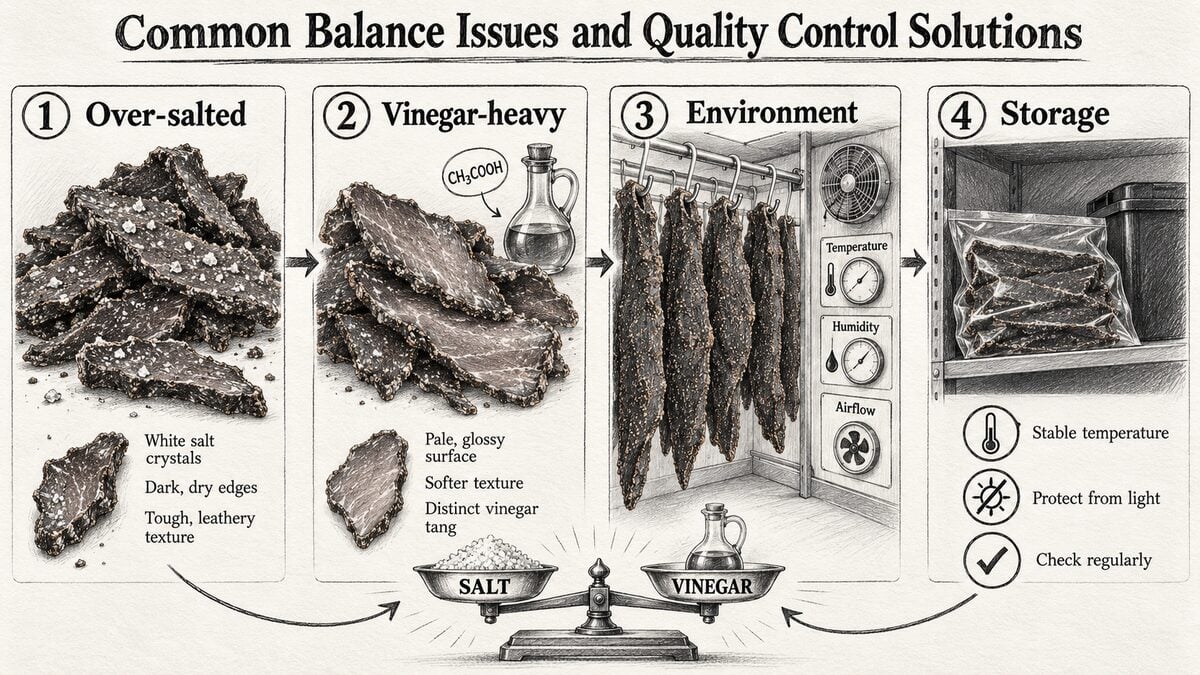
Recognizing salt and vinegar imbalance early helps protect biltong texture, flavor and consistency.
Common Balance Issues and Quality Control Solutions
Troubleshooting Over-Salted Biltong Characteristics
Over-salted biltong presents distinct quality indicators that skilled producers recognize immediately. The meat surface develops an unnaturally white, crystalline appearance where salt deposits concentrate along muscle fibers. This excessive salting creates a harsh, burning sensation on the tongue that masks the natural beef flavors essential to authentic South African Beef Biltong.
The texture becomes problematically firm and dry, with the meat feeling almost leathery rather than maintaining the characteristic tender chew. Visual inspection reveals darker edges where salt has drawn excessive moisture from the outer layers. Professional producers in Carlsbad often test suspect batches by examining the salt residue left on cutting boards after slicing.
Corrective measures require immediate intervention during curing. Reducing salt exposure time and increasing vinegar proportion in subsequent batches helps restore balance. However, once the air-curing process begins, over-salted meat rarely recovers its intended flavor profile completely.
Correcting Vinegar-Heavy Batches During Production
Vinegar-dominated biltong creates equally problematic quality issues that compromise the traditional air-curing process. The meat surface appears overly glossy with a pronounced acidic aroma that overwhelms the subtle spice notes. Excessive vinegar content prevents proper moisture removal, resulting in softer textures that lack the firm bite characteristic of properly balanced biltong.
The flavor profile becomes aggressively sour, creating an unpleasant, lingering puckering sensation. This acidity imbalance interferes with the natural enzymatic processes that develop complex flavors during traditional air-curing. Quality control specialists recognize this issue through the meat’s pale, washed-out appearance and the sharp vinegar smell that persists beyond the initial curing stage.
Immediate correction involves diluting the vinegar solution and extending salt exposure time to restore proper balance. Adding measured amounts of dry spices helps absorb excess acidity while maintaining the authentic flavor foundation. Understanding these processes helps producers prevent similar issues in future batches.
Environmental Factors That Affect Balance Consistency
Temperature fluctuations significantly impact salt-to-vinegar ratios during the air-curing process. High humidity environments in coastal areas like Escondido can dilute salt concentration while promoting excessive vinegar penetration into muscle fibers. Conversely, extremely dry conditions accelerate salt crystallization on the surface while preventing proper vinegar absorption.
Airflow patterns within drying chambers create micro-climates that affect different meat pieces inconsistently. Poor air circulation allows moisture pockets to form, disrupting the uniform balance necessary for consistent quality. Professional facilities monitor ambient temperatures between 60-70°F and maintain relative humidity around 55-65% to preserve optimal balance.
Seasonal variations require ongoing adjustments to base formulations. Winter months often require higher vinegar ratios to compensate for drier air, while summer humidity calls for higher salt concentrations to maintain proper moisture control. Experienced producers track these environmental patterns to predict necessary formula modifications throughout the year.
Storage Conditions That Preserve Optimal Ratios
Proper storage maintains the delicate salt-to-vinegar balance achieved during production. Vacuum-sealed packaging prevents further moisture migration that could disrupt established ratios. However, completely airtight storage can trap residual vinegar vapors, potentially intensifying acidic notes over time.
Temperature-controlled storage between 60-65°F preserves the balance integrity without promoting bacterial growth or excessive drying. Temperature swings cause condensation cycles that redistribute salt and vinegar unevenly throughout the meat. This explains why properly prepared biltong requires consistent storage conditions from production through consumption.
Light exposure accelerates chemical reactions that alter flavor compounds, shifting the perceived balance even when actual ratios remain stable. Professional storage facilities use UV-filtered lighting and maintain consistent atmospheric conditions. Consumer storage recommendations include keeping biltong in cool, dark locations within breathable containers that allow minimal air exchange without complete exposure.
Regular quality assessments during storage identify ratio shifts before they compromise product integrity. Visual inspections for salt crystallization or surface moisture, combined with periodic taste evaluations, ensure maintained balance standards throughout the product’s shelf life.
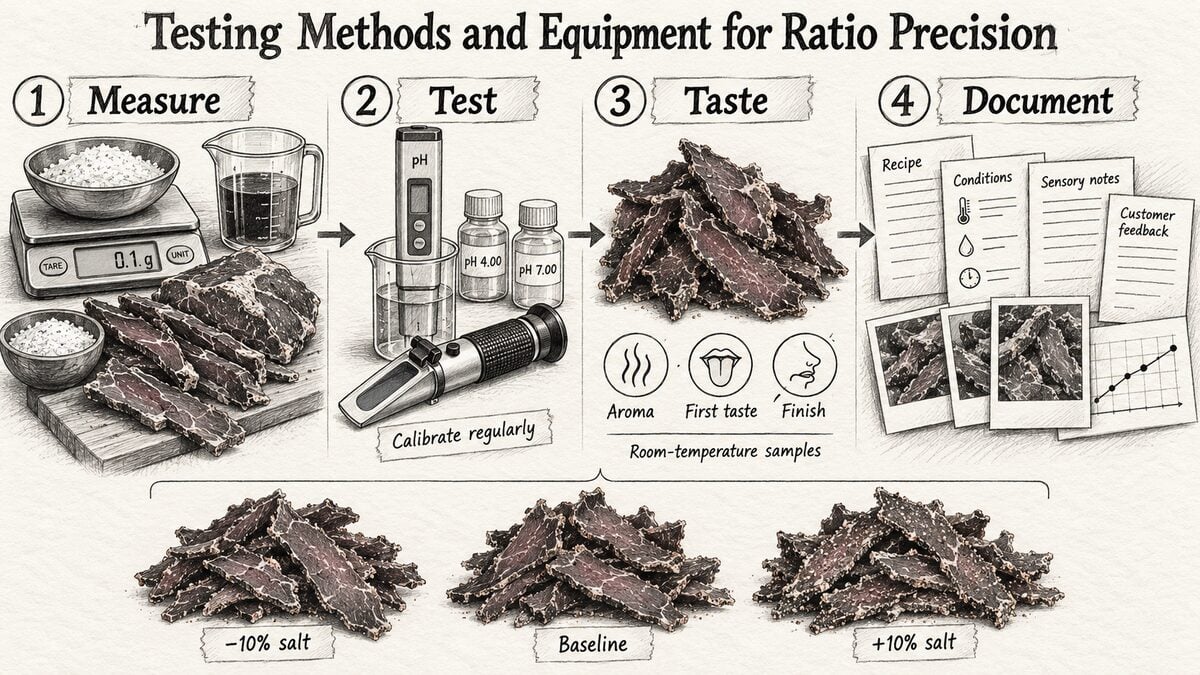
Reliable testing tools and detailed records turn a successful biltong ratio into a repeatable process.
Testing Methods and Equipment for Ratio Precision
Kitchen-Scale Testing for Small Batch Producers
Precision starts with measurement, and small batch producers need reliable tools that won’t break the bank. A digital kitchen scale reading to 0.1-gram accuracy provides the foundation for consistent salt-to-vinegar ratios. Most successful biltong makers in Carlsbad work with 500-gram to 2-kilogram batches, where even a 2-gram salt variance can shift the entire flavor profile.
The testing process begins with baseline measurements. Record your current recipe’s exact salt and vinegar quantities, then create three test variations: reduce salt by 10%, increase by 10%, and adjust vinegar accordingly. Document the meat weight, environmental humidity (crucial in Southern California’s varying conditions), and drying time for each batch.
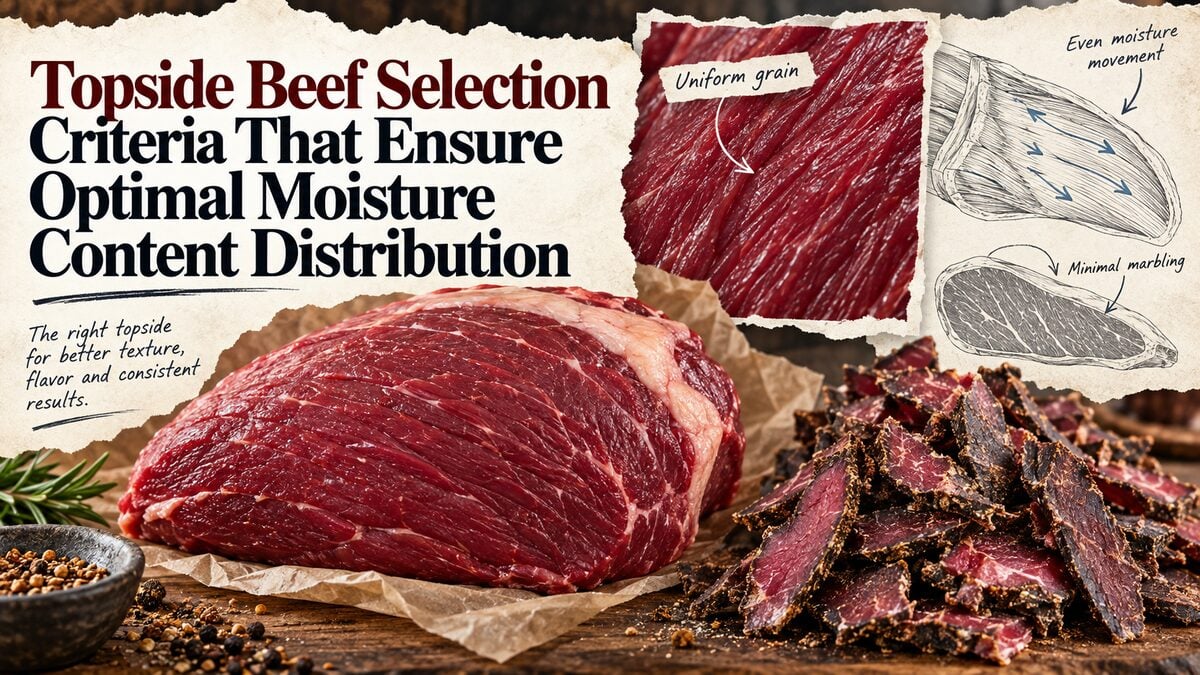
Smart producers use the “ratio card” method. Create index cards showing successful ratios for different meat cuts. Silverside typically requires 2.5% salt by meat weight, while topside handles 2.8% due to its denser muscle structure. These cards serve as your quality-control reference, especially when scaling production or training new team members.
Digital pH Meters and Salt Concentration Tools
Professional-grade pH meters eliminate guesswork from the curing process. Target pH levels for properly balanced South African Beef Biltong range between 5.2 and 5.6 after initial curing. Readings below 5.0 indicate excessive vinegar, while anything above 5.8 suggests insufficient acid for proper preservation.
Salt concentration meters (refractometers) provide instant feedback on brine strength. Quality biltong requires 12-15% salt concentration in the initial mixture. Higher concentrations create overly aggressive curing, while lower levels compromise shelf stability and flavor development.
Digital tools shine when documenting environmental factors. Combination meters that track temperature, humidity, and air circulation help establish the complete picture. Escondido’s inland climate demands different approaches than coastal Carlsbad, and your equipment should capture these variations. Log readings every 12 hours during the first three days of drying.
Calibration matters immensely. Test your pH meter weekly using standard buffer solutions, and verify salt readings against known concentrations. Equipment drift creates false positives and can ruin entire batches.
Traditional Taste-Testing Protocols from Biltong Masters
South African biltong masters developed systematic tasting protocols long before digital meters existed. The “three-point test” remains the gold standard: evaluate aroma immediately after slicing, initial taste on the tongue tip, and the finish after chewing for 30 seconds.
Timing matters in taste testing. Sample your biltong at 48 hours (early indicators), 96 hours (mid-cure assessment), and final completion. Each stage reveals different aspects of salt-vinegar balance. Early samples should show bright acidity without harshness, while finished products display complex umami notes with subtle acid support.
Create a standardized tasting environment. Use room temperature samples, neutral palate cleansers (unsalted crackers work perfectly), and consistent lighting. Taste fatigue sets in after 4-5 samples, so limit sessions and involve multiple evaluators when possible.
The “texture-flavor correlation” method helps identify balance issues. Properly balanced biltong should offer slight resistance when bitten, followed by easy chewing. Overly salty batches create tough, leathery texture, while insufficient salt produces mushy consistency despite adequate drying time.
Documentation Systems for Tracking Successful Ratios
Successful ratio documentation requires systematic record-keeping that captures both quantitative measurements and qualitative observations. Create batch sheets that include meat source, cut type, ambient conditions, exact ingredient ratios, and sensory notes at each evaluation point.
Digital spreadsheets work well for small producers, but consider dedicated food production software as volume increases. Track correlations between environmental conditions and optimal ratios. December’s cool, dry weather in Carlsbad may allow slightly lower salt concentrations than August’s humidity challenges.
Photo documentation proves invaluable for visual quality indicators. Standardized photos at 24-hour intervals show color development, surface characteristics, and potential issues. Compare successful batches against problematic ones to identify visual patterns linked to specific ratio imbalances.
Integrate customer feedback to close the quality loop. Document which ratios generate positive responses and note any complaints about saltiness or acid levels. This real-world data validates your technical measurements and guides future adjustments.
Build redundancy into your documentation system. Cloud storage, physical backups, and access for multiple team members ensure successful ratio discoveries aren’t lost due to technical failures or staff changes.
Adapting Ratios for Different Cuts and Production Scales
Adjusting Formulas for Silverside vs Topside Cuts
Different muscle cuts require distinct salt-to-vinegar ratios due to their varying fiber density and moisture content. Silverside cuts, with their tighter muscle structure, benefit from slightly higher vinegar concentrations (typically 2-3% more than standard ratios) to ensure proper penetration through the dense fibers. The additional acidity helps break down the muscle proteins more effectively during the initial curing phase.
Topside cuts present different challenges with their more open grain structure. These cuts absorb marinade faster, so they require lower vinegar concentrations to prevent over-acidification. Professional producers often reduce vinegar ratios by 10-15% when working with topside cuts while maintaining salt levels to ensure proper preservation. The key is monitoring initial penetration rates during the first 24 hours of curing.
When transitioning between cuts in production runs, experienced producers test small batches to establish baseline penetration rates. This approach prevents costly mistakes when scaling up formulations. The muscle fiber orientation also influences how salt crystals distribute throughout the meat, affecting both flavor development and preservation quality.
Scaling Ratios from Home Kitchen to Commercial Production
Home production typically involves batches of 2-5 pounds, allowing for precise measurement and immediate adjustments. Commercial scaling to 50-100 pound batches introduces variables that require formula modifications. Mixing equipment, ambient temperature control, and marinade distribution methods all affect how effectively ingredients penetrate the meat.
Commercial tumbling equipment creates different mechanical action compared to hand-mixing, often requiring 20-25% reduction in vinegar concentration to prevent over-processing. Extended tumbling time increases surface-area exposure, making the meat more susceptible to acid damage if ratios aren’t adjusted accordingly.
Batch timing becomes critical at commercial scales. While home producers can monitor individual pieces closely, commercial operations need standardized quality checkpoints. Consistent mixing protocols ensure uniform distribution across large batches. Temperature control systems must maintain precise ranges (typically 35-40°F) during extended processing times to prevent bacterial growth while maintaining optimal chemical reactions.
Production scheduling also influences ratio adjustments. Commercial facilities often process multiple batches daily, so they must account for ambient humidity changes throughout production cycles. This necessitates slight formula modifications to maintain consistent quality indicators across all production runs.
Seasonal Adjustments for Humidity and Temperature Changes
Environmental conditions significantly impact salt-to-vinegar effectiveness throughout the year. Summer humidity above 65% requires increased salt concentrations (typically 8-12% higher) to maintain proper moisture extraction rates. Slower evaporation in humid conditions can lead to surface moisture retention if salt levels aren’t adjusted upward.
Winter conditions with humidity below 40% create rapid surface drying that can seal moisture inside if vinegar concentrations aren’t reduced. Cold temperatures slow chemical penetration, requiring extended marinating times or slightly increased acid concentrations to maintain quality standards.
Coastal areas like those around Carlsbad face unique challenges, as salt air affects the curing environment. Producers often reduce their salt ratios by 5-8% to compensate for ambient salt exposure while maintaining vinegar levels for proper acidification. These regional adjustments matter most when producers need consistent quality across different locations.
Monitoring daily weather patterns helps predict necessary adjustments. Professional producers track humidity, temperature, and barometric pressure to fine-tune their formulations. This proactive approach prevents quality issues before they develop into batch failures.
Creating Signature Blends While Maintaining Quality Standards
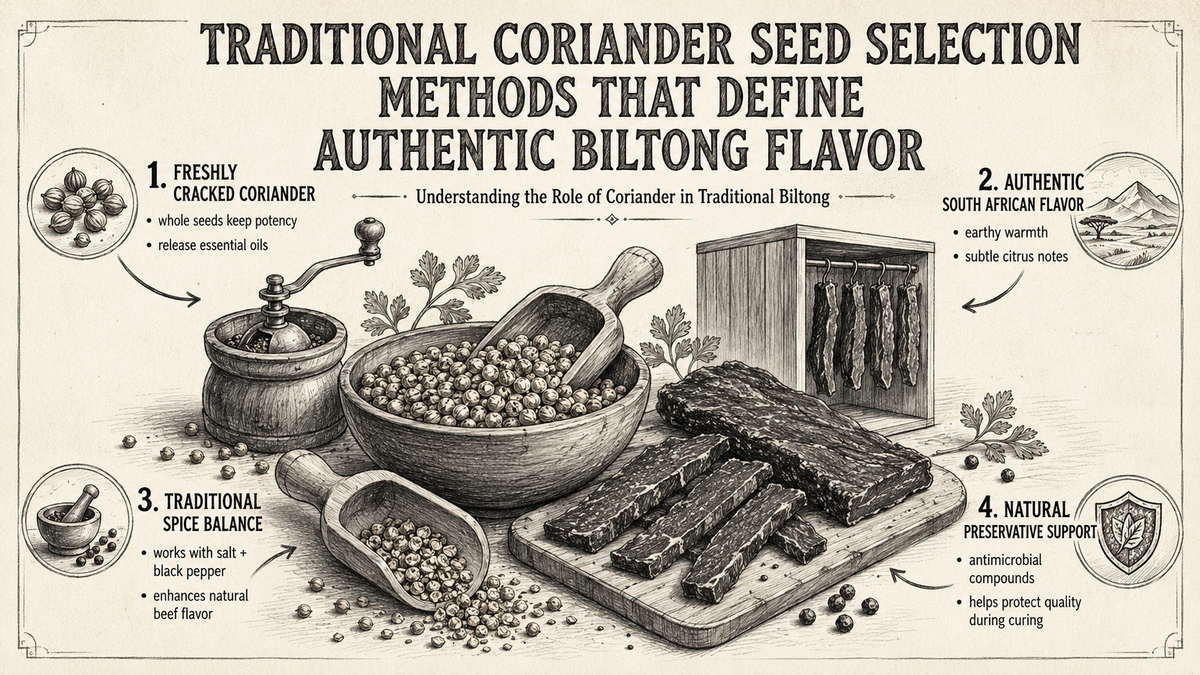
Developing unique flavor profiles requires careful balance between innovation and proven preservation principles. Adding aromatic spices or specialty vinegars must account for their impact on the fundamental salt-to-vinegar chemistry. Black pepper, coriander, and garlic each affect pH differently, which can alter the curing process.
Custom vinegar blends (apple cider, wine, or malt vinegars) have varying acidity levels requiring formula adjustments. Apple cider vinegar typically measures 4.5-5.5% acetic acid compared to white vinegar’s consistent 5%, so you may need to adjust concentrations to maintain proper preservation levels.
Signature spice blends should never compromise the core preservation ratios. Successful commercial producers establish their base salt-to-vinegar formula first, then layer additional flavors without disrupting the fundamental chemistry. This approach ensures consistent quality indicators while allowing creative expression.
Quality control becomes paramount when developing signature products. Each new formulation requires extensive testing to verify that visual, textural, and taste indicators meet established standards. Investing in proper testing prevents costly production issues and maintains the reputation discerning customers expect from quality South African Beef Biltong. Whether you’re refining traditional methods or developing innovative blends, understanding these adaptation principles ensures your biltong consistently delivers the perfect balance of flavor, texture, and preservation that defines exceptional air-cured meat products.